



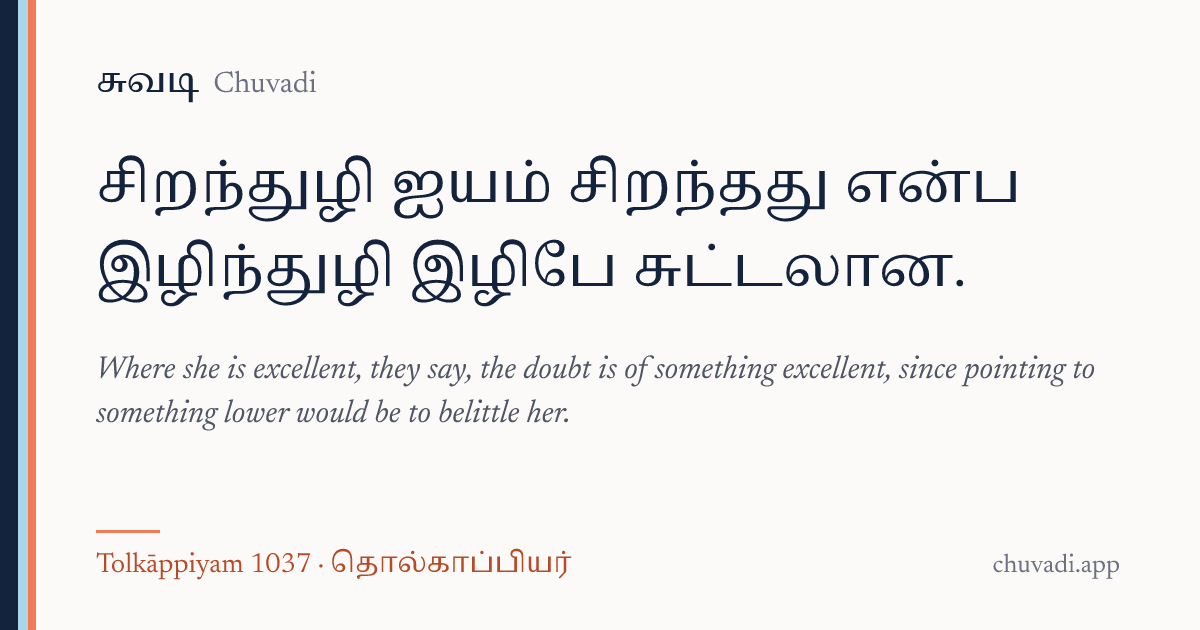
தொல்காப்பியம் 1037 · பொருள் 3.3
பாடல் · The poem
Tap a word to see where else it occurs.
பொருள் · Meaning in TamilAI
தலைவியைக் கண்ட தலைவனுக்கு "இவள் யார்" என்ற ஐயம் தோன்றினால், அந்த ஐயம் உயர்ந்த பொருளைப் பற்றியதாகவே இருக்கும்; இவள் தெய்வமகளோ, வானுலக மங்கையோ என்றே அவன் ஐயுறுவான். தாழ்ந்த பொருளைச் சுட்டி ஐயுறுதல் அவளை இழிவுபடுத்துவதாகும்; ஆகவே அது கூடாது.
இளம்பூரணர்
இவர் தலைவியைக் கண்ட தலைவனுக்கு ஐயம் தோன்றின் அது இவள் தெய்வமகளோ என உயர்ந்த பொருளைப் பற்றியதாகவே அமையும்; இழிந்த பொருளைச் சுட்டி ஐயுறுதல் பொருந்தாது எனப் பொருள் கொள்வார்.
நச்சினார்க்கினியர்
இவரும் இவ்வாறே பொருள் கொண்டு, தலைவனின் முதற்காட்சியைப் பாடும் புலவன் பின்பற்ற வேண்டிய ஒழுங்காக இதனை விளக்குவார்.
"அணங்குகொல் ஆய்மயில் கொல்லோ கனங்குழை மாதர்கொல்" என்னும் திருக்குறள் இத்தகைய ஐயத்துக்குச் சிறந்த சான்று. புலவன் தலைவனின் முதற் காட்சியைப் பாடும்போது பின்பற்ற வேண்டிய ஒழுங்காக உரையாசிரியர்கள் இதனைக் கொள்வர்.
ஆங்கிலம் · English translationAI
Translation
- Where she is excellent, they say, the doubt is of something excellent,
- since pointing to something lower would be to belittle her.
What the poem says
On first seeing the heroine the hero may be struck by aiyam, "doubt", as to what she is. This nūṟpā rules that the doubt must always be about something higher: he wonders whether she is a goddess, a celestial woman, a peacock-like being of another world. He may not wonder whether she is something lower, because to imagine her as a lesser creature would be an insult.
A well-known illustration of such doubt is the Kuṟaḷ couplet in which the man asks whether she is a goddess, a fine peahen, or a woman with heavy earrings. The commentators read the nūṟpā as a rule of decorum for the poet describing the hero's first sight of the heroine.