



தொல்காப்பியம் 1041 · பொருள் 3.7
பாடல் · The poem
Tap a word to see where else it occurs.
பொருள் · Meaning in TamilAI
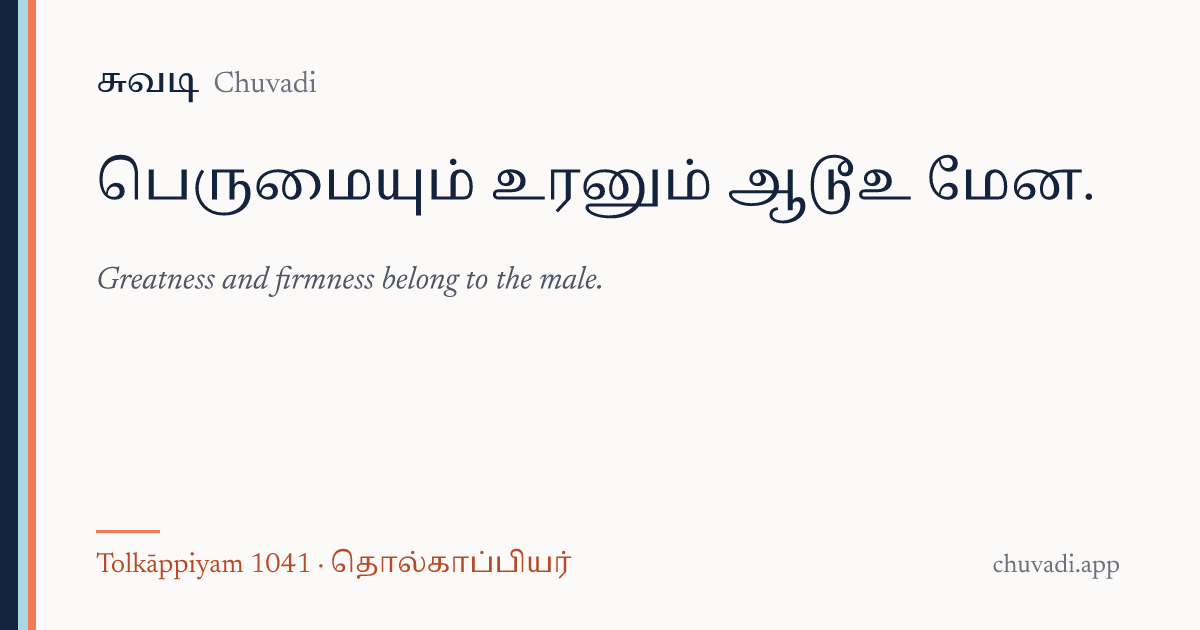
பெருமையும் உரனும் ஆண்மகனுக்கு உரிய பண்புகள்.
இளம்பூரணர்
இவர் பெருமையும் உரனும் ஆண்மகனுக்கு உரிய பண்புகள் எனக் கொண்டு, அடுத்த நூற்பாவில் பெண்ணுக்குரிய பண்புகளோடு இவற்றை இணைத்துப் பொருள் கொள்வார்; இவ்விரு சொற்களுக்கு இவர் தரும் நுட்பமான பொருள் இங்குச் சரிபார்க்கப்படவில்லை.
நச்சினார்க்கினியர்
இவர் பெருமையைப் பழிக்கு அஞ்சி நிற்கும் மேன்மையாகவும், உரனை அறிவோடு கூடிய மனவுறுதியாகவும் விளக்குவதாக அறியப்படுகிறது; இவை தலைவன் களவில் நெறி தவறாமல் நிற்பதற்குக் காரணம் என்பது இவர் கருத்து.
பெருமை என்பது பழிக்கு அஞ்சி நிற்கும் மேன்மை; உரன் என்பது அறிவோடு கூடிய மனவுறுதி என உரையாசிரியர்கள் விளக்குவர். அடுத்த நூற்பா பெண்ணுக்குரிய பண்புகளைக் கூறுவதால், இரண்டையும் சேர்த்துப் படிக்க வேண்டும்.
ஆங்கிலம் · English translationAI
Translation
- Greatness and firmness belong to the male.
What the poem says
This one-line nūṟpā names the qualities proper to the man in love poetry: perumai, "greatness, nobility" (of character and conduct), and uraṉ, "firmness, strength of mind". They are the counterpart of the woman's qualities given in the next nūṟpā.
The commentators read perumai broadly as the dignity that keeps a man from blameworthy acts, and uraṉ as firmness grounded in understanding, the steadiness that lets him control himself even in love. Because these are his nature, the hero in the poems is expected to stay within bounds even in the stress of secret love.