



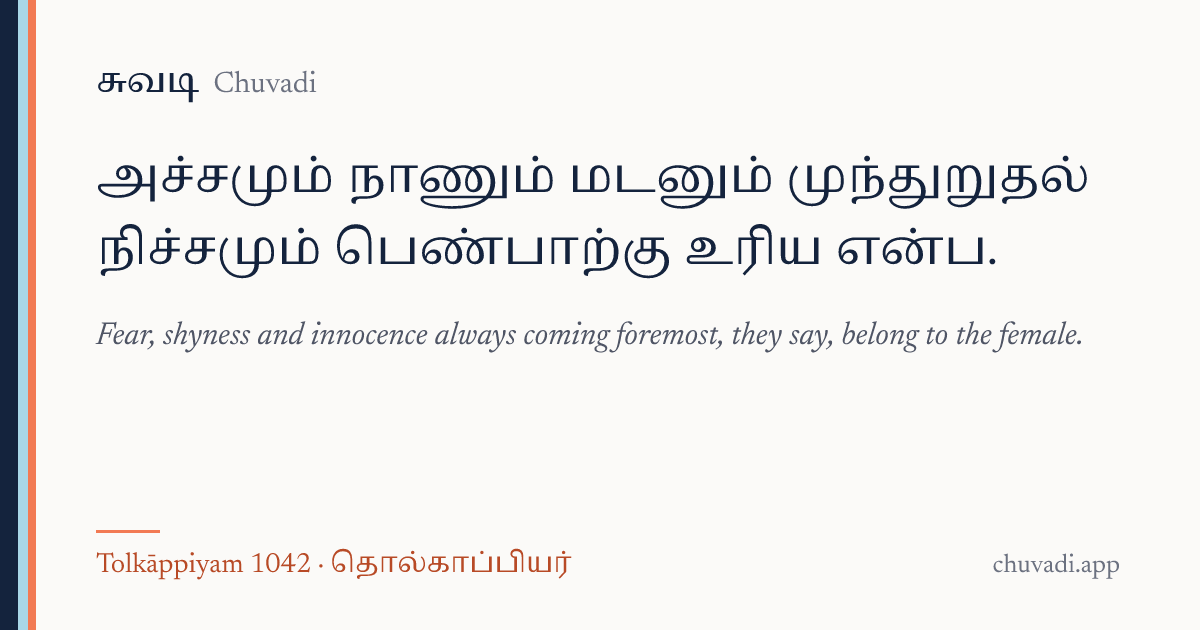
தொல்காப்பியம் 1042 · பொருள் 3.8
பாடல் · The poem
Tap a word to see where else it occurs.
பொருள் · Meaning in TamilAI
அச்சமும் நாணமும் மடமும் எப்போதும் முன்னின்று விளங்குதல் பெண்ணுக்கு உரிய இயல்பு என்று கூறுவர்.
இளம்பூரணர்
இவர் அச்சம், நாணம், மடம் என்னும் மூன்றும் எப்போதும் முன்னின்று விளங்குதல் பெண்ணுக்கு உரியது எனப் பொருள் கொள்வார்.
நச்சினார்க்கினியர்
இவரும் இம்மூன்றையும் பெண்ணுக்குரிய பண்புகளாகக் கொண்டு, மடம் என்பதை அறியாமையாகக் கொள்ளாமல் கள்ளமற்ற இயல்பாக விளக்குவார்; தலைவி தன் காதலைக் குறிப்பால் உணர்த்துவதற்கு இவையே காரணம் என்பார்.
தலைவி தன் காதலை நேரே சொல்லாமல் குறிப்பால் உணர்த்துவதற்கும் தோழியைச் சார்ந்து நிற்பதற்கும் இம்மூன்று பண்புகளே காரணம். மடம் என்பது அறியாமை அன்று; சொன்னதைச் சோதிக்காமல் ஏற்கும் கள்ளமின்மை என உரையாசிரியர்கள் விளக்குவர்.
ஆங்கிலம் · English translationAI
Translation
- Fear, shyness and innocence always coming foremost,
- they say, belong to the female.
What the poem says
The woman's qualities: accam "fear", nāṇ "shyness, modesty" and maṭam "innocence, artlessness". The nūṟpā adds that these always come first (muntuṟutal niccam), that is, in every situation they are the leading traits of the heroine, ahead of her desire.
These three explain much of the heroine's behaviour in the poems: why she does not speak her love directly, why she relies on hints and on her friend, and why her desire shows only through signs (see tol.1052). The commentators read maṭam not as ignorance but as the quality of accepting what one is told without probing, an innocence suited to her.