



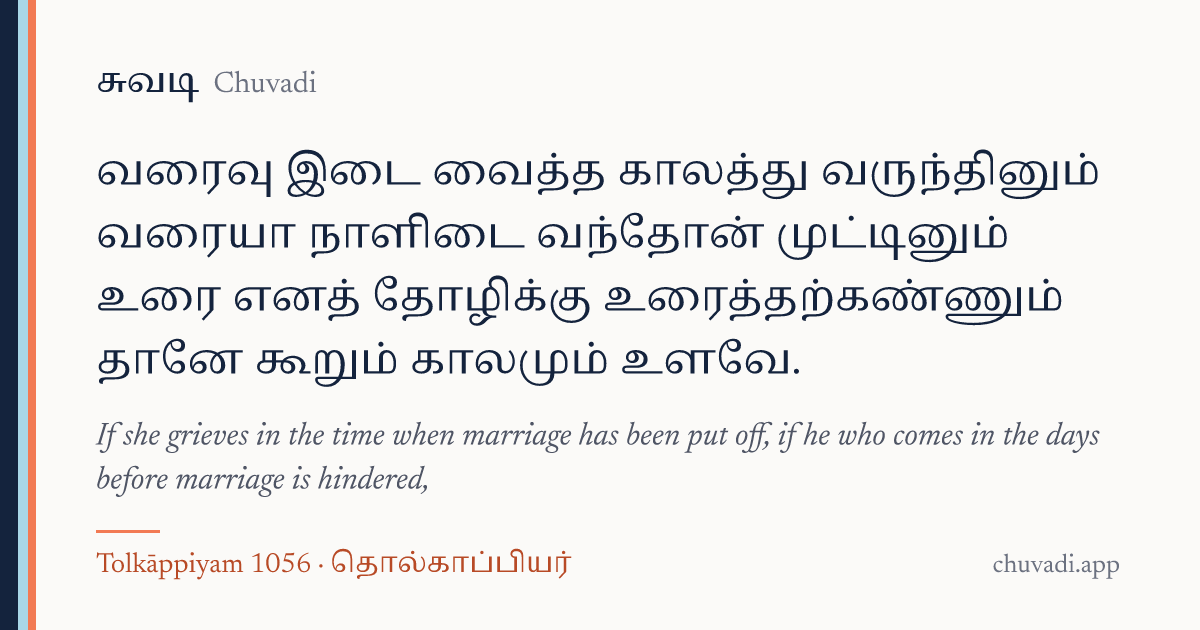
தொல்காப்பியம் 1056 · பொருள் 3.22
பாடல் · The poem
Tap a word to see where else it occurs.
பொருள் · Meaning in TamilAI
மணம் தள்ளிப்போன காலத்தில் தலைவி வருந்தினாலும், மணமாகாத களவுக் காலத்தில் வந்த தலைவன் தடைப்பட்டுத் திரும்பினாலும், "நீ அவனுக்குச் சொல்" என்று தோழியிடம் உரைக்கும் இடத்திலும், தலைவி தானே பேசும் காலங்களும் உண்டு.
இளம்பூரணர்
இவர் வரைவு தள்ளிப்போனபோது வருந்துதல், தலைவன் வந்து தடைப்படுதல், தோழியிடம் 'நீ உரை' என்று சொல்லுதல் ஆகிய இடங்களில் தலைவி தானே பேசுவதும் உண்டு எனப் பொருள் கொள்வார்.
நச்சினார்க்கினியர்
இவரும் இவற்றைத் தலைவி குறிப்பாலேயே பேசுவாள் என்ற முந்தைய விதிகளுக்கு விலக்காகக் கொண்டு, நெருக்கடியான நிலைகளில் அவள் நேரே பேசுவதை விளக்குவார்.
தலைவி பொதுவாகக் குறிப்பாலும் தோழி வழியாகவுமே பேசுவாள் என்ற முந்தைய விதிகளுக்கு இவை விதிவிலக்குகள். நெருக்கடியான இந்நிலைகளில் அவள் நேரே பேசுவதும் உண்டு என்பது கருத்து.
ஆங்கிலம் · English translationAI
Translation
- If she grieves in the time when marriage has been put off,
- if he who comes in the days before marriage is hindered,
- in telling her friend, 'Speak to him',
- there are also times when she speaks herself.
What the poem says
Normally the heroine speaks through her friend (tōḻi). This nūṟpā gives the exceptions, times when she herself addresses the hero or speaks openly: when she suffers because the marriage has been postponed; when the hero, coming during the period of secret meetings, is obstructed and cannot meet her; and when she tells her friend to speak to him on her behalf.
The commentators read the last line as allowing her own direct speech in these pressing circumstances. It balances the earlier rules (tol.1052 to 1054) which said that her love shows only by hints.