



தொல்காப்பியம் 1057 · பொருள் 3.23
பாடல் · The poem
Tap a word to see where else it occurs.
பொருள் · Meaning in TamilAI
"நாணம் உயிரைவிடச் சிறந்தது; குற்றமற்ற அறிவோடு கூடிய கற்பு நாணத்தைவிடச் சிறந்தது" என்னும் முன்னோர் மொழியைப் பற்றிய நெஞ்சத்தோடு, தலைவி தன் காதலன் இருக்கும் இடத்துக்குச் சென்றாலும், குற்றமற்ற நல்ல சொற்களைத் தானே பேசினாலும், இவை போன்ற பிறவும் தோன்றும்.
இளம்பூரணர்
இவர் நாணம் உயிரினும் சிறந்தது, கற்பு நாணினும் சிறந்தது என்னும் முன்னோர் மொழியை உட்கொண்டு தலைவி தலைவன் இருக்கும் இடத்துச் செல்லுதலும், தானே நல்ல சொல் கூறுதலும் உண்டு எனப் பொருள் கொள்வார்.
நச்சினார்க்கினியர்
இவரும் இதனைக் களவு இடையூறுபட்டபோது தலைவி நாணத்தைக் கடந்து உடன்போக்கில் செல்லுதலுக்கு அடிப்படையாகக் கொள்வார்; கற்பு நாணத்தினும் மேலானது என்பதே இதன் மையக் கருத்து என விளக்குவார்.
களவு வெளிப்பட்டு வேறொருவனுக்கு மணம் பேசப்படும் நிலையில், தலைவி நாணத்தைக் கடந்து தலைவனோடு உடன்போக்கில் செல்லுதலை இது நியாயப்படுத்துகிறது என்று உரையாசிரியர்கள் கொள்வர். கற்பு நாணத்தினும் மேலானது என்பதே இதன் மையக் கருத்து.
ஆங்கிலம் · English translationAI
Translation
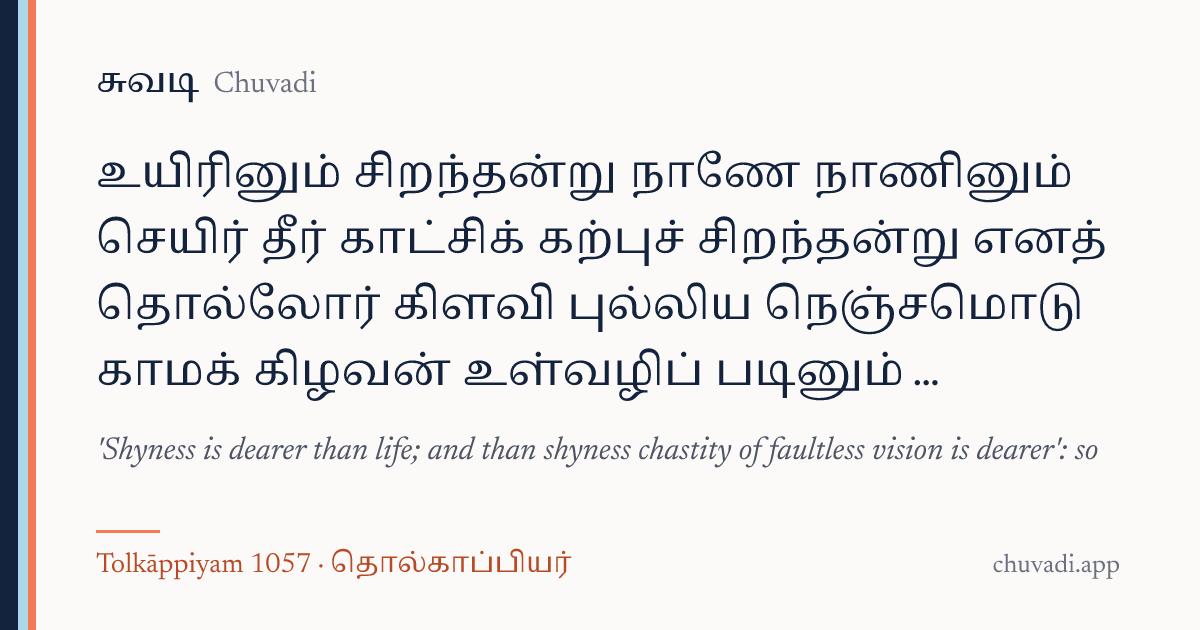
- 'Shyness is dearer than life; and than shyness
- chastity of faultless vision is dearer': so
- with a heart that holds to this word of the ancients,
- if she goes to the place where her lover is,
- if the heroine speaks good and blameless words,
- in such ways, and others too, the matter shows itself.
What the poem says
One of the best known nūṟpās of the Poruḷatikāram. It quotes a saying of the ancients: shyness (nāṇ) is more precious than life, and kaṟpu, "chastity, faithful wedded love", of flawless judgement, is more precious than shyness. Holding to this, the heroine may overcome her shyness and act: she may go to where the hero is, that is, leave her home and elope with him (uṭaṉpōkku), and she may speak openly and well.
The commentators take this as the justification of elopement within kaḷavu: when her secret love is threatened, for example by a marriage arranged with someone else, her loyalty to the man she has chosen outweighs even her modesty. "Other things of that kind" opens the rule to related situations in which kaṟpu overrides nāṇ.