



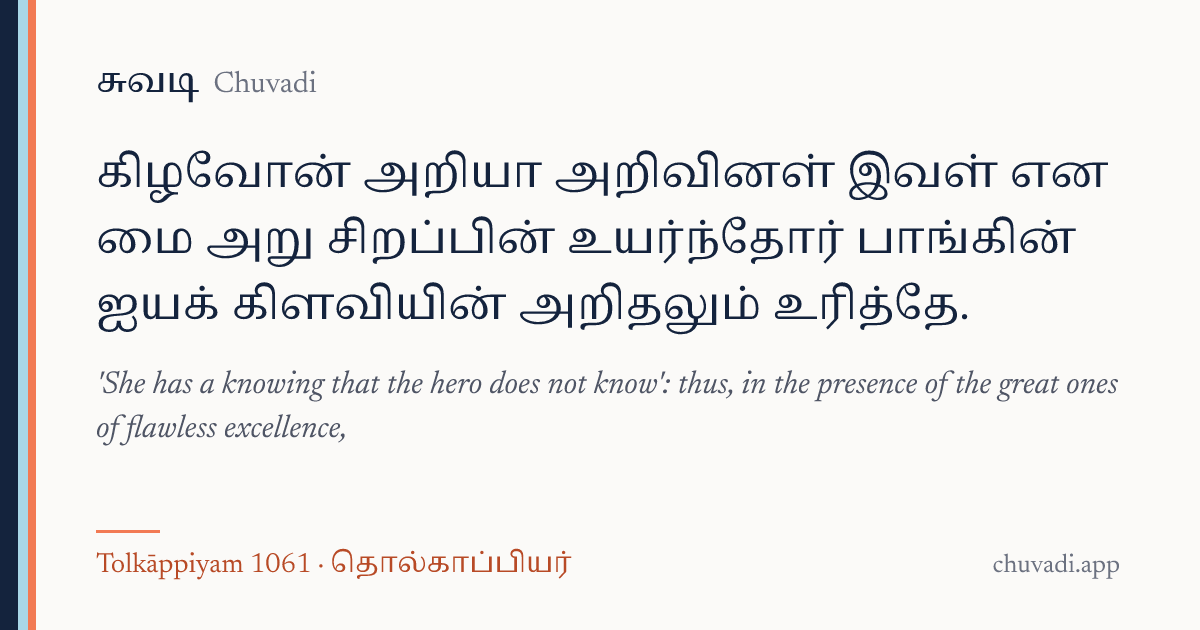
தொல்காப்பியம் 1061 · பொருள் 3.27
பாடல் · The poem
Tap a word to see where else it occurs.
பொருள் · Meaning in TamilAI
"தலைவன் அறியாத ஓர் அறிவை இவள் உடையவள்" என்று, குற்றமற்ற சிறப்புடைய பெரியோர் அருகில் பேசப்படும் ஐயம் கலந்த சொற்களால் களவை அறிந்துகொள்ளுதலும் உரியதே.
இளம்பூரணர்
இவர் உரையும் இந்நூற்பாவுக்கு மேற்கூறிய பொருளையே தருவதாகக் கொள்ளலாம்; யார் ஐயுறுகிறார், யார் அறிகிறார் என்பதற்கு இவர் தரும் விளக்கம் இங்குச் சரிபார்க்கப்படவில்லை.
நச்சினார்க்கினியர்
இவர் உரையும் இந்நூற்பாவுக்கு மேற்கூறிய பொருளையே தருவதாகக் கொள்ளலாம்; இவர் இதற்குத் தரும் விளக்கம் இங்குச் சரிபார்க்கப்படவில்லை.
களவு எவ்வாறு பிறருக்குத் தெரியவருகிறது என்னும் பகுதியோடு இது தொடர்புடையதாகத் தோன்றுகிறது. ஆனால் யார் ஐயுறுகிறார், யார் அறிகிறார் என்பதை நூற்பா தெளிவாகக் கூறவில்லை. இதன் பொருள் எங்களுக்கு உறுதியாகத் தெரியவில்லை; சொற்பொருளையே தந்துள்ளோம்.
ஆங்கிலம் · English translationAI
Translation
- 'She has a knowing that the hero does not know': thus,
- in the presence of the great ones of flawless excellence,
- coming to know by words of doubt is also proper.
What the poem says
A compressed and difficult rule. Literally it allows "knowing through words of doubt" (aiyak kiḷavi) in the company of "the great of flawless excellence" (uyarntōr, respected elders or the wise), with the thought "she has a knowing that the hero does not know".
It seems to continue the theme of how the elders come to learn of the secret love: knowledge may come from guarded, doubting remarks spoken among respected persons, rather than from open report. Who doubts, who learns, and whose "knowing" is meant are not stated, and we do not have a confident reconstruction of how the commentators construe each phrase. The English keeps to the words, and the sense should be taken as uncertain.