



தொல்காப்பியம் 1062 · பொருள் 3.28
பாடல் · The poem
Tap a word to see where else it occurs.
பொருள் · Meaning in TamilAI
தன் உள்ளத்தில் உள்ள காதல் வேட்கையைத் தலைவனுக்கு முன் சொல்லால் வெளிப்படுத்துதல் தலைவிக்கு இல்லை. ஆயினும் அவள் உணர்வு மறைந்து நிற்காது; பச்சை மண்கலத்தில் ஊற்றிய நீர் வெளியே கசிந்து தெரிவதுபோல, பிறருக்கு உள்ளதுபோலவே அவளிடமும் அது புலப்படும்.
இளம்பூரணர்
இவர் தலைவி தன் வேட்கையைத் தலைவன் முன் சொல்லால் வெளிப்படுத்துதல் இல்லை எனவும், ஆயினும் பச்சை மட்கலத்தில் பெய்த நீர் கசிந்து தோன்றுவதுபோல அது புலப்படும் எனவும் பொருள் கொள்வார்.
நச்சினார்க்கினியர்
இவரும் பெய்ந்நீர் உவமையையே இந்நூற்பாவின் மையமாகக் கொண்டு, சொல்லாமலேயே தலைவியின் காதல் குறிப்பால் வெளிப்படும் என விளக்குவார்.
சொல்லாமலேயே காதல் வெளிப்படும் என்பதைப் பச்சைக் கலத்தில் பெய்த நீர் என்னும் உவமையால் காட்டுகிறது. தலைவியின் காதல் குறிப்பாலேயே புலப்படும் என்ற முன் விதியை இது உவமையோடு வலியுறுத்துகிறது.
ஆங்கிலம் · English translationAI
Translation
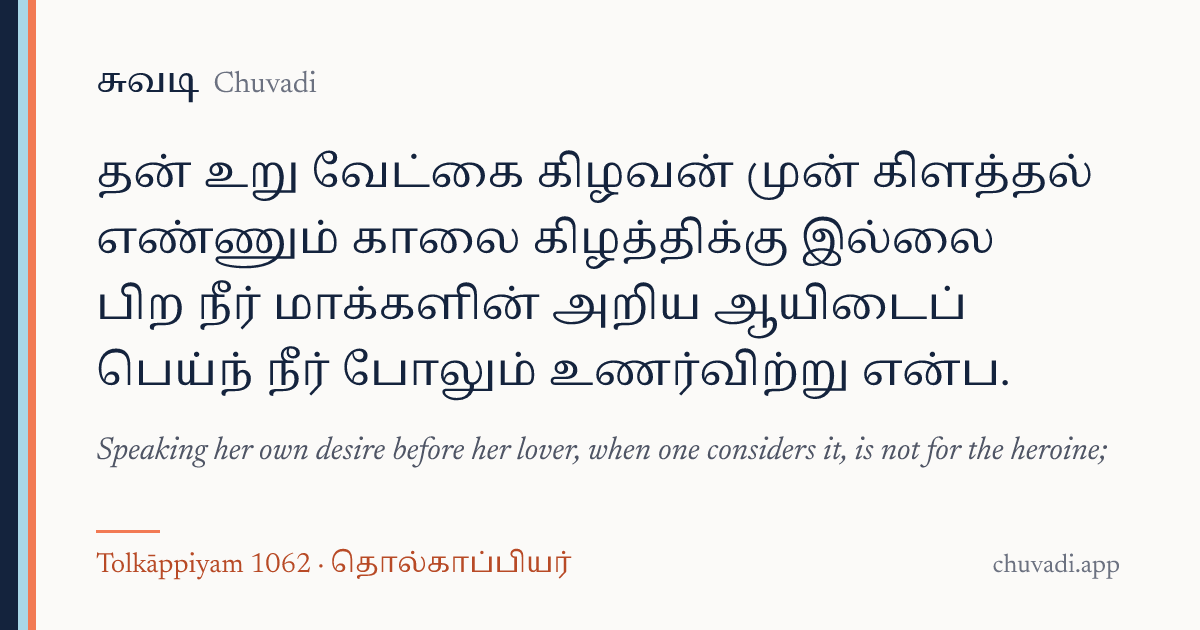
- Speaking her own desire before her lover,
- when one considers it, is not for the heroine;
- yet, as with folk of other nature, it is known there:
- her feeling, they say, is like water poured into a new pot.
What the poem says
The heroine never states her desire to the hero in words; that would go against her nāṇ "shyness". Yet her love does not stay hidden. It shows itself, as it would in other people, and the nūṟpā gives a homely image for this: her feeling is like water poured into a fresh, unfired clay pot, which seeps through the walls and shows on the outside without being poured out.
The commentators read the image as the key point: the feeling is not spoken, but it cannot be contained and becomes visible in her looks and behaviour. The rule restates, with a simile, the principle of tol.1052 that her love appears only through signs.