



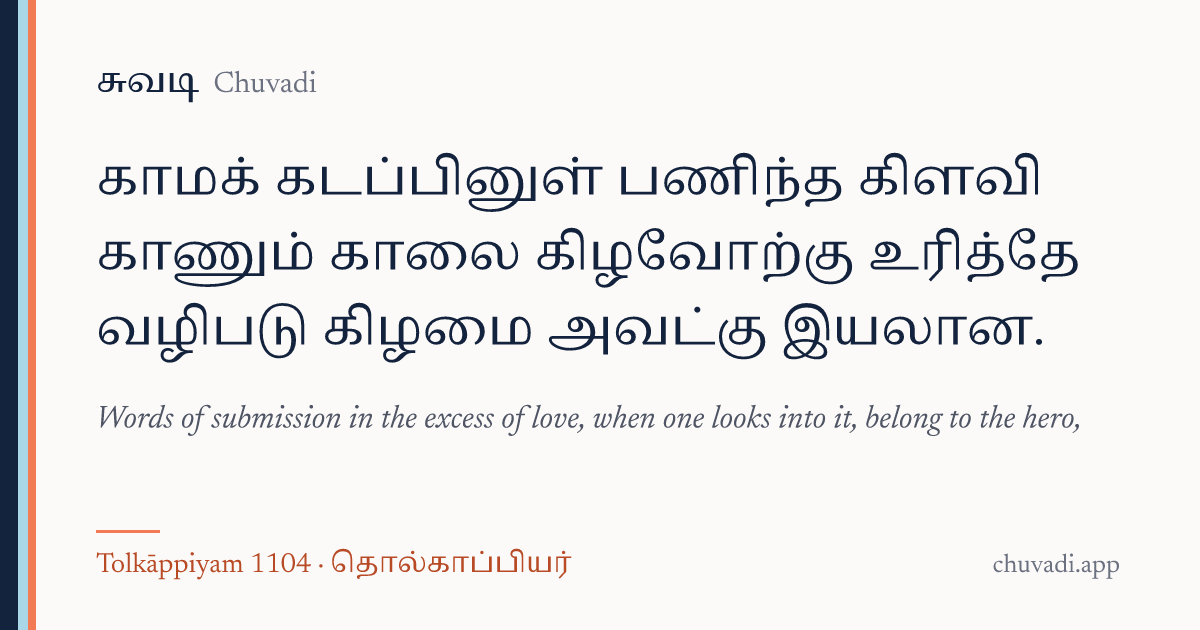
தொல்காப்பியம் 1104 · பொருள் 4.19
பாடல் · The poem
Tap a word to see where else it occurs.
பொருள் · Meaning in TamilAI
காமம் எல்லை கடந்த நிலையில் பணிந்து கூறும் சொற்கள், ஆராயும் காலத்துத் தலைவனுக்கே உரியவை; ஏனெனில், கணவனை வழிபட்டு ஒழுகுதல் தலைவிக்கு எப்போதும் இயல்பாகவே உள்ளது.
இளம்பூரணர்
நூற்பாவாலேயே பொருள் விளங்கும் என்று கலித்தொகைச் சான்று காட்டுவார்.
நச்சினார்க்கினியர்
தலைவியும் தோழியும் வேறுபட்டு நிற்பதைக் கண்டு காமம் மிகுந்த தலைவன் தாழ்ந்து கூறுவான் என முன் நூற்பாவோடு இணைப்பார்.
ஆங்கிலம் · English translationAI
Translation
- Words of submission in the excess of love,
- when one looks into it, belong to the hero,
- since the bond of worship is natural to her.
What the poem says
When love passes its bounds (kāmak kaṭappu), humble, submissive words, pleading, falling at the feet, belong to the hero, not the heroine; for the wife, worshipful devotion to her husband is already her constant nature (vaḻipaṭu kiḻamai), so such pleading is not special in her.
Iḷampūraṇar says the meaning is plain from the sūtra and cites a Kalittokai passage where the heroine says, "are the great harsh to those who cannot bear it?". Nacciṉārkkiṉiyar places it after the heroine's words of estrangement: when the hero sees her and the friend estranged and his love overflows, he speaks humbly, as in Kalittokai 88, "I cannot live except by the grace of your eyes; what is my fault?".
உரை · Commentary
இளம்பூரணர்
இது, தலைமகற் குரியதொரு மரபுணர்த்திற்று.
இது, சூத்திரத்தாற் பொருள் விளங்கும்.
“ஒரூஉ, கொடியியல் நல்லார் குரல் நாற்றத்துற்ற”
என்னும் மருதக்கலியுள்,
“பெரியார்க் கடியரோ ஆற்றாதவர்”
எனத் தலைவி கூறியவழி,
“கடியர் தமக் கியார்சொலத் தக்கார் மற்று” (கலித். ௮௮)
எனவரும்.
நச்சினார்க்கினியர்
இது, தலைவி வேற்றுமைக்கிளவி தோற்றிய பின்னர்த் தலைவற்கு உரியதோர் இலக்கணங் கூறுகின்றது.
(இ - ள்) காமக் கடப்பினுட் பணிந்த கிளவி - அங்ஙனந் தலைவிகண்ணுந் தோழிகண்ணும் வேறுபாடு கண்டுழித் தனக்குக் காமங் கையிகந்துழித் தாழ்ந்துகூறுங் கூற்று ; காணுங் காலை கிழவோற்கு உரித்தே - ஆராயுங் காலத்துத் தலைவற்கு உரித்து; வழிபடு கிழமை அவட்கு இயலான - அவனை எஞ்ஞான்றும் வழிபட்டொழுகுதல் தலைவிக்கு இல்லறத்தோடு பட்ட இயல்பாகலான் (எ - று.)
“ஆயிழாய், நின்கண் பெறினல்லால் இன்னுயிர் வாழ்கல்லா என்க ணெவனோ தவறு” (கலி. 88)
“கடியர்தமக், கியார்சொல்லத் தக்கார் மாற்று” (கலி. 88)
“நின்னாணை கடக்கிற்பா ரியார்” (கலி. 81)
என்றாற் போல்வன கொள்க.
‘காணுங்காலை’ என்றதனால் தலைவன் தலைவியெதிர் புலப்பது தன்றவறு சிறிதாகிய இடத்தெனவும், இங்ஙனம் பணிவது தன் தவறு பெரிதாகிய இடத்தெனவுங் கொள்க.