



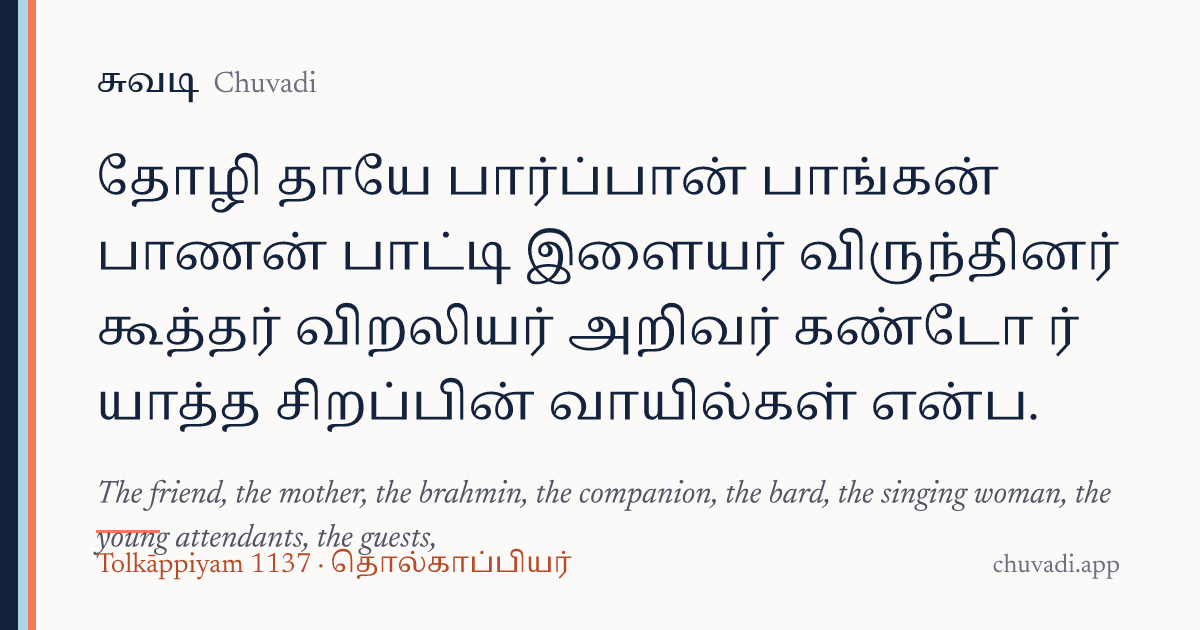
தொல்காப்பியம் 1137 · பொருள் 4.52
பாடல் · The poem
Tap a word to see where else it occurs.
பொருள் · Meaning in TamilAI
தோழி, செவிலித்தாய், பார்ப்பான், பாங்கன், பாணன், பாடினி, இளையர், விருந்தினர், கூத்தர், விறலியர், அறிவர், கண்டோர் ஆகிய பன்னிருவரும் கற்பு வாழ்க்கையில் பொருந்திய சிறப்புடைய வாயில்கள் என்று கூறுவர்.
இளம்பூரணர்
"பாட்டி" என்பதைப் பாடினி என விளக்கி, இப்பன்னிருவரும் வாயில்கள் என்பார்.
நச்சினார்க்கினியர்
ஒவ்வொருவரையும் விளக்கி, தலைவனும் தலைவியும் துறவு மேற்கொண்டாலும் அவர்களைப் பிரியாது பின்செல்லும் அளவு பிணிப்புடையவர் இவர் என, கோப்பெருஞ்சோழனுடன் வடக்கிருந்த நண்பர்களைச் சான்றாகக் காட்டுவார்.
ஆங்கிலம் · English translationAI
Translation
- The friend, the mother, the brahmin, the companion,
- the bard, the singing woman, the young attendants, the guests,
- the dancers, the singing actresses, the wise, those who see:
- these, they say, are the go-betweens of established excellence.
What the poem says
The list of vāyil, the go-betweens of kaṟpu, twelve in all: the friend (tōḻi), the mother (tāy, here the foster-mother), the brahmin (pārppāṉ), the hero's companion (pāṅkaṉ), the bard (pāṇaṉ), the singing woman (pāṭṭi, which Iḷampūraṇar glosses as pāṭiṉi), the young attendants (iḷaiyar), guests (viruntiṉar), the dancers (kūttar), the singing and dancing women (viṟaliyar), the wise (aṟivar) and "those who see" (kaṇṭōr), onlookers or passers-by.
Iḷampūraṇar says only that these twelve are the go-betweens. Nacciṉārkkiṉiyar glosses each and reads "established excellence" as their bond with the couple, so close that they would follow them even into renunciation, citing the friends of Kōpperuñcōḻaṉ who joined him when he gave up the world.
உரை · Commentary
இளம்பூரணர்
இது, கற்பின்கண் வாயில்களாவாரை உணர்த்திற்று.
(இ - ள்.) பாட்டியென்பது பாடினி யென்றவாறு.
தோழிமுதலாகச் சொல்லப்பட்ட பன்னிருவரும் வாயில்களாவார் என்றவாறு.
நச்சினார்க்கினியர்
இது, வாயில்களைத் தொகுத்து அவருந் துறவிற்கு உரியராவர் என்கின்றது.
(இ—ள்.) தோழி— அன்பாற் சிறந்த தோழியும்; தாய்—அவளே போலுஞ் செவிலியும்; பார்ப்பான்—அவரின் ஆற்றலுடைய பார்ப்பானும்; பாங்கன்—அவரேபோலும் பாங்கனும்—பாணன்—பாங்குபட்டொழுகும் பாணனும்; பாடினி—தலைவி மாட்டுப் பாங்காயொழுகும் பாடினியும்; இளையர் — என்றும் பிரியா இளையரும்; விருந்தினர்— இருவரும் அன்பு செய்யும் விருந்தினரும்; கூத்தர் — தலைவற்கு இன்றியமையாக் கூத்தரும்; விறலியர் — தாமே ஆடலும் பாடலும் நிகழ்த்தும் விறலியரும்; அறிவர் - முன்னே துறவுள்ளத்தராகிய அறிவரும்; கண்டோர் - அவர் துறவு கண்டு கருணைசெய்யுங் கண்டோரும்; யாத்த சிறப்பின் வாயில்கள் என்ப - இந்தத் தலைவனுந் தலைவியும் பெற்ற துறவின்கண்ணே மனம் பிணிப்புண்ட சிறப்பினையுடைய வாயில்களென்று கூறுவர் ஆசிரியர் (எ - று.)
என்றது, இவர் அத்துறவிற்கு இடையூறாகாது முன் செல்வர், தாமும் அவரைப் பிரிவாற்றாமையி னென்பதாம். இதனைக் கற்புங் காமமும் (தொல். கற், 11) என்னுஞ் சூத்திரத்து முன்னாக வாயில்களைத் தொகுத்துக் கூறிய சூத்திரமாக வைத்தல் பொருத்தமுடைத்தேனும் யாத்த சிறப்பினென்று துறவு நோக்குதலின் இதன் பின் வைத்தார், இதற்குக் கோப்பெருஞ்சோழன் துறந்துழிப் பிசிராந்தையாரும் பொத்தியாரும் போல்வார் துறந்தாரென்று கூறும் புறச்செய்யுட்கள் உதாரணம் (எ - று.)