



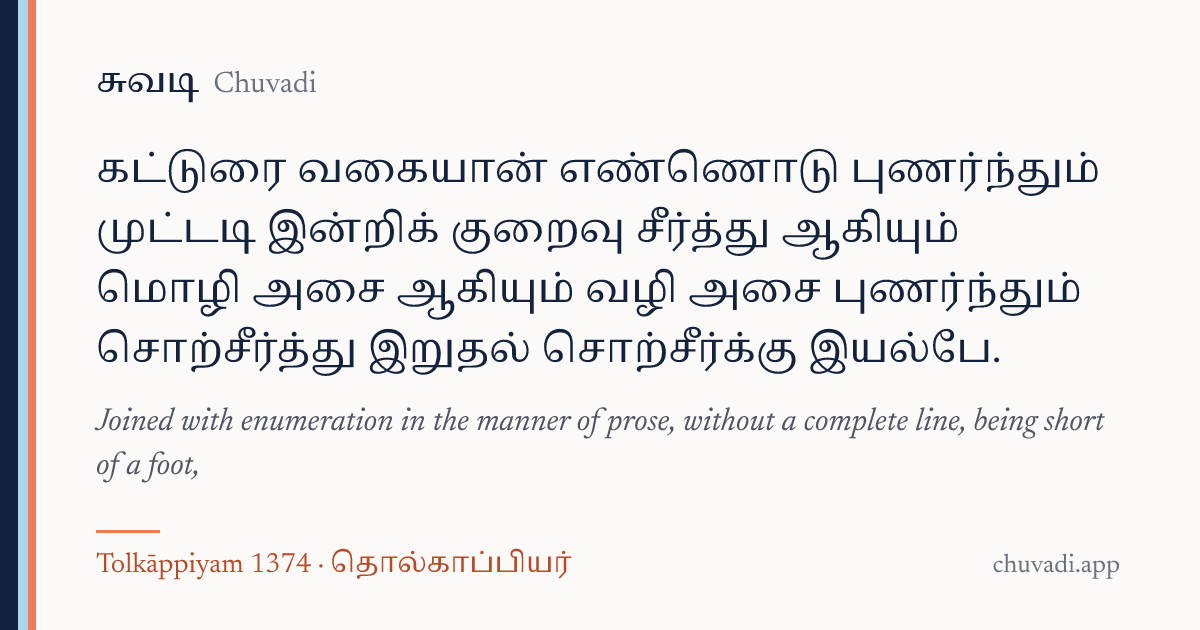
தொல்காப்பியம் 1374 · பொருள் 8.119
பாடல் · The poem
Tap a word to see where else it occurs.
பொருள் · Meaning in TamilAI
உரைநடை போன்ற முறையில் எண்ணிக் கூறுதலோடு கூடியும், முழுமையான அடி இல்லாமல் சீர் குறைந்து வந்தும், ஒரு சொல்லே ஓர் அசையாக நின்றும், பின்வரும் அசையோடு சேர்ந்தும், சொல்லின் முடிவிலேயே சீர் முடிவது சொற்சீரின் இயல்பு. அதாவது, அசைகளின் வாய்பாட்டால் அன்றிச் சொல்லின் எல்லையாலேயே அமையும் சீர் சொற்சீர் ஆகும்.
இளம்பூரணர்
இவர் உரையும் இந்நூற்பாவுக்கு மேற்கூறிய பொருளையே தருவதாகக் கொள்ளலாம்; இவர் தரும் எடுத்துக்காட்டுகள் இங்கு சரிபார்க்கப்படவில்லை.
நச்சினார்க்கினியர்
இவர் உரையும் இந்நூற்பாவுக்கு மேற்கூறிய பொருளையே தருவதாகக் கொள்ளலாம்; இவர் தரும் எடுத்துக்காட்டுகள் இங்கு சரிபார்க்கப்படவில்லை.
நூற்பாக்களில் பயிலும் பாவண்ணத்தோடு இதனை உரையாசிரியர்கள் இணைத்துக் காண்கின்றனர். நான்கு நிலைகளும் எவ்வாறு சேர்கின்றன என்பதை நூற்பாவிலிருந்து மட்டும் உறுதியாகச் சொல்ல இயலவில்லை.
ஆங்கிலம் · English translationAI
Translation
- Joined with enumeration in the manner of prose,
- without a complete line, being short of a foot,
- a word standing as a syllable-unit, or joined with the unit that follows,
- ending as a word-foot: this is the nature of the word-foot.
What the poem says
This nūṟpā defines the coṟcīr, the "word-foot": a foot whose limits are set by the word rather than by the regular pattern of metrical syllable-units (acai). It appears where the verse runs in kaṭṭurai, a prose-like manner, often as a list or enumeration (eṇ); where there is no full, regular line (muṭṭaṭi) and the line falls short of its feet; where a single word stands as one acai, or takes on a following acai; and where the unit closes at the end of the word.
The old commentators connect this with the plain, word-by-word rhythm of didactic and technical verse; later in this chapter the pāvaṇṇam is defined as having word-feet and being frequent in treatises (tol.1461). The details of the four conditions, and how they combine, are hard to recover exactly from the nūṟpā alone, and the readings here are given cautiously.