



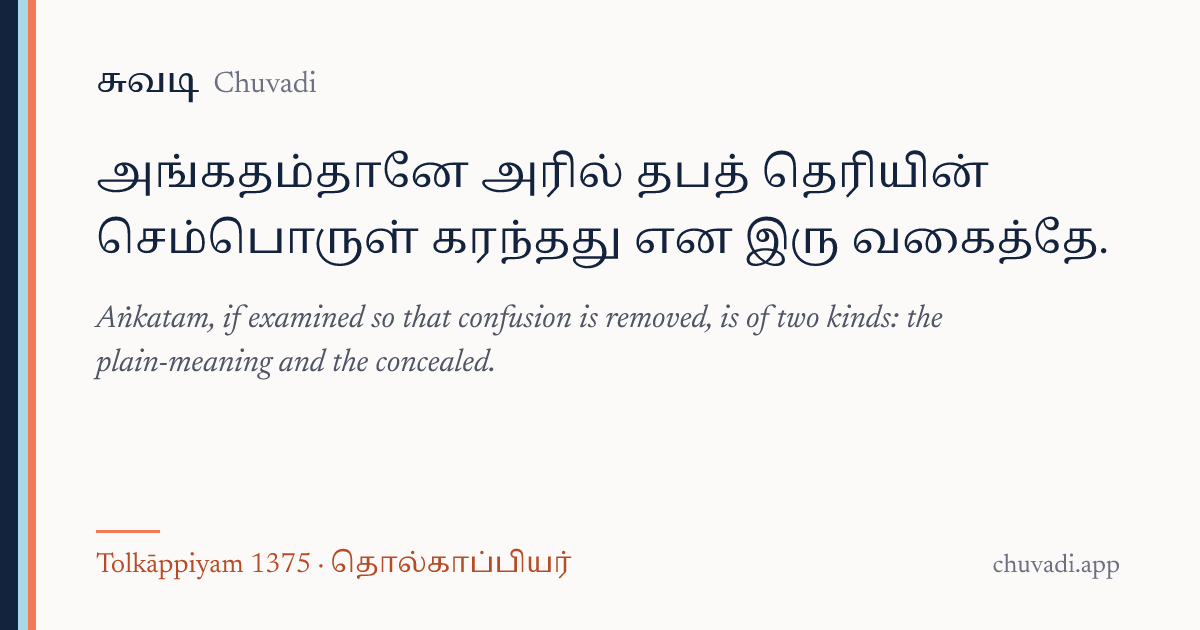
தொல்காப்பியம் 1375 · பொருள் 8.120
பாடல் · The poem
Tap a word to see where else it occurs.
பொருள் · Meaning in TamilAI
அங்கதம் என்னும் வசைச் செய்யுளை ஐயம் நீங்க ஆராய்ந்தால், அது வெளிப்படையான பொருளில் வருவது, பொருள் மறைந்து வருவது என இரண்டு வகைப்படும்.
இளம்பூரணர்
இளம்பூரணர் அங்கதத்தை வெளிப்படையாகப் பழிப்பது, பழிப்பை மறைத்துச் சொல்வது என இரண்டாகவே பிரித்து, அவற்றை அடுத்த இரு நூற்பாக்களோடு இணைத்து விளக்குவார். அரில் தப என்பதைக் குழப்பம் நீங்க ஆராய்ந்தால் எனக் கொள்வார்.
நச்சினார்க்கினியர்
நச்சினார்க்கினியரும் அங்கதம் செம்பொருள், கரந்தது என்னும் இரண்டு வகையிலேயே அடங்கும் எனக் கொள்வார்; இவ்விரண்டும் அடுத்த நூற்பாக்களில் வசை, பழிகரப்பு எனப் பெயர் பெறுவதாக விளக்குவார்.
இவ்விரண்டு வகைகளையும் அடுத்த இரண்டு நூற்பாக்கள் விளக்குகின்றன என்று உரையாசிரியர்கள் கொள்கின்றனர்.
ஆங்கிலம் · English translationAI
Translation
- Aṅkatam, if examined so that confusion is removed,
- is of two kinds: the plain-meaning and the concealed.
What the poem says
Aṅkatam is satirical or censuring verse, verse that blames or mocks. Examined carefully, the nūṟpā says, it is of two kinds: cemporuḷ, where the blame is stated openly in plain meaning, and kaṟantatu, where the blame is hidden. The next two nūṟpās define each.
The phrase aril tapa, "so that confusion (or entanglement) is removed", is a common formula in Tolkāppiyam for "on clear analysis". The commentators treat these two kinds as the whole of aṅkatam.