



தொல்காப்பியம் 1437 · பொருள் 8.182
பாடல் · The poem
Tap a word to see where else it occurs.
பொருள் · Meaning in TamilAI
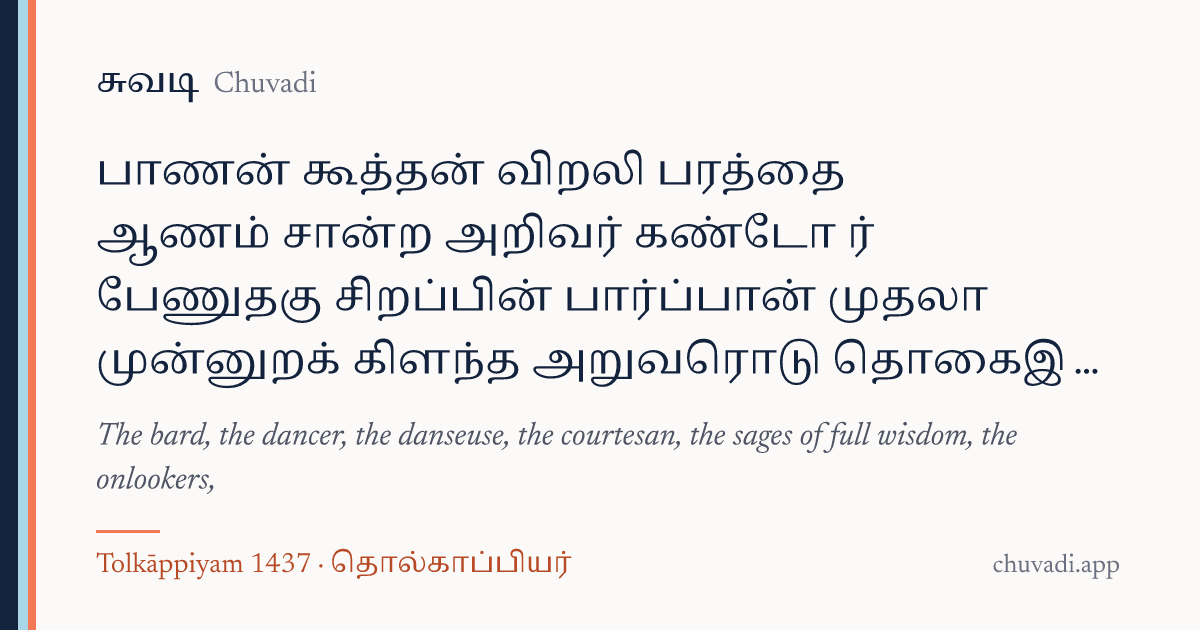
பாணன், கூத்தன், விறலி, பரத்தை, மாட்சிமை உடைய அறிவர், கண்டோர் ஆகியோர், போற்றத்தக்க சிறப்புடைய பார்ப்பான் முதலாக முன்பு சொன்ன அறுவரோடு சேர்ந்து, பழைய மரபின்படி கற்புக் காலத்தில் கூற்று நிகழ்த்த உரியவர்.
இளம்பூரணர்
இளம்பூரணர் பாணன், கூத்தன், விறலி, பரத்தை, அறிவர், கண்டோர் என்னும் அறுவரும் முன்கூறிய அறுவரோடு சேர்ந்து கற்புக் காலத்தில் கூற்றுக்கு உரியர் எனப் பொருள் கொள்வார்.
நச்சினார்க்கினியர்
நச்சினார்க்கினியரும் கற்பில் கூற்றுக்கு உரியவர் இவ்வாறு பன்னிருவர் எனக் கொண்டு விளக்குவார்; இவர் தரும் எடுத்துக்காட்டுகள் இங்கு சரிபார்க்கப்படவில்லை.
ஆக, கற்பில் கூற்றுக்கு உரியவர் பன்னிருவர். பாணன் முதலியோர் தலைவன் பரத்தையிடம் சென்ற சூழலில் வாயில்களாக வருவதை மருதத்திணைப் பாடல்களில் காணலாம்.
ஆங்கிலம் · English translationAI
Translation
- The bard, the dancer, the danseuse, the courtesan,
- the sages of full wisdom, the onlookers,
- with the brahmin of excellence worthy of honour first,
- gathered together with the six stated before,
- are, by the tradition of the old way, entitled to speak in wedded love.
What the poem says
In kaṟpu, wedded love, the circle of speakers widens. To the six of secret love are added the pāṇaṉ (bard), the kūttaṉ (dancer or actor), the viṟali (female performer), the parattai (courtesan, the other woman), the aṟivar (the wise, sages) and the kaṇṭōr (onlookers, passers-by). That makes twelve speakers.
These figures belong to the household world of marriage: the bards and performers carry messages between the hero and his wife, especially in the situations of his straying to the courtesan, and the sages and onlookers counsel. Poems of the Marutam region in Aiṅkuṟunūṟu and Kalittokai give many examples.