



தொல்காப்பியம் 1438 · பொருள் 8.183
பாடல் · The poem
Tap a word to see where else it occurs.
பொருள் · Meaning in TamilAI
ஊரார், அயலார், சேரியில் உள்ளோர், தலைவியின் நோயின் காரணம் அறிவதாகக் கூறும் வேலன் முதலியோர், தந்தை, தமையன் ஆகியோர் பிறரால் எடுத்துச் சொல்லப்படுவதன்றி, அகப்பாடலில் தாமே கூற்று நிகழ்த்துவதில்லை என்பது விதியாகத் தோன்றும்.
இளம்பூரணர்
இளம்பூரணர் ஊரார், அயலார், சேரியோர், தலைவியின் நோய்க்குக் காரணம் அறிவதாகக் கூறுவோர், தந்தை, தமையன் ஆகியோர் பிறரால் எடுத்துச் சொல்லப்படுவதன்றித் தாமே கூற்று நிகழ்த்தார் எனப் பொருள் கொள்வார்.
நச்சினார்க்கினியர்
நச்சினார்க்கினியரும் இவர்கள் பிறர் கூற்றின் வழியாக மட்டுமே பாடலில் இடம்பெறுவர் எனக் கொள்வார்; நோய் மருங்கு அறிநர் என்பதற்கு இவர் தரும் விரிவான விளக்கம் இங்கு சரிபார்க்கப்படவில்லை.
ஆகவே ஊர் அலரும் தந்தையின் சினமும் தலைவி, தோழி, செவிலி ஆகியோரின் சொற்களின் வழியாகவே பாடலில் இடம்பெறும். இங்குச் சொல்லப்படும் நோய் தலைவியின் காமநோய் என்று உரையாசிரியர்கள் கொள்வர்.
ஆங்கிலம் · English translationAI
Translation
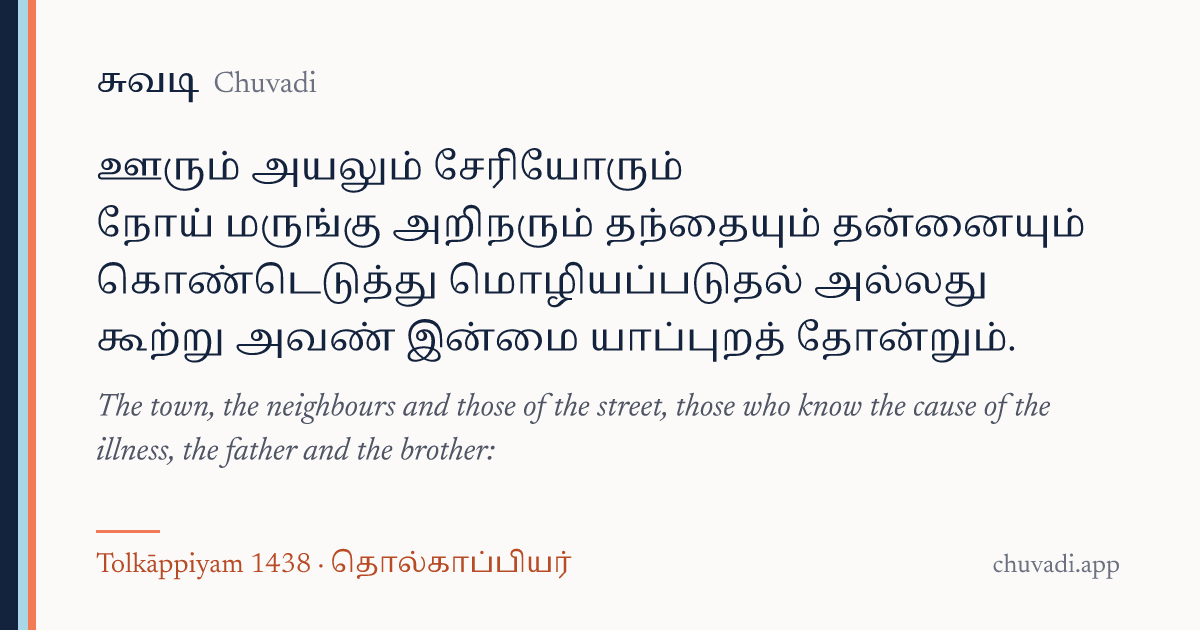
- The town, the neighbours and those of the street,
- those who know the cause of the illness, the father and the brother:
- except for being taken up and spoken of by others,
- their having no speech there appears as the rule.
What the poem says
Some persons belong to the world of the poem but never speak in it. The townspeople (whose gossip, alar, is a theme), the neighbours, those of the street, the diviners who claim to know the cause of the heroine's lovesickness, her father and her brother: they are only mentioned by other speakers, reported or quoted, but have no utterance of their own.
So in an akam poem one hears of the father's anger or the town's gossip only through the words of the heroine, the friend or the foster-mother. The commentators read the "illness" as the heroine's pining, which the family mistakes for possession and calls in the vēlaṉ (diviner) to treat.