



தொல்காப்பியம் 484 · சொல் 1.1
பாடல் · The poem
Tap a word to see where else it occurs.
பொருள் · Meaning in TamilAI
மக்களைக் குறிப்பதை உயர்திணை என்றும், மக்கள் அல்லாத பிற எல்லாவற்றையும் அஃறிணை என்றும் முன்னோர் கூறுவர். சொற்கள் எல்லாம் இந்த இரண்டு திணைகளுள் ஒன்றைச் சார்ந்தே ஒலிக்கின்றன. எடுத்துக்காட்டாக, அவன் வந்தான் என்பது உயர்திணை; அது வந்தது என்பது அஃறிணை.
இளம்பூரணர்
இளம்பூரணர் மக்கட்சுட்டு என்பதை மக்கள் என்று கருதப்படும் பொருள் எனக் கொண்டு, அதனை உயர்திணை என்றும், மக்கள் அல்லாத உயிருள்ளனவும் உயிரில்லனவும் ஆகிய பிற எல்லாவற்றையும் அஃறிணை என்றும் பொருள் கொள்வார். சொற்கள் எல்லாம் இவ்விரு திணைகளுள் ஒன்றைப் பற்றியே ஒலிக்கும் என்பது இவர் விளக்கம்.
நச்சினார்க்கினியர்
நச்சினார்க்கினியரும் மக்கட்சுட்டு என்பதை மக்கள் என்னும் கருத்துப் பொருள் எனக் கொண்டு, தேவரும் நரகரும் அக்கருத்துள் அடங்கி உயர்திணை ஆவர் என்று விரித்துக் கூறுவார். அல பிற என்பதற்கு மக்கள் அல்லாத எல்லாப் பொருளும் எனப் பொருள் கொள்வதில் இவர் இளம்பூரணரோடு ஒத்துச் செல்வார்.
மக்கள் என்பதில் தேவர், நரகர் முதலியோரும் அடங்குவர் என்று உரையாசிரியர்கள் விளக்குவர். சொல்லதிகாரத்தின் முதல் நூற்பா இது; பின்வரும் இயைபு விதிகள் எல்லாம் இந்தப் பிரிவையே அடிப்படையாகக் கொள்கின்றன.
ஆங்கிலம் · English translationAI
Translation
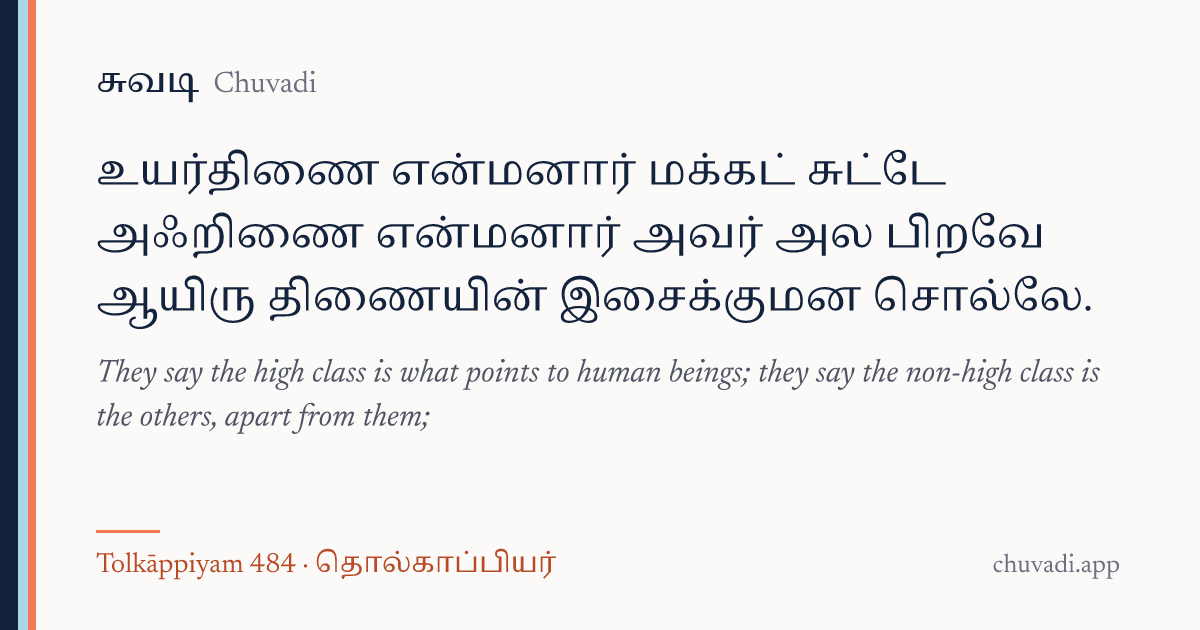
- They say the high class is what points to human beings;
- they say the non-high class is the others, apart from them;
- words sound forth in those two classes.
What the poem says
The Collatikāram, the book on words, opens by dividing everything that words refer to into two tiṇai ("classes"). Uyartiṇai, the "high class", is human beings; aḵṟiṇai, the "non-high class", is everything else: animals, plants, objects, places. Every word in the language, the last line says, belongs to one of these two classes, and much of the grammar of agreement depends on it: a verb such as "he came" or "it came" must match the class of its subject.
The commentators note that "makkaḷ", human beings, is taken broadly enough to include gods and beings of the other worlds, which are spoken of like humans. The phrase "they say" (eṉmaṉār) is the usual way the text presents its rules as the teaching of earlier scholars.