



தொல்காப்பியம் 490 · சொல் 1.7
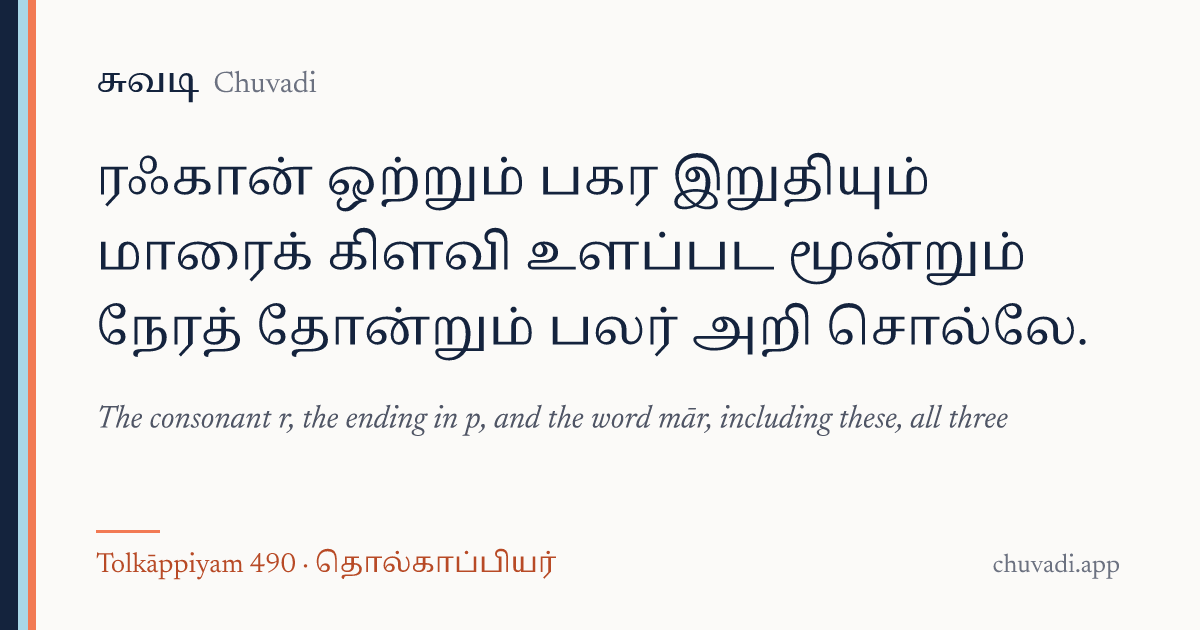
பாடல் · The poem
Tap a word to see where else it occurs.
பொருள் · Meaning in TamilAI
ரகர மெய், பகர இறுதி, மார் என்னும் சொல் ஆகிய மூன்றும் பலர்பாலை அறிவிக்கும் சொற்களாகப் பொருந்தித் தோன்றும். எடுத்துக்காட்டு: வந்தார், உண்ப, உண்மார்.
இளம்பூரணர்
இளம்பூரணர் ரகர மெய், பகர இறுதி, மார் என்னும் சொல் ஆகிய மூன்றையும் பலர்பாலை அறிவிக்கும் ஈறுகளாகக் கொண்டு, இவை வினைச்சொல்லின் இறுதியில் நின்று பலர்பாலைக் காட்டும் எனப் பொருள் கொள்வார்.
நச்சினார்க்கினியர்
நச்சினார்க்கினியரும் இம்மூன்றையும் பலர்பால் ஈறுகளாகவே கொள்வார். பகர ஈறும் மார் ஈறும் எவ்வெவ் வினை வடிவுகளில் வரும் என்பதை இவர் எவ்வளவு விரிக்கிறார் என்பது இங்கு சரிபார்க்கப்படவில்லை.
பகர ஈறும் மார் ஈறும் பழைய செய்யுள் வழக்கில் மிகுதியாக வருவன. பகர ஈறு எந்தெந்த வினை வடிவுகளில் வரும் என்பதை உரையாசிரியர்கள் விரிவாக ஆராய்வர்; அதன் நுட்பங்கள் எனக்கு உறுதியாகத் தெரியவில்லை.
ஆங்கிலம் · English translationAI
Translation
- The consonant r, the ending in p,
- and the word mār, including these, all three
- appear fittingly as the word that shows many persons.
What the poem says
The epicene (human) plural has three markers: a final r (vantār "they came", avar "they"), a final p, found in older future forms such as uṇpa "they will eat", and the suffix mār, as in uṇmār or vantaṉmār. Of these, mār is called a whole "word" (kiḷavi) rather than a letter.
The p-ending and mār are rare in later Tamil and survive mostly in old poetry. The commentators give examples of each from verse; I have kept to the type forms. Exactly which verb forms the p-ending covers was discussed by the commentators, and I am not confident of the details.