



தொல்காப்பியம் 491 · சொல் 1.8
பாடல் · The poem
Tap a word to see where else it occurs.
பொருள் · Meaning in TamilAI
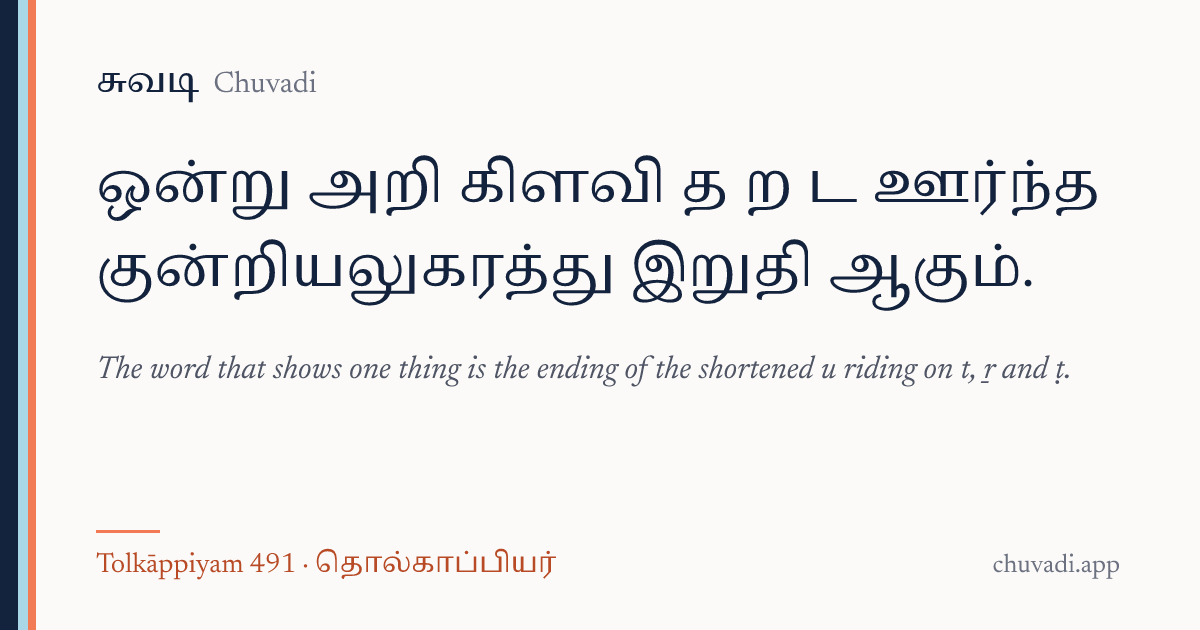
தகரம், றகரம், டகரம் ஆகிய மெய்களின் மேல் ஏறி வரும் குற்றியலுகரத்தை இறுதியாக உடைய சொல் ஒன்றன்பாலை அறிவிக்கும். அதாவது து, று, டு என முடியும் சொற்கள். எடுத்துக்காட்டு: வந்தது, கூயிற்று.
இளம்பூரணர்
இளம்பூரணர் தகர, றகர, டகர மெய்களின்மேல் ஏறி வரும் குற்றியலுகரத்தை இறுதியாக உடைய சொல் ஒன்றன்பாலை அறிவிக்கும் எனப் பொருள் கொள்வார்; அதாவது து, று, டு என்னும் மூன்று ஈறுகள்.
நச்சினார்க்கினியர்
நச்சினார்க்கினியரும் இம்மூன்று ஈறுகளையும் ஒன்றன்பால் ஈறுகளாகவே கொண்டு, அவை தெரிநிலை வினையிலும் குறிப்பு வினையிலும் வரும் என்று விளக்குவார்.
இம்மூன்று மெய்களும் ஒன்றன்பால் வினைமுற்றுகளிலும் குறிப்பு வினைகளிலும் வரும் வடிவுகளை அடக்குவன என்று உரையாசிரியர்கள் விளக்குவர். டுகர ஈறு பழஞ்செய்யுளில் மிகுதியாகக் காணப்படுவது.
ஆங்கிலம் · English translationAI
Translation
- The word that shows one thing is the ending
- of the shortened u riding on t, ṟ and ṭ.
What the poem says
The non-high-class singular is marked by a final kuṟṟiyalukaram ("shortened u", the short u that ends many Tamil words) carried on the consonants t, ṟ or ṭ: the syllables tu, ṟu, ṭu at the end. Examples: vantatu "it came", kūyiṟṟu "it called". The word "riding on" (ūrnta) is the usual image for a vowel mounted on a consonant.
The commentators explain the three consonants as covering the different verb and appellative forms of the neuter singular. The ṭu forms are uncommon outside early poetry.