



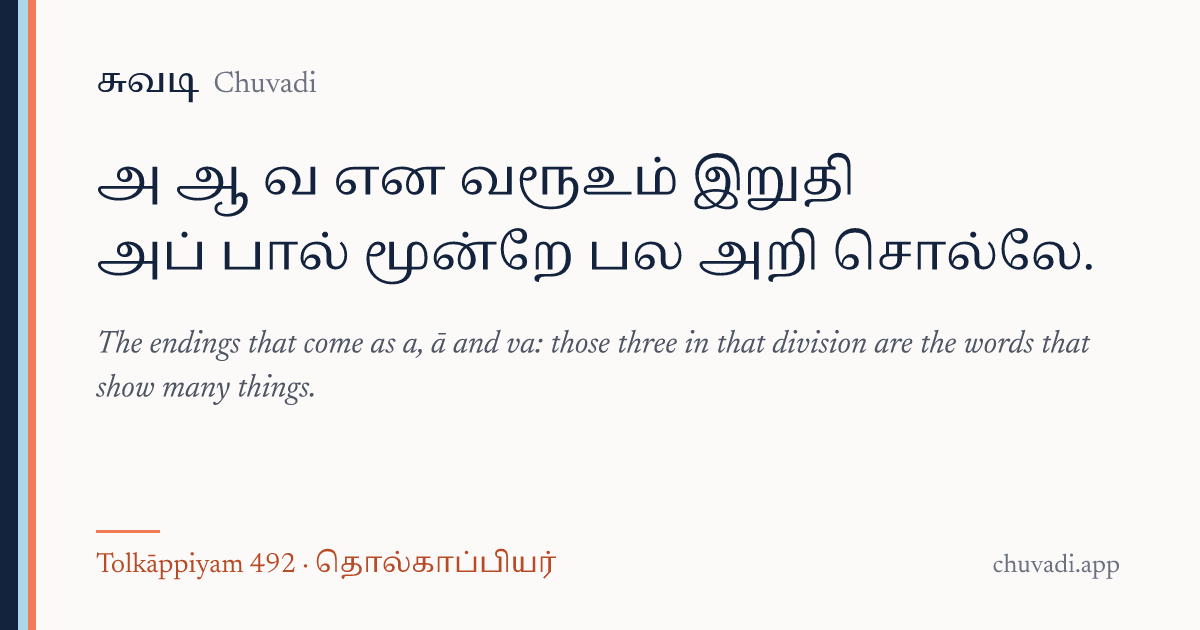
தொல்காப்பியம் 492 · சொல் 1.9
பாடல் · The poem
Tap a word to see where else it occurs.
பொருள் · Meaning in TamilAI
அ, ஆ, வ என வரும் மூன்று இறுதிகளும் அஃறிணையின் பலவின்பாலை அறிவிக்கும் சொற்களாகும். எடுத்துக்காட்டு: வந்தன, உண்ணா, உண்குவ.
இளம்பூரணர்
இளம்பூரணர் அ, ஆ, வ என்னும் மூன்று இறுதிகளும் அஃறிணைப் பலவின்பாலை அறிவிக்கும் எனப் பொருள் கொள்வார்.
நச்சினார்க்கினியர்
நச்சினார்க்கினியரும் இதே பொருளைக் கொள்வார்; ஆகார ஈறு எதிர்மறை வினையில் வருவது என்பதை இவரும் குறிப்பிடுவார். வகர ஈற்றுக்கு இவர் தரும் எடுத்துக்காட்டுகள் இங்கு சரிபார்க்கப்படவில்லை.
ஆகார ஈறு எதிர்மறையிலும், வகர ஈறு பழைய எதிர்கால வடிவுகளிலும் வருவன என்று உரையாசிரியர்கள் விளக்குவர். இவற்றின் விரிவு வினையியலில் சொல்லப்படும்.
ஆங்கிலம் · English translationAI
Translation
- The endings that come as a, ā and va:
- those three in that division are the words that show many things.
What the poem says
The non-high-class plural has three endings: a (vantaṉa "they came", of things or animals), ā, found in the negative (uṇṇā "they do not eat"), and va, found in older future forms such as uṇkuva "they (things) will eat". "In that division" (appāl) means within the aḵṟiṇai plural.
The commentators match each ending to the tense or form in which it appears, as above. The va forms are archaic and the details of their use belong to the chapter on verbs.