



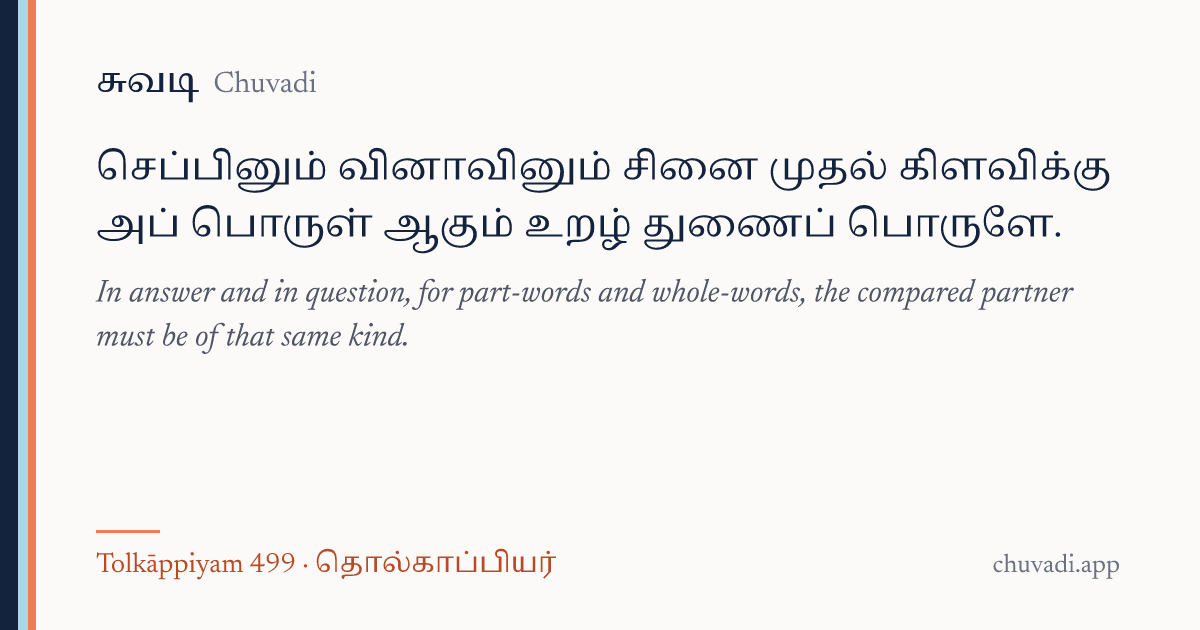
தொல்காப்பியம் 499 · சொல் 1.16
பாடல் · The poem
Tap a word to see where else it occurs.
பொருள் · Meaning in TamilAI
வினாவிலும் விடையிலும் சினைச்சொல்லையோ முதற்சொல்லையோ ஒப்பிடும்போது, ஒப்பிடப்படும் மற்றொன்றும் அதே வகையினதாக இருக்க வேண்டும். சினையைச் சினையோடும் முதலை முதலோடும் ஒப்பிட வேண்டும். இவள் கண் அவள் கண்ணை ஒக்குமோ என்று கேட்க வேண்டும்; இவள் கண் அவளை ஒக்குமோ என்று கேட்பது வழு.
இளம்பூரணர்
இளம்பூரணர் வினாவிலும் விடையிலும் சினைச்சொல்லை ஒப்பிடும்போது சினையோடும், முதற்சொல்லை ஒப்பிடும்போது முதலோடுமே ஒப்பிட வேண்டும் எனப் பொருள் கொள்வார்; உறழ்துணைப் பொருள் என்பதை ஒப்பிட்டு நிறுத்தப்படும் மற்றொரு பொருள் எனக் கொள்வார்.
நச்சினார்க்கினியர்
நச்சினார்க்கினியரும் இதே பொருளைக் கொண்டு, சினையைச் சினையோடும் முதலை முதலோடும் உறழ்வதே முறை, மாறி உறழ்வது வழு என்று விளக்குவார்.
சினை என்பது உறுப்பு, முதல் என்பது அவ்வுறுப்பை உடைய பொருள் என்று உரையாசிரியர்கள் விளக்குவர். உறழ்துணை என்பது ஒப்பிட்டு நிறுத்தப்படும் மற்றொரு பொருள்.
ஆங்கிலம் · English translationAI
Translation
- In answer and in question, for part-words and whole-words,
- the compared partner must be of that same kind.
What the poem says
When a part (ciṉai, such as an eye or a hand) or a whole (mutal, the person or thing to which parts belong) is compared in a question or answer, the thing it is compared with must be of the same kind: part with part, whole with whole. One asks "is her eye like this one's eye?", not "is her eye like this one?"; one compares a person with a person.
"Uṟaḻ tuṇai" means the partner set against it in comparison. The commentators illustrate with paired questions of this kind, showing that mixing a part with a whole produces a faulty comparison.