



தொல்காப்பியம் 500 · சொல் 1.17
பாடல் · The poem
Tap a word to see where else it occurs.
பொருள் · Meaning in TamilAI
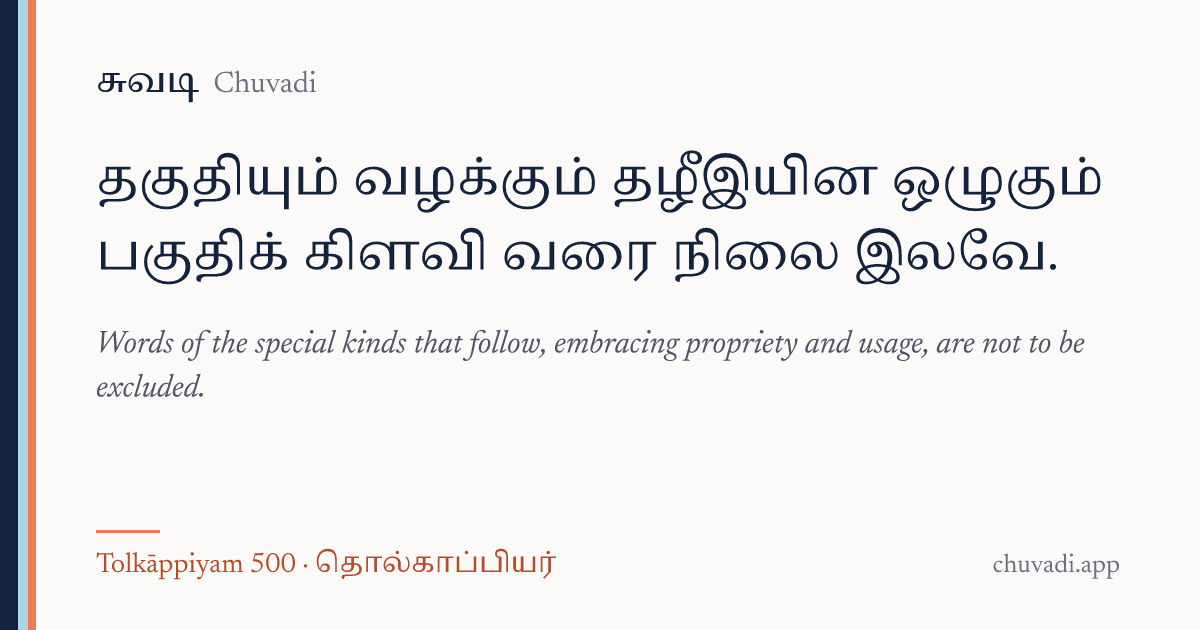
தகுதியையும் வழக்கையும் தழுவி நடக்கும் சில வகைச் சொற்கள் உண்டு; அவை நேர்ப்பொருளில் இருந்து விலகினாலும் விலக்கப்பட வேண்டியவை அல்ல. செத்தார் என்பதற்குத் துஞ்சினார் என்று சொல்லுதல், இழிவான சொல்லை மறைத்து நாகரிகமாகச் சொல்லுதல், ஒரு குழுவினர் தமக்குள் வழங்கும் குறிச்சொற்கள் ஆகியவை தகுதியால் வருவன. நெடுங்காலம் வழங்கி வடிவு மாறிய சொற்கள் வழக்கால் வருவன.
இளம்பூரணர்
இளம்பூரணர் தகுதி என்பதைக் கூறத் தகாததை நாகரிகமாக மாற்றிக் கூறும் வழக்கு என்றும், வழக்கு என்பதை நெடுங்காலம் வழங்கி நிலைபெற்ற சொல்வழக்கு என்றும் கொண்டு, இவ்விரண்டும் தழுவி வரும் சொற்கள் விலக்கப்படா எனப் பொருள் கொள்வார்.
நச்சினார்க்கினியர்
நச்சினார்க்கினியர் தகுதியை மங்கலம், இடக்கரடக்கல், குழூஉக்குறி எனப் பகுத்து விளக்கும் உரையாசிரியர் மரபைப் பின்பற்றுவார்; இவ்வகைச் சொற்கள் நேர்ப்பொருளிலிருந்து விலகினாலும் வழு ஆகா என்பது இவர் கருத்து.
தகுதியை மங்கலம், இடக்கரடக்கல், குழூஉக்குறி எனப் பிரித்து விளக்குவது உரையாசிரியர்களின் முறை; நூற்பா தகுதி, வழக்கு என்னும் இரண்டையே பெயரிட்டுக் கூறுகிறது.
ஆங்கிலம் · English translationAI
Translation
- Words of the special kinds that follow, embracing propriety and usage,
- are not to be excluded.
What the poem says
Certain words depart from literal correctness, but because they follow takuti ("propriety, fitness") or vaḻakku ("established usage") they are not faults. The commentators explain propriety as covering auspicious substitutes (saying "he has slept" or "he has gone to the world above" for "he died"), polite avoidance of coarse words (saying one is going "to wash one's feet" for relieving oneself), and the private code words of a group, such as the special terms used by traders or goldsmiths. Usage covers forms reshaped by long use, such as contracted place names.
"Pakutik kiḷavi", "words of a portion", is read as "words of these particular classes". The classification of these types into maṅkalam, iṭakkaraṭakkal and kuḻūukkuṟi is how the commentators organise them; the nūṟpā itself names only the two principles.