



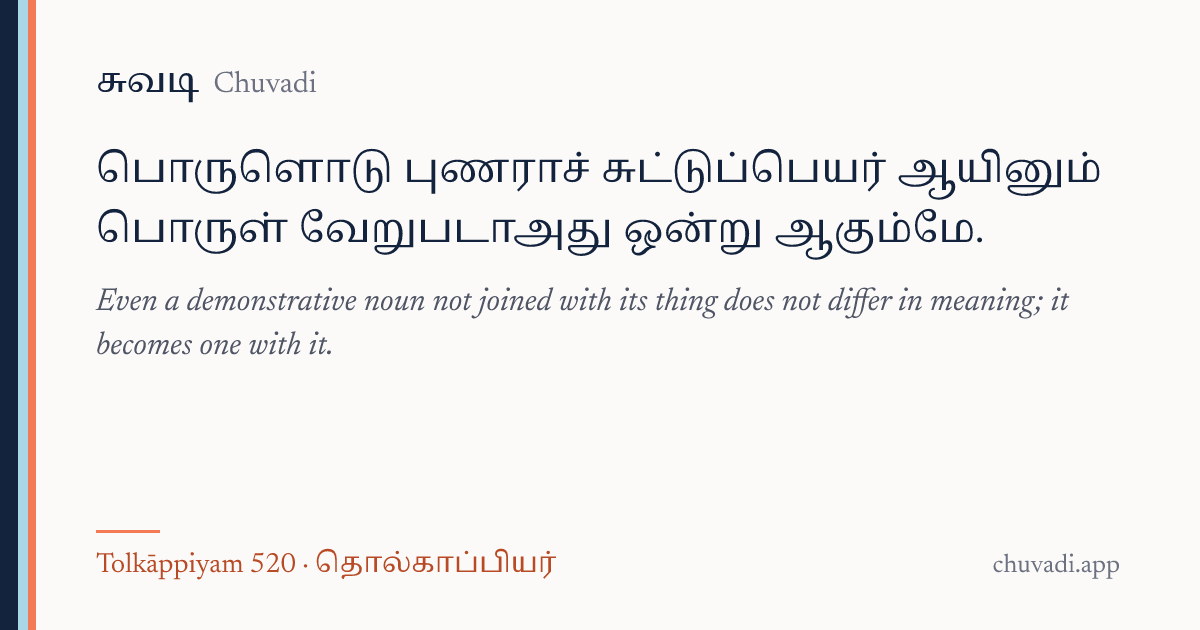
தொல்காப்பியம் 520 · சொல் 1.37
பாடல் · The poem
Tap a word to see where else it occurs.
பொருள் · Meaning in TamilAI
தான் சுட்டும் பொருளோடு நேரடியாகச் சேராமல் வரும் சுட்டுப்பெயரானாலும், அது பொருளில் வேறுபடாமல் அப்பொருளோடு ஒன்றாகவே நிற்கும். சாத்தன் வந்தான்; அவனுக்குச் சோறு கொடு என்பதில் அவன் என்பது சாத்தனையே குறிக்கிறது.
இளம்பூரணர்
இளம்பூரணர் தான் சுட்டும் பொருளோடு நேரே சேராமல் தனித்து வரும் சுட்டுப்பெயரும், பொருளால் வேறுபடாமல் அப்பொருளோடு ஒன்றாகவே நிற்கும் எனப் பொருள் கொள்வார்.
நச்சினார்க்கினியர்
நச்சினார்க்கினியரும் இதே பொருளைக் கொண்டு, முன் கூறிய இயற்பெயரையே பின் வரும் சுட்டுப்பெயர் குறிக்கும் என்று விளக்குவார்.
பொருளொடு புணரா என்பதை நேரடியாக இணையாத என உரையாசிரியர்கள் பொருள் கொள்வர். சுட்டுப்பெயரும் இயற்பெயரும் வரும் முறையை அடுத்த நூற்பா கூறுகிறது.
ஆங்கிலம் · English translationAI
Translation
- Even a demonstrative noun not joined with its thing
- does not differ in meaning; it becomes one with it.
What the poem says
A cuṭṭuppeyar ("demonstrative pronoun", such as avaṉ "he", atu "it") may stand without its noun being stated in the same phrase, yet it still refers to the same thing and does not create a separate referent. In "Cāttaṉ came; give him rice", "him" is one with Cāttaṉ.
The commentators read "poruḷoṭu puṇarā" as "not combined directly with the thing it refers to", and the rule as saying the pronoun and its noun are one in meaning. The next nūṟpā fixes their order.