



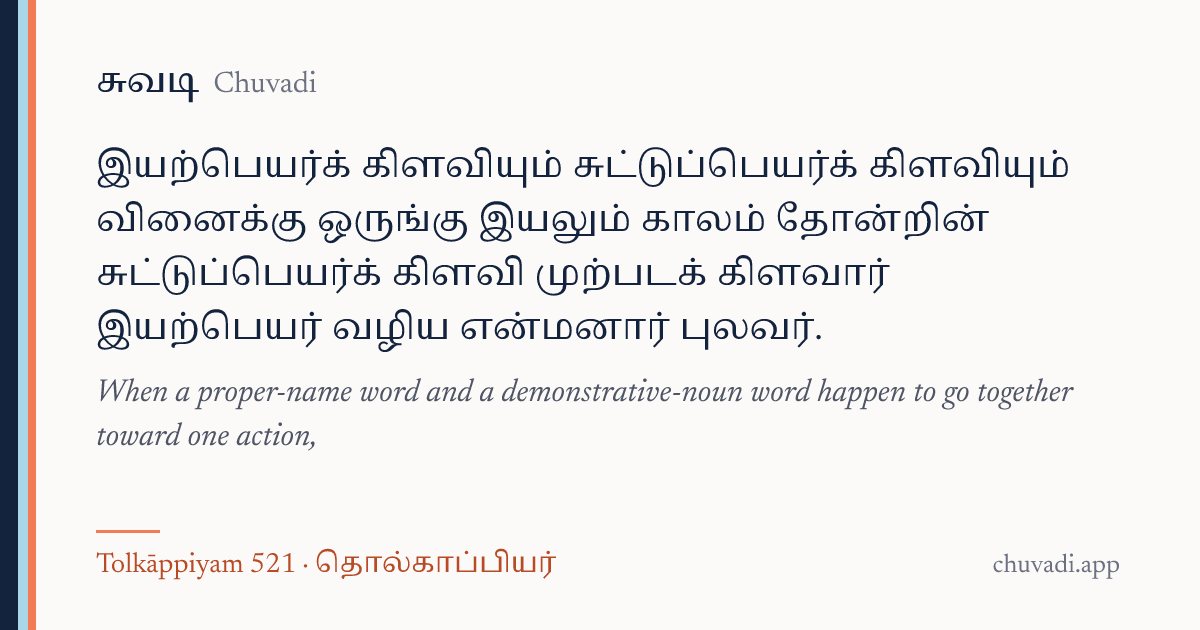
தொல்காப்பியம் 521 · சொல் 1.38
பாடல் · The poem
Tap a word to see where else it occurs.
பொருள் · Meaning in TamilAI
இயற்பெயரும் சுட்டுப்பெயரும் ஒரு செயலோடு சேர்ந்து வரும்போது, சுட்டுப்பெயரை முன்னால் கூறமாட்டார்; அது இயற்பெயருக்குப் பின்னால் வரும் என்று புலவர் கூறுவர். சாத்தன் வந்தான்; அவனுக்குச் சோறு கொடு என்று கூறுவது முறை.
இளம்பூரணர்
இளம்பூரணர் இயற்பெயரும் சுட்டுப்பெயரும் ஒரு வினைக்குச் சேர்ந்து வரும்போது சுட்டுப்பெயரை முன்னர்க் கூறாது இயற்பெயரின் பின்னரே கூற வேண்டும் எனப் பொருள் கொள்வார்.
நச்சினார்க்கினியர்
நச்சினார்க்கினியரும் இதே பொருளைக் கொண்டு, சுட்டுப்பெயர் முன்னர்க் கூறப்பட்டதைச் சுட்டுவதே இயல்பு என்பதனால் இம்முறை என்று விளக்குவார்.
சுட்டுப்பெயர் முன்னர்க் கூறப்பட்ட ஒன்றைச் சுட்டுவதே இயல்பு என்பதே இவ்விதியின் அடிப்படை. செய்யுளில் இம்முறை மாறலாம் என்பதை அடுத்த நூற்பா கூறுகிறது.
ஆங்கிலம் · English translationAI
Translation
- When a proper-name word and a demonstrative-noun word
- happen to go together toward one action,
- they do not state the demonstrative word first;
- it comes after the proper name, the scholars say.
What the poem says
When a personal name (iyaṟpeyar, "proper name") and a pronoun referring to the same person both occur in connection with an action, the pronoun must not come first. One says "Cāttaṉ came; give him rice", not "he came; give Cāttaṉ rice" meaning the same person. The name comes first and the pronoun follows it.
This is a rule of reference: a pronoun normally points back to something already named. The next nūṟpā allows the reverse in verse.