



தொல்காப்பியம் 562 · சொல் 2.17
பாடல் · The poem
Tap a word to see where else it occurs.
பொருள் · Meaning in TamilAI
நிறம், வடிவு, அளவு, சுவை, தண்மை, வெம்மை, அச்சம், நன்மை, தீமை, சிறுமை, பெருமை, வன்மை, மென்மை, கடுமை, முதுமை, இளமை, சிறத்தல், இழித்தல், புதுமை, பழமை, ஆக்கம், இன்மை, உடைமை, நாற்றம், தீர்தல், பன்மை, சின்மை, பற்றுவிடுதல் என்பவையும், இவை போன்ற பிறவும் ஐந்தாம் வேற்றுமையைச் சார்ந்தவை என்று கூறுவர். பெரும்பாலானவை ஒப்புமைப் பொருளன; தீர்தல், பற்றுவிடுதல் ஆகியவை நீங்கல் பொருளன. ஊரின் தீர்ந்தான் என வரும்.
இளம்பூரணர்
இளம்பூரணர் வண்ணம் முதலாகப் பற்றுவிடுதல் ஈறாக எண்ணப்பட்டவையும், அவை போன்ற பிறவும் ஐந்தாம் வேற்றுமைக்கு உரியவை எனப் பொருள் கொள்வார்; இவற்றுள் பெரும்பாலானவை ஒப்புப் பொருளும், தீர்தல், பற்றுவிடுதல் போன்றவை நீங்கல் பொருளும் தருவன.
நச்சினார்க்கினியர்
நச்சினார்க்கினியர் உரையும் இந்நூற்பாவுக்கு மேற்கூறிய பொருளையே தருவதாகக் கொள்ளலாம்; பற்று விடுதல் என்பதை ஒன்றாகக் கொள்கிறாரா இரண்டாகப் பிரிக்கிறாரா என்பதும் இவர் தரும் எடுத்துக்காட்டுகளும் இங்கு சரிபார்க்கப்படவில்லை.
பற்றுவிடுதல் என்பதை ஒரே பொருளாகக் கொள்வதைப் பின்பற்றியுள்ளேன்; பற்று, விடுதல் என இரண்டாகப் பிரிக்கலாமா என்பது பற்றி வேறுபாடு உண்டு.
ஆங்கிலம் · English translationAI
Translation
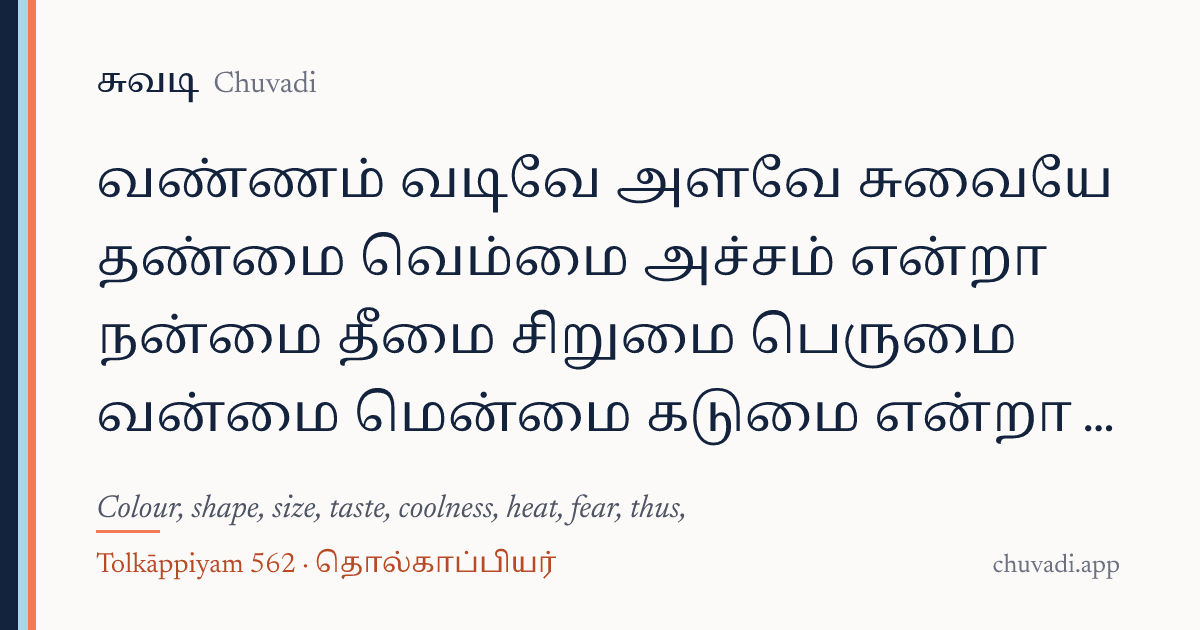
- Colour, shape, size, taste,
- coolness, heat, fear, thus,
- goodness, badness, smallness, greatness,
- hardness, softness, harshness, thus,
- age, youth, excelling, falling short,
- newness, oldness, increase, thus,
- lack, possession, smell, departing,
- many, few, release from attachment, thus,
- and others like them belong to its division, they say.
What the poem says
The meanings in which the fifth case appears. Most are qualities used in comparison: colour (kākkaiyiṉ karitu "blacker than the crow"), shape, size, taste, coolness, heat, fear, goodness, badness, smallness, greatness, hardness, softness, harshness, age, youth, excelling, being inferior, newness, oldness, increase, lack, possession, smell, many and few. Two others express separation: tīrtal "departing from" (ūriṉ tīrntāṉ "he left the town") and paṟṟu viṭutal "giving up attachment to".
The commentators take the last item as a single meaning, "letting go of attachment", and treat it with tīrtal as the source of the ablative's "from" sense. Whether paṟṟu and viṭutal are one item or two has been discussed; I follow the single reading.