



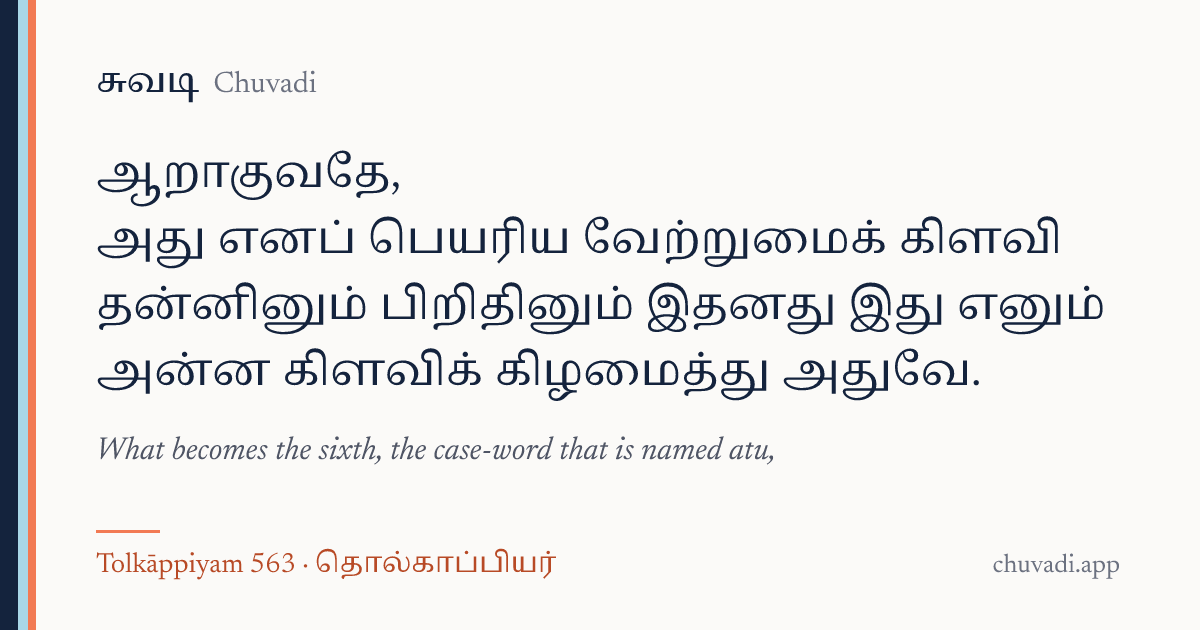
தொல்காப்பியம் 563 · சொல் 2.18
பாடல் · The poem
Tap a word to see where else it occurs.
பொருள் · Meaning in TamilAI
ஆறாம் வேற்றுமை எனப்படும் அது என்னும் உருபு, தன்னோடு ஒன்றியதாயினும் தன்னின் வேறானதாயினும், இதனுடையது இது என்னும் கிழமைப் பொருளில் வரும். சாத்தனது கை என்பது தற்கிழமை; சாத்தனது ஆடை என்பது பிறிதின்கிழமை.
இளம்பூரணர்
இளம்பூரணர் அது என்னும் ஆறாம் வேற்றுமை, தன்னோடு ஒன்றிய பொருளாயினும் தன்னின் வேறான பொருளாயினும், இதனது இது என்னும் கிழமைப் பொருளில் வரும் எனப் பொருள் கொள்வார்.
நச்சினார்க்கினியர்
நச்சினார்க்கினியரும் தன்னினும் பிறிதினும் என்பதைத் தற்கிழமை, பிறிதின்கிழமை எனக் கொண்டு இதே பொருளை விளக்குவார்.
தன்னினும் பிறிதினும் என்பதைத் தற்கிழமை, பிறிதின்கிழமை என உரையாசிரியர்கள் விளக்குவர். மின்பதிப்பில் பெயரிய என்பதற்குப் பெரிய என்று பிழையாக இருந்தது; இங்கே திருத்தப்பட்டுள்ளது.
ஆங்கிலம் · English translationAI
Translation
- What becomes the sixth,
- the case-word that is named atu,
- in what is its own and in what is other, saying 'this is of this',
- it has the relation of such words.
What the poem says
The sixth case, marked by atu (the genitive), expresses kiḻamai, the relation of belonging: "this is of this". The relation may be with what is part of the thing itself (taṟkiḻamai, "own relation", as Cāttaṉatu kai "Cāttaṉ's hand") or with what is separate from it (piṟitiṉ kiḻamai, "other relation", as Cāttaṉatu āṭai "Cāttaṉ's garment").
The distinction between taṟkiḻamai and piṟitiṉ kiḻamai is how the commentators explain taṉṉiṉum piṟitiṉum. The etext printed periya in the second line, a slip for peyariya "named", as in the parallel nūṟpās; it is corrected here.