



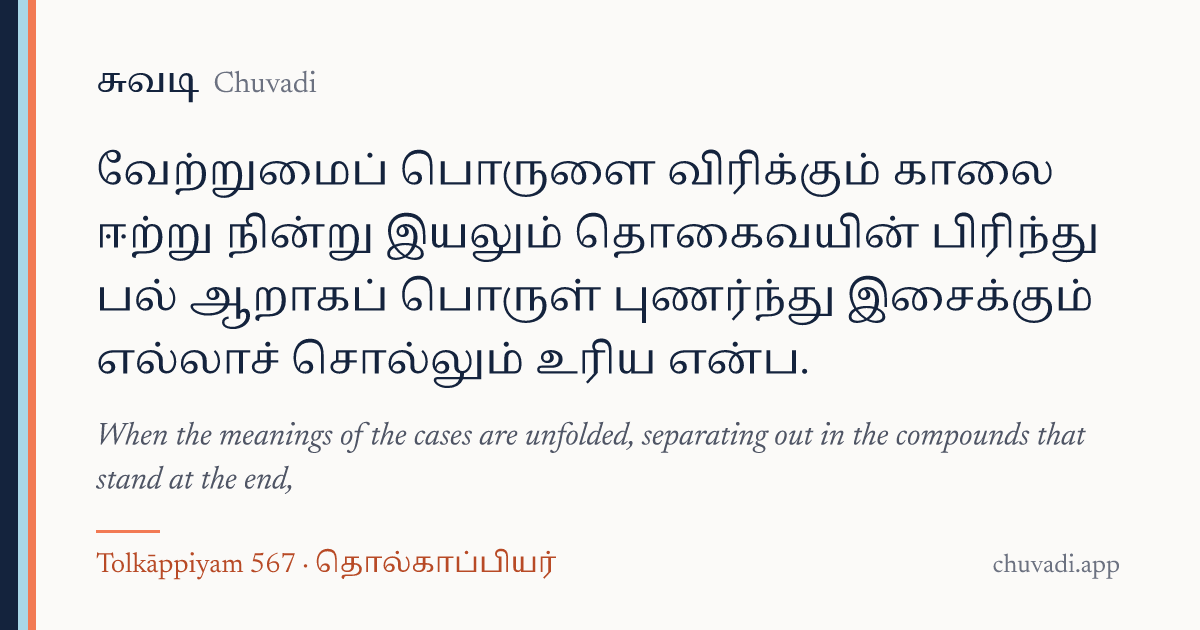
தொல்காப்பியம் 567 · சொல் 2.22
பாடல் · The poem
Tap a word to see where else it occurs.
பொருள் · Meaning in TamilAI
வேற்றுமைப் பொருளை விரித்துக் கூறும்போது, உருபு மறைந்து நிற்கும் தொகைகளில் அவை பிரிந்து, பல வகையாகப் பொருளோடு சேர்ந்து ஒலிக்கும்; எல்லாச் சொற்களும் அவ்வாறு வருவதற்கு உரியவை என்று கூறுவர். நிலம் கடந்தான் என்ற தொடரை விரித்தால் நிலத்தைக் கடந்தான் என இரண்டாம் வேற்றுமை தோன்றுகிறது.
இளம்பூரணர்
இளம்பூரணர் உரையும் இந்நூற்பாவுக்கு மேற்கூறிய பொதுப் பொருளையே தருவதாகக் கொள்ளலாம்; ஈற்று நின்று இயலும் என்பதற்கு இவர் கொள்ளும் பொருள் இங்கு சரிபார்க்கப்படவில்லை.
நச்சினார்க்கினியர்
நச்சினார்க்கினியர் உரையும் இந்நூற்பாவுக்கு மேற்கூறிய பொதுப் பொருளையே தருவதாகக் கொள்ளலாம்; இவர் தரும் எடுத்துக்காட்டுகள் இங்கு சரிபார்க்கப்படவில்லை.
இந்நூற்பா மிகச் சுருக்கமானது; ஈற்று நின்று இயலும் என்பதைத் தொகையில் நிற்கும் ஈறு என்றோ பெயரின் இறுதியில் வரும் உருபு என்றோ பல வகையாகப் பொருள் கொள்வர். இங்கே பொதுப்பொருளை மட்டும் தந்துள்ளேன்.
ஆங்கிலம் · English translationAI
Translation
- When the meanings of the cases are unfolded,
- separating out in the compounds that stand at the end,
- combining with meanings in many ways, they sound;
- all words are fit for this, they say.
What the poem says
A closing rule for the chapter. Case relations are often hidden in compounds (vēṟṟumait tokai, "case compounds"), where the marker is dropped: nilam kaṭantāṉ "he crossed the land" hides the second case of nilattaik kaṭantāṉ. When such compounds are expanded (virittal, "unfolding"), the meaning may be brought out in more than one way, combining with different case senses, and every word can enter into this.
This nūṟpā is compressed, and its second line in particular can be construed in different ways; the commentators differ in how they read "īṟṟu niṉṟu iyalum", whether as the ending that stands in the compound or the case marker at the end of the noun. I give the general sense, which is that unfolding a compound may yield several case readings.