



தொல்காப்பியம் 568 · சொல் 3.1
பாடல் · The poem
Tap a word to see where else it occurs.
பொருள் · Meaning in TamilAI
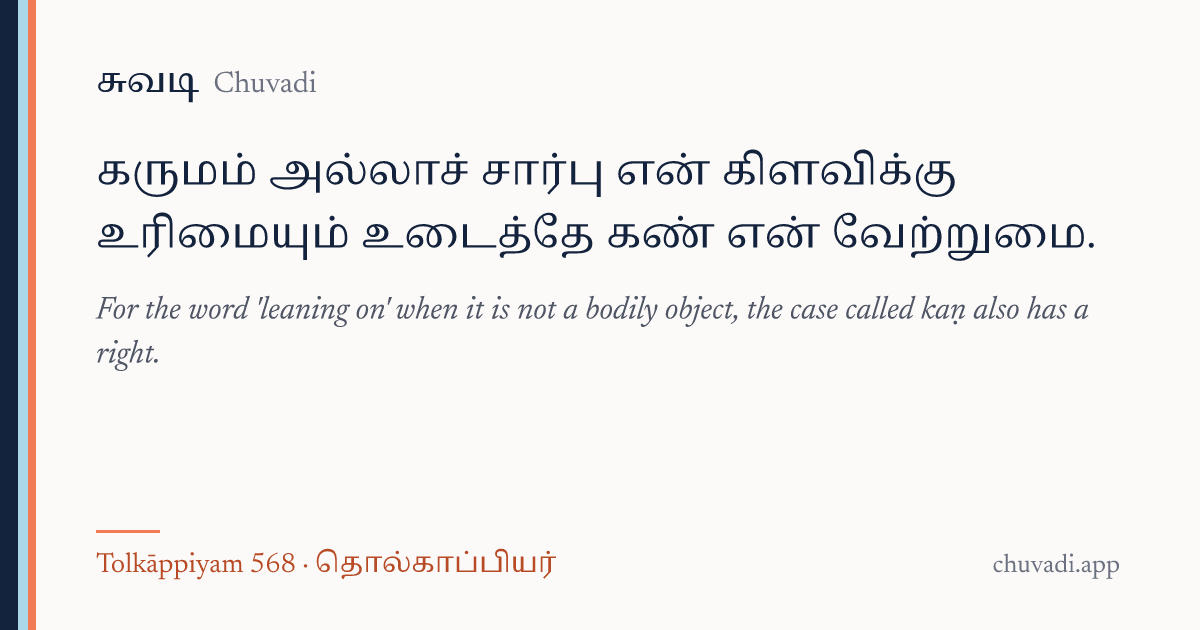
சார்தல் என்னும் சொல், உடலால் ஒரு பொருளைச் சார்ந்து நிற்கும் செயலைக் குறிக்காதபோது, இரண்டாம் வேற்றுமை உருபான ஐ மட்டுமன்றி ஏழாம் வேற்றுமை உருபான கண்ணையும் ஏற்கும் உரிமை உடையது. தூணைச் சார்ந்தான் என்பதில் ஐ மட்டுமே பொருந்தும்; அரசனைச் சார்ந்தான், அரசன்கண் சார்ந்தான் என்னும் இரண்டும் பொருந்தும்.
இளம்பூரணர்
இளம்பூரணர் உடலால் சார்தல் அல்லாத சார்பு என்னும் சொல்லுக்கு ஐ உருபேயன்றிக் கண் உருபும் உரியது எனப் பொருள் கொள்வார்; உம்மையால் ஐ தன் உரிமையை இழக்கவில்லை என்பது இவர் கருத்து.
நச்சினார்க்கினியர்
நச்சினார்க்கினியரும் இதனை வேற்றுமை மயக்கத்தின் முதல் விதியாகக் கொண்டு, கருமம் அல்லாச் சார்பு என்பதை மனத்தால் ஒருவரைச் சார்ந்து நிற்றல் போன்றது என்று விளக்குவார் எனக் கொள்ளலாம்; இவர் தரும் எடுத்துக்காட்டுகள் இங்கு சரிபார்க்கப்படவில்லை.
இது வேற்றுமை மயக்கம் கூறும் இயலின் முதல் நூற்பா. உம்மையால் ஐ தன் உரிமையை இழக்கவில்லை, கண்ணும் கூடுதலாக வரும் என்று உரையாசிரியர்கள் கொள்கின்றனர்.
ஆங்கிலம் · English translationAI
Translation
- For the word 'leaning on' when it is not a bodily object,
- the case called kaṇ also has a right.
What the poem says
This opens the Vēṟṟumaimayaṅkiyal, "the chapter on the mixing of cases" (vēṟṟumai "case", mayakkam "mixing, overlap"), which lists places where one case ending can stand for, or alongside, another. The verb cār- "lean on, rely on" normally takes the second case (accusative, ai). When the leaning is not a physical act on an object (karumam), the seventh case, the locative kaṇ, is also allowed.
The commentators contrast a man leaning bodily against a pillar, where only the accusative is right, with someone relying on a king, where both "he relied on the king" with ai and "he relied in the king" with kaṇ are acceptable. The word urimaiyum "also the right" shows that the second case keeps its claim and the seventh is added to it.