



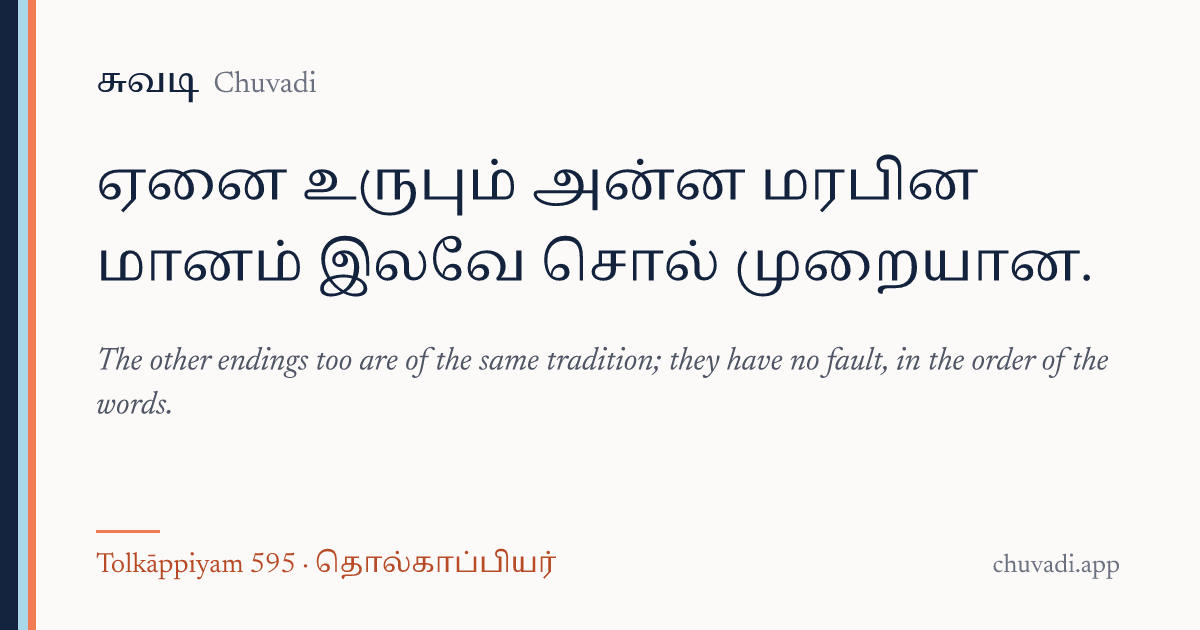
தொல்காப்பியம் 595 · சொல் 3.28
பாடல் · The poem
Tap a word to see where else it occurs.
பொருள் · Meaning in TamilAI
நான்காம் வேற்றுமைக்குச் சொன்னது போலவே, பிற வேற்றுமை உருபுகளும் அதே மரபில் விரிந்த பொருள்களில் வருவது உண்டு; சொல்முறையில் அவற்றால் குற்றம் இல்லை.
இளம்பூரணர்
இளம்பூரணர் பிற வேற்றுமை உருபுகளும் அதே மரபில் விரிந்த பொருள்களில் வருவது சொல்முறையில் குற்றம் ஆகாது எனப் பொருள் கொள்வார்; மானம் என்பதைக் குற்றம் எனக் கொள்வார்.
நச்சினார்க்கினியர்
நச்சினார்க்கினியரும் இதனை முந்தைய நூற்பாவின் கருத்தை எல்லா வேற்றுமைகளுக்கும் விரிப்பதாகக் கொள்வார்; இவர் தரும் எடுத்துக்காட்டுகள் இங்கு சரிபார்க்கப்படவில்லை.
மானம் என்பது குற்றம். முன்னைய நூற்பாவின் கருத்தை எல்லா வேற்றுமைகளுக்கும் விரித்துக் கூறுவதாக இதனைக் கொள்ளலாம்.
ஆங்கிலம் · English translationAI
Translation
- The other endings too are of the same tradition;
- they have no fault, in the order of the words.
What the poem says
Just as the dative has the extended uses listed above, the other case endings also have customary extended uses of the same kind. Māṉam means "fault, defect": using them in such ways is no error.
The commentators take this as a general extension of the previous nūṟpā to all the cases, leaving the details to usage.