



தொல்காப்பியம் 596 · சொல் 3.29
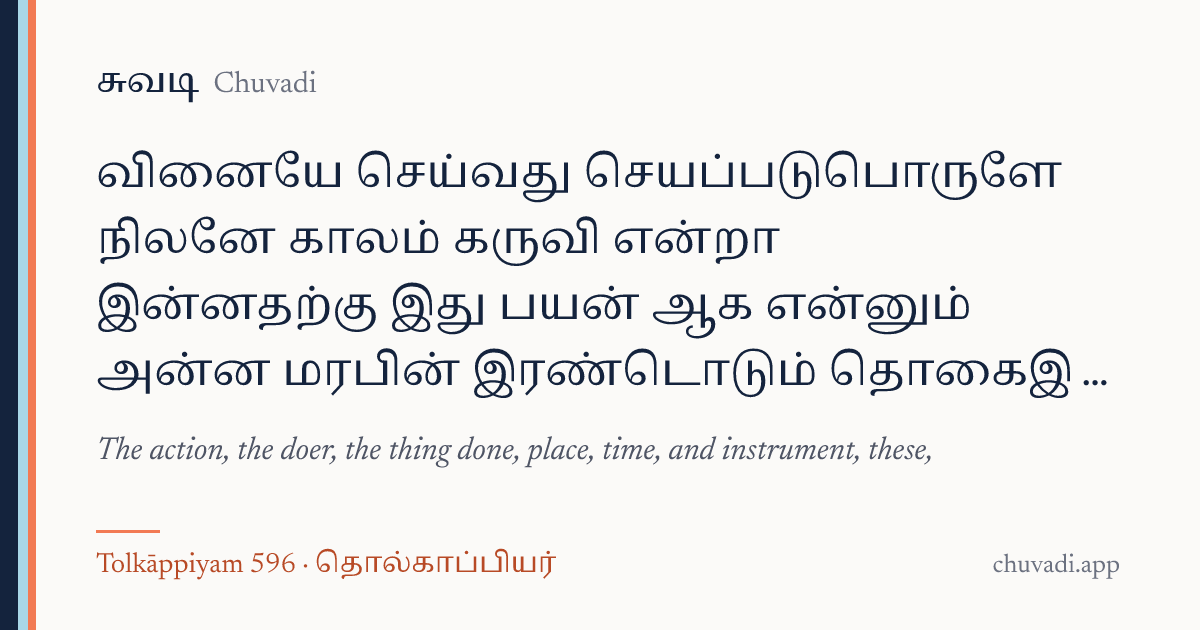
பாடல் · The poem
Tap a word to see where else it occurs.
பொருள் · Meaning in TamilAI
ஒரு தொழில் நிகழ்வதற்கு எட்டு அடிப்படைகள் உண்டு: வினை, செய்பவன், செயப்படுபொருள், இடம், காலம், கருவி, யாருக்காகச் செய்யப்படுகிறது என்பது, இதன் பயன் என்ன என்பது. இவ்விரண்டையும் சேர்த்து எட்டு என்று கூறுவர்.
இளம்பூரணர்
இளம்பூரணர் வினை, செய்வது, செயப்படுபொருள், நிலம், காலம், கருவி, இன்னதற்கு, இது பயன் என்னும் எட்டும் தொழில் நிகழ்வதற்கு அடிப்படையாகும் எனப் பொருள் கொள்வார்.
நச்சினார்க்கினியர்
நச்சினார்க்கினியரும் இவ்வெட்டையே கொண்டு, வேற்றுமை உருபுகள் பெரும்பாலும் இவற்றைக் குறிக்கின்றன என்று இயைத்துக் காட்டுவார் எனக் கொள்ளலாம்; இவர் உரையின் விவரம் இங்கு சரிபார்க்கப்படவில்லை.
வேற்றுமை உருபுகள் பெரும்பாலும் இந்தக் காரணிகளையே குறிக்கின்றன. வடமொழி இலக்கணத்தின் காரகக் கொள்கையோடு இது ஒத்தது என்றாலும், தொல்காப்பியம் தன் முறையில் இதனைக் கூறுகிறது.
ஆங்கிலம் · English translationAI
Translation
- The action, the doer, the thing done,
- place, time, and instrument, these,
- and 'for whom', and 'this as the result', so named,
- joined with these two of the same kind,
- are those eight, they say, the bases of action.
What the poem says
Every action rests on eight factors (toḻil mutaṉilai "the grounds of an action"): the act itself (viṉai), the agent (ceyvatu), the object (ceyappaṭu poruḷ), the place (nilam), the time (kālam), the instrument (karuvi), the one for whom it is done (iṉṉataṟku, the beneficiary), and the result or purpose (itu payaṉ āka).
This analysis underlies the case system: most of these factors are what the case endings mark. In "the potter makes a pot with clay in his yard in the morning for a customer, for a fee", each factor appears. The list is close to the kārakas of Sanskrit grammar, though Tolkāppiyam frames it in its own terms.