



தொல்காப்பியம் 652 · சொல் 5.13
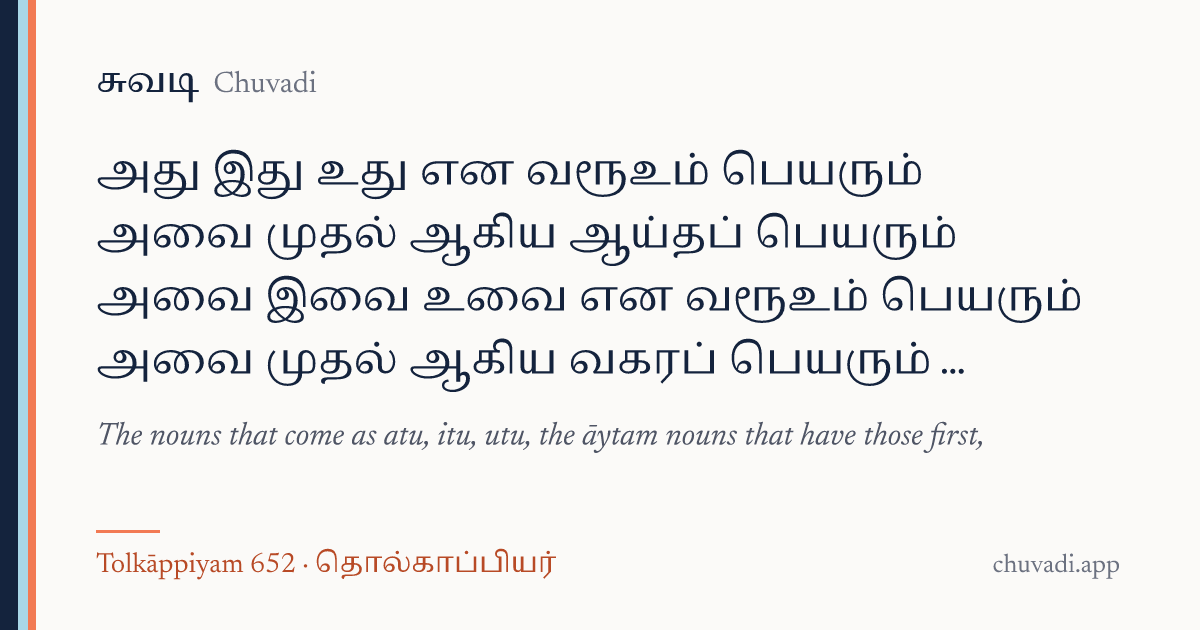
பாடல் · The poem
Tap a word to see where else it occurs.
பொருள் · Meaning in TamilAI
அது, இது, உது; அவற்றை முதலாகக் கொண்ட அஃது, இஃது, உஃது என்னும் ஆய்தப் பெயர்கள்; அவை, இவை, உவை; அவற்றை முதலாகக் கொண்ட அவ், இவ், உவ் என்னும் வகரப் பெயர்கள்; யாது, யா, யாவை ஆகிய பதினைந்தும் பாலறிவிக்கும் அஃறிணைப் பெயர்கள்.
இளம்பூரணர்
இளம்பூரணர் அது, இது, உது முதலிய சுட்டுப்பெயர்களையும், ஆய்தம் பெற்ற வடிவங்களையும், வகர இறுதி வடிவங்களையும், யாது முதலிய வினாப்பெயர்களையும் சேர்த்துப் பதினைந்து அஃறிணைப் பெயர்களாக எண்ணுவார்.
நச்சினார்க்கினியர்
நச்சினார்க்கினியரும் இப்பதினைந்தையும் இதே முறையில் எண்ணி, உயர்திணைக்குக் கூறிய பதினைந்தோடு இவை இணையாக அமைவதைக் கொள்வார்; இவர் தரும் எடுத்துக்காட்டுகள் இங்கு சரிபார்க்கப்படவில்லை.
உயர்திணைக்குக் கூறிய பதினைந்து சுட்டு, வினாப் பெயர்களுக்கு இது நேர் இணையாக அமைகிறது.
ஆங்கிலம் · English translationAI
Translation
- The nouns that come as atu, itu, utu,
- the āytam nouns that have those first,
- the nouns that come as avai, ivai, uvai,
- the v nouns that have those first,
- and the nouns called yātu, yā, yāvai,
- with the three in that place, those fifteen,
- are lower-class nouns that make the gender known.
What the poem says
The fifteen pronouns of the lower class (aḵṟiṇai) that show its genders: atu, itu, utu "that, this, that between" (singular); the forms with āytam (the special sound ḵ), aḵtu, iḵtu, uḵtu; avai, ivai, uvai "those, these" (plural); the v-forms av, iv, uv; and the interrogatives yātu "which (one)", yā and yāvai "which (ones)".
This exactly parallels the fifteen higher-class pronouns of nūṟpā 5.8.