



தொல்காப்பியம் 653 · சொல் 5.14
பாடல் · The poem
Tap a word to see where else it occurs.
பொருள் · Meaning in TamilAI
பல்ல, பல, சில, உள்ள, இல்ல என்னும் பெயர்களும், வினையால் அமைந்த பெயரும், பண்பால் அமைந்த பெயரும், இத்தனை என்று அளவைக் கூறும் எண்ணுப்பெயரும், ஒப்புமையால் அமைந்த பெயரும் ஆகிய ஒன்பதும் முன்னைய பெயர்கள் போலவே பாலறிவிக்கும் அஃறிணைப் பெயர்கள்.
இளம்பூரணர்
இளம்பூரணர் பல்ல, பல, சில, உள்ள, இல்ல ஆகியவற்றோடு வினைப்பெயர், பண்புப்பெயர், எண்ணுக்குறிப்புப் பெயர், ஒப்பின் பெயர் ஆகியவற்றைச் சேர்த்து ஒன்பதாக எண்ணி, இவற்றைப் பாலறிவிக்கும் அஃறிணைப் பெயர்களாகக் கொள்வார்.
நச்சினார்க்கினியர்
நச்சினார்க்கினியர் உரையும் இந்நூற்பாவுக்கு மேற்கூறிய பொருளையே தருவதாகக் கொள்ளலாம்; இவர் தரும் எடுத்துக்காட்டுகள் இங்கு சரிபார்க்கப்படவில்லை.
பட்டியலில் உள்ள ஒவ்வொன்றையும் தனித்தனியே எண்ணி ஒன்பது என்று கொள்வர்.
ஆங்கிலம் · English translationAI
Translation
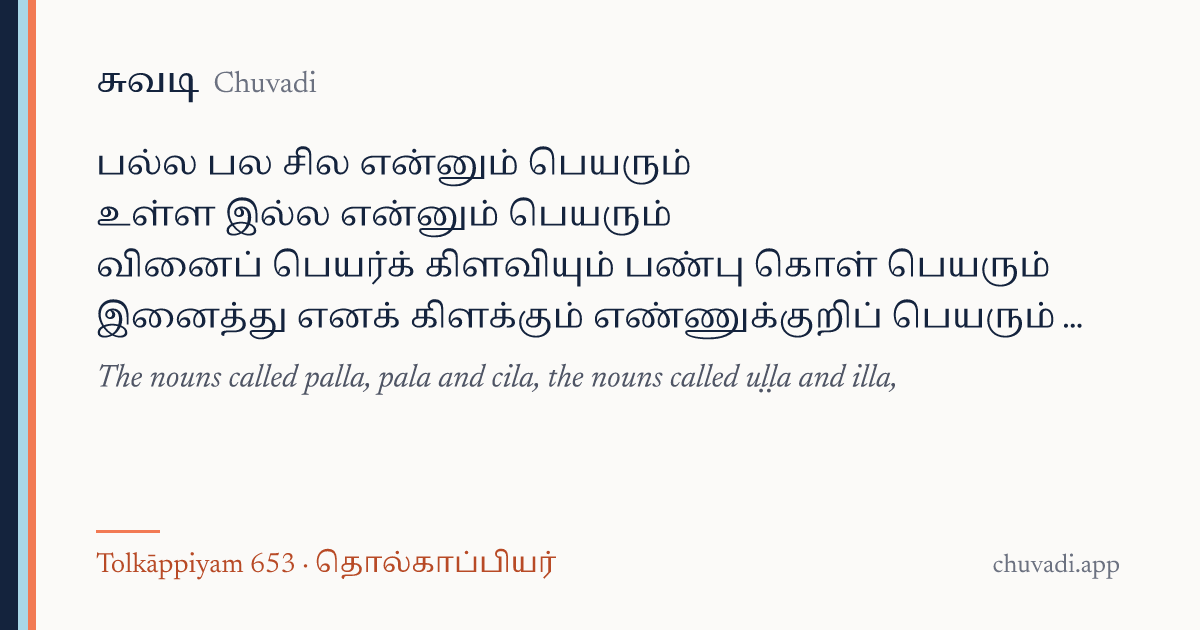
- The nouns called palla, pala and cila,
- the nouns called uḷḷa and illa,
- action noun words and nouns that take a quality,
- the number nouns that state 'so many',
- and the noun forms made from likeness, including these,
- those nine of that gender are of the same kind.
What the poem says
Nine further kinds of lower-class nouns showing gender (here the plural): palla and pala "many", cila "some, few", uḷḷa "those that exist", illa "those that do not", nouns from an action, nouns from a quality, number nouns, and nouns formed from comparison ("those like ...").
The count of nine is reached by taking each listed item separately. All of these refer to non-rational things.