



தொல்காப்பியம் 654 · சொல் 5.15
பாடல் · The poem
Tap a word to see where else it occurs.
பொருள் · Meaning in TamilAI
கள் என்னும் விகுதியோடு சேரும் அஃறிணை இயற்பெயர்கள், அவ்வாறு வரும் இடத்தில், பன்மையை அறிவிக்கும் சொற்களாகும். மரம் என்பது ஒன்றையோ பலவற்றையோ குறிக்கலாம்; மரங்கள் என்பது பன்மையையே குறிக்கும்.
இளம்பூரணர்
இளம்பூரணர் கள் என்னும் விகுதியோடு சேரும் அஃறிணை இயற்பெயர்கள் பன்மையை அறிவிக்கும் சொற்களாகும் எனப் பொருள் கொள்வார்; கொள்வழி உடைய என்பதால் அவ்விகுதி எல்லா இடத்திலும் வர வேண்டியதில்லை என்பதும் பெறப்படும் என்பார்.
நச்சினார்க்கினியர்
நச்சினார்க்கினியரும் கள் விகுதி பெற்ற அஃறிணைப் பெயர் பன்மைப் பொருளே தரும் எனக் கொள்வார்; இவர் தரும் எடுத்துக்காட்டுகள் இங்கு சரிபார்க்கப்படவில்லை.
பழந்தமிழில் கள் விகுதி பெரும்பாலும் அஃறிணைப் பன்மைக்கு உரியது; அது கட்டாயமாக வர வேண்டியதில்லை என்பதைக் கொள்வழி உடைய என்னும் சொற்கள் காட்டுகின்றன.
ஆங்கிலம் · English translationAI
Translation
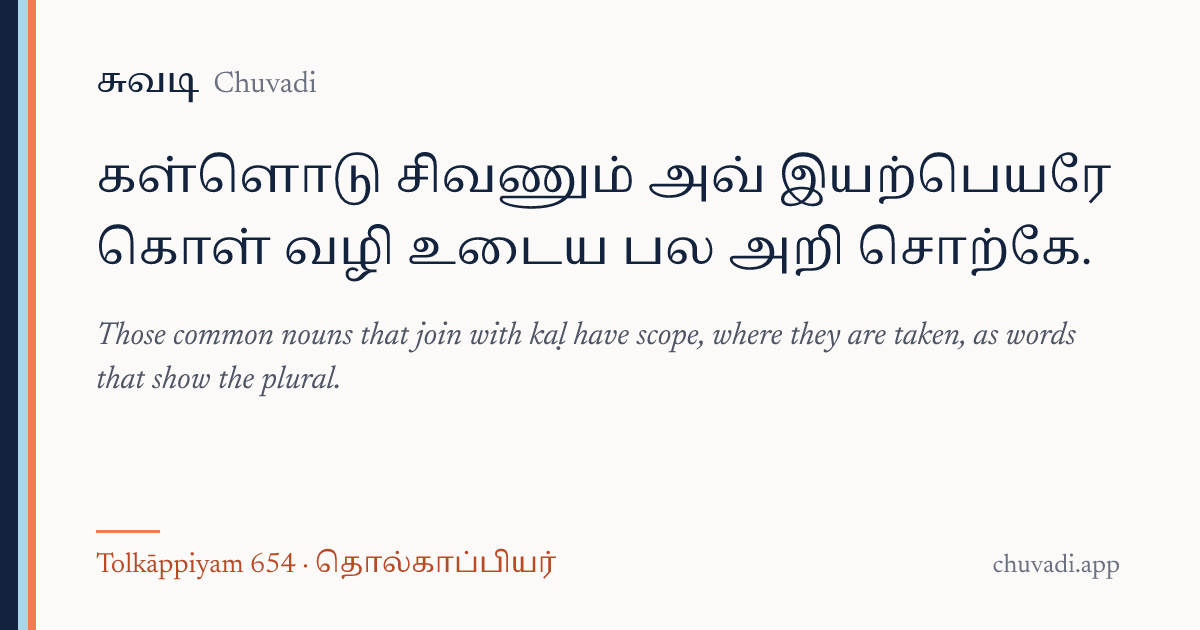
- Those common nouns that join with kaḷ
- have scope, where they are taken, as words that show the plural.
What the poem says
Lower-class common nouns that take the plural suffix -kaḷ thereby become words that show the plural. Maram "tree" by itself may be singular or plural; maraṅkaḷ "trees" is clearly plural.
In the old language -kaḷ was mainly a lower-class plural, and the phrase koḷ vaḻi uṭaiya "have room where taken" suggests that its use was not obligatory.