



தொல்காப்பியம் 685 · சொல் 6.3
பாடல் · The poem
Tap a word to see where else it occurs.
பொருள் · Meaning in TamilAI
இறந்த காலம், நிகழ் காலம், எதிர் காலம் என்னும் அம் மூன்று காலங்களும், வெளிப்படையாகக் காலம் காட்டும் வினைகளுக்கு மட்டுமன்றிக் குறிப்பு வினைகளுக்கும் உண்மையாகவே பொருந்தி நிற்கும். கரியன், நல்லன் போன்ற சொற்களில் கால இடைநிலை இல்லையாயினும், சொல்லப்படும் சூழலால் காலம் புலப்படும்.
இளம்பூரணர்
இளம்பூரணர் இறப்பு, நிகழ்வு, எதிர்வு ஆகிய மூன்று காலமும் தெரிநிலை வினைக்கு மட்டுமன்றிக் குறிப்பு வினைக்கும் உண்மையாகவே பொருந்தும் எனப் பொருள் கொள்வார்; குறிப்பு வினையில் காலம் உருவில் தோன்றாமல் பொருளில் உணரப்படும் என்பது இவர் கருத்து.
நச்சினார்க்கினியர்
நச்சினார்க்கினியரும் மெய்ந்நிலை உடைய என்பதால் குறிப்பு வினையின் காலம் வெறும் பெயரளவினது அன்று, உண்மையானது எனக் கொள்வார்.
குறிப்பு வினையில் காலம் உருவில் தோன்றாது, பொருளில் உணரப்படும் என்பதே உரையாசிரியர்களின் விளக்கம்.
ஆங்கிலம் · English translationAI
Translation
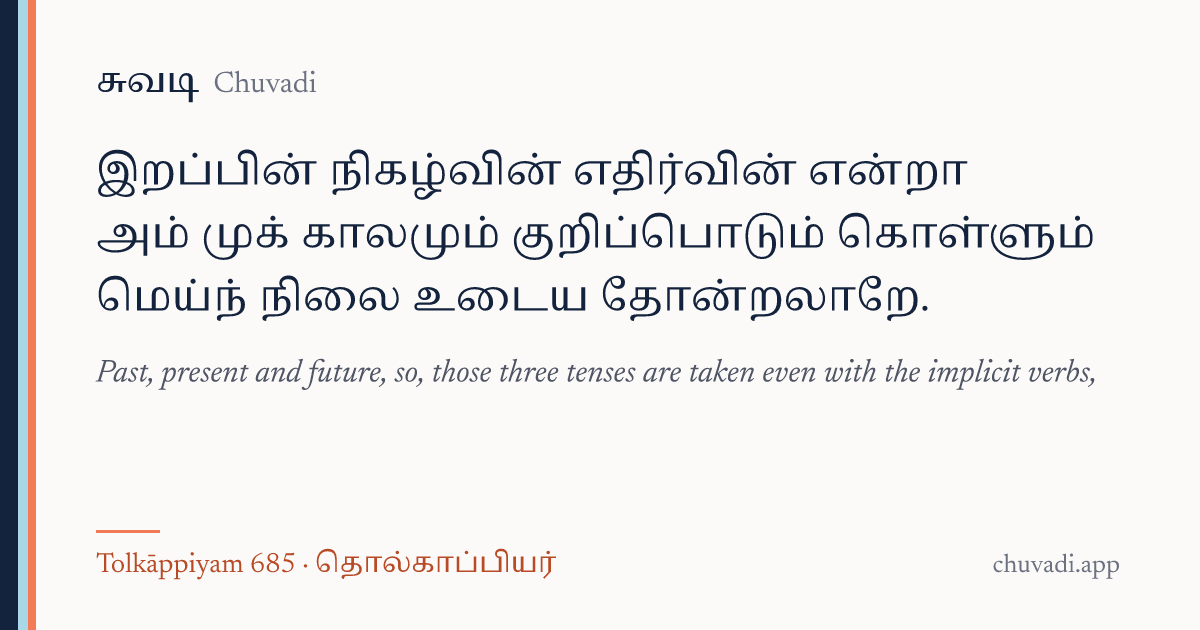
- Past, present and future, so,
- those three tenses are taken even with the implicit verbs,
- having a true standing in the way they appear.
What the poem says
The three tenses are named: the past (iṟappu), the present (nikaḻvu) and the future (etirvu). The rule then adds that these three times belong not only to the explicit verbs that show a tense sign but also to kuṟippu, the implicit or appellative verbs.
An implicit verb such as kariyaṉ "he is dark" or nallaṉ "he is good" carries no tense marker, but the commentators explain that context supplies the time: "he was dark then", "he is dark now". The last line, "having a true standing", is taken to mean that the tense in such verbs is real, not merely nominal, even though it is not visible in the form.