



தொல்காப்பியம் 686 · சொல் 6.4
பாடல் · The poem
Tap a word to see where else it occurs.
பொருள் · Meaning in TamilAI
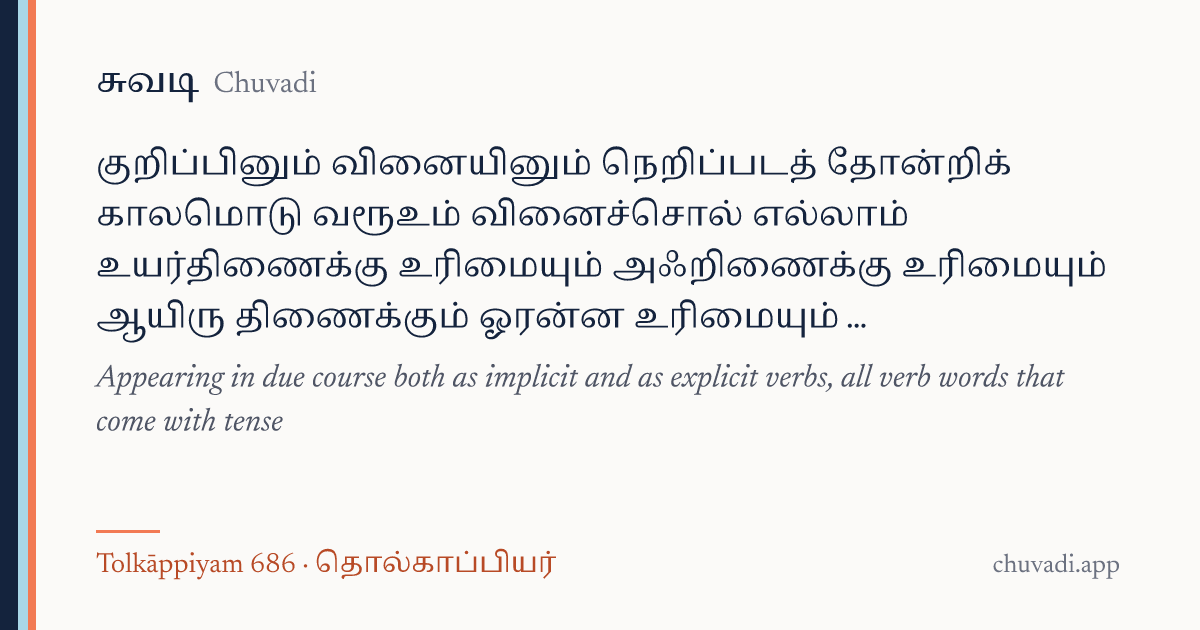
குறிப்பு வினையாகவும் தெரிநிலை வினையாகவும் முறைப்படித் தோன்றிக் காலத்தோடு வரும் வினைச்சொற்கள் எல்லாம் மூன்று வகைப்படும்: உயர்திணைக்கு மட்டும் உரியவை, அஃறிணைக்கு மட்டும் உரியவை, இரு திணைக்கும் பொதுவாக உரியவை. வந்தான் உயர்திணைக்கு உரியது; வந்தது அஃறிணைக்கு உரியது; வந்தாய் இரண்டுக்கும் பொது.
இளம்பூரணர்
இளம்பூரணர் தெரிநிலையாகவும் குறிப்பாகவும் வரும் வினைச்சொற்களை உயர்திணைக்கு உரியவை, அஃறிணைக்கு உரியவை, இருதிணைக்கும் பொதுவானவை என மூன்றாகப் பகுப்பார்; இவ்வியலின் பின்வரும் நூற்பாக்கள் இம்முறையில் அமைவதாகக் கொள்வார்.
நச்சினார்க்கினியர்
நச்சினார்க்கினியரும் இதே மூவகைப் பாகுபாட்டைக் கொள்வார்; பெயர்களுக்குப் பெயரியலில் கூறிய மூவகைப் பிரிவோடு இது இணையாக அமைவதைக் காட்டுவார்.
இந்த மூன்று பிரிவுகளையும் இவ்வியலின் அடுத்த நூற்பாக்கள் வரிசையாக விளக்குகின்றன என்று உரையாசிரியர்கள் காட்டுவர்.
ஆங்கிலம் · English translationAI
Translation
- Appearing in due course both as implicit and as explicit verbs,
- all verb words that come with tense
- have forms proper to the high class, forms proper to the non-high class,
- and forms common alike to both those classes:
- they appear in those three kinds of form.
What the poem says
Here the finite verbs are classified by the class (tiṇai) of their subject. Tamil divides beings into uyartiṇai "the high class" (humans and gods) and aḵṟiṇai "the non-high class" (everything else). Every tensed verb, whether explicit (teriṉilai) or implicit (kuṟippu), falls into one of three groups: forms used only of the high class (vantāṉ "he came"), forms used only of the non-high class (vantatu "it came"), and forms common to both (for example the second-person vantāy "you came", said to a man or to an animal alike).
The rest of the chapter works through these three groups in that order, giving the personal endings of each.