



தொல்காப்பியம் 687 · சொல் 6.5
பாடல் · The poem
Tap a word to see where else it occurs.
பொருள் · Meaning in TamilAI
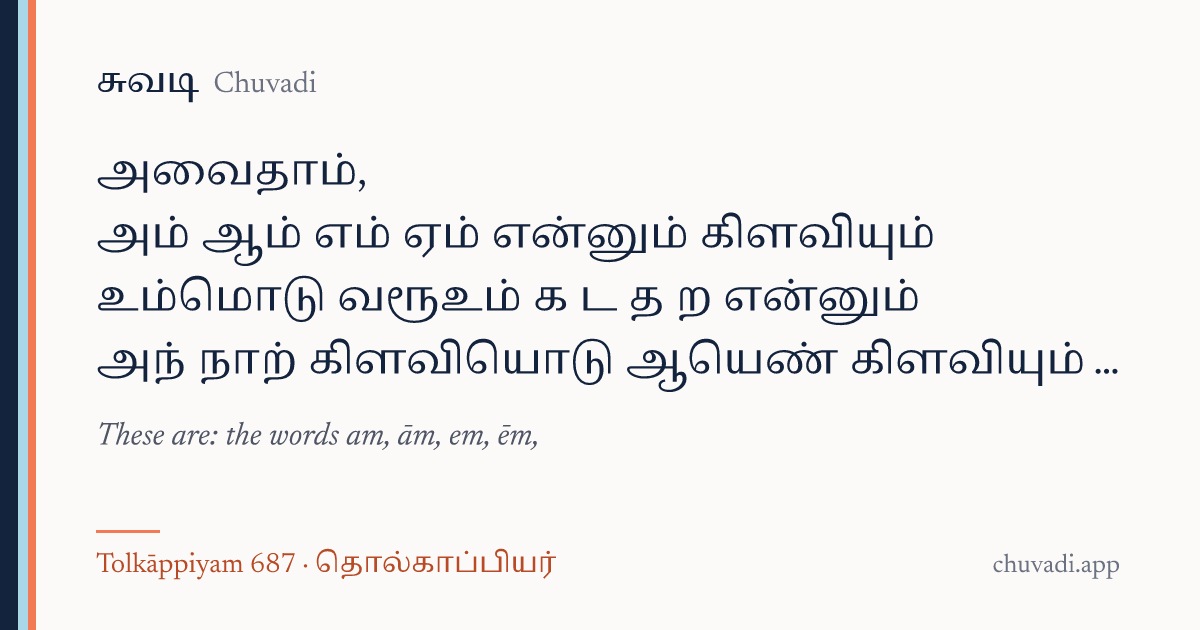
அவை: அம், ஆம், எம், ஏம் என்னும் நான்கு விகுதிகளும், உம் என்பதனோடு சேர்ந்து வரும் கும், டும், தும், றும் என்னும் நான்கு விகுதிகளும் ஆகிய எட்டும் தன்மைப் பன்மை வினைச்சொற்கள் ஆகும். உண்டனம், உண்டாம், உண்டேம், உண்கும், வருதும், சேறும் என்பன எடுத்துக்காட்டுகள்.
இளம்பூரணர்
இளம்பூரணர் அம், ஆம், எம், ஏம், கும், டும், தும், றும் என்னும் எட்டு விகுதிகளையும் தன்மைப் பன்மை வினைமுற்று விகுதிகளாகக் கொள்வார்; இவர் தரும் எடுத்துக்காட்டுகளின் சரியான வடிவங்கள் இங்கு சரிபார்க்கப்படவில்லை.
நச்சினார்க்கினியர்
நச்சினார்க்கினியரும் இவ்வெட்டையும் தன்மைப் பன்மை விகுதிகளாகவே எண்ணுவார்; உம் சேர்ந்த நான்கு விகுதிகளின் காலப் பொருள் பற்றி இவர் கூறும் விளக்கம் இங்கு சரிபார்க்கப்படவில்லை.
கும், டும், தும், றும் என்னும் விகுதிகள் பெரும்பாலும் எதிர்காலப் பொருளில் வரும் என்று உரையாசிரியர்கள் காட்டுவர்; இவற்றுள் பல உரையாசிரியர் காலத்திலேயே செய்யுள் வழக்காக மட்டும் நின்றன.
ஆங்கிலம் · English translationAI
Translation
- These are:
- the words am, ām, em, ēm,
- and the k, ṭ, t, ṟ that come with um,
- making with those four words eight words in all:
- first-person words that speak the plural.
What the poem says
The first group of high-class verbs is the first person plural (taṉmai "first person"). Eight endings are listed: -am, -ām, -em, -ēm, and -kum, -ṭum, -tum, -ṟum (the four consonants k, ṭ, t, ṟ followed by -um).
Examples of the kind the commentators give: uṇṭaṉam, uṇṭām, uṇṭaṉem and uṇṭēm "we ate"; uṇkum "we will eat", uṇṭum, varutum "we will come", cēṟum "we will go". The -kum, -ṭum, -tum, -ṟum set is generally taken to be future in sense. Several of these endings were already archaic by the time of the medieval commentators, who explain them from literary usage.