



தொல்காப்பியம் 688 · சொல் 6.6
பாடல் · The poem
Tap a word to see where else it occurs.
பொருள் · Meaning in TamilAI
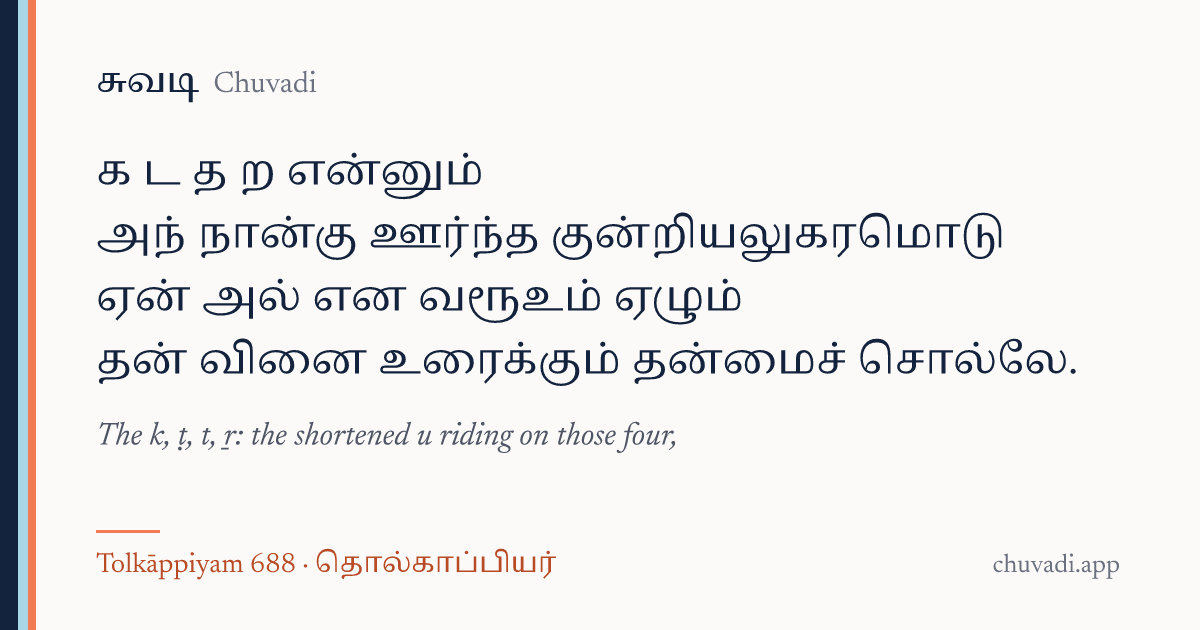
க, ட, த, ற என்னும் நான்கு மெய்களின் மேல் ஏறி வரும் குற்றியலுகரத்தோடு கூடிய கு, டு, து, று என்பனவும், ஏன், அல் என்பனவும் ஆகிய ஏழும் தன் செயலைச் சொல்லும் தன்மை ஒருமை வினைச்சொற்கள். உண்கு, உண்டு, வருது, சேறு, உண்டேன், உண்பல் என்பன இவற்றுக்கு எடுத்துக்காட்டுகள்.
இளம்பூரணர்
இளம்பூரணர் கு, டு, து, று என்னும் குற்றியலுகர இறுதிகளையும் ஏன், அல் என்பனவற்றையும் சேர்த்து ஏழு தன்மை ஒருமை விகுதிகளாகக் கொள்வார்; இவர் தரும் எடுத்துக்காட்டுகள் பழஞ்செய்யுள் வழக்கைச் சார்ந்தவை.
நச்சினார்க்கினியர்
நச்சினார்க்கினியரும் இவ்வேழையும் தன்வினை உரைக்கும் தன்மை ஒருமை விகுதிகளாகவே கொள்வார்; இவர் தரும் எடுத்துக்காட்டுகள் இங்கு சரிபார்க்கப்படவில்லை.
இவற்றுள் ஏன் விகுதி மட்டுமே பிற்கால வழக்கில் நிலைத்தது; ஏனையவை பழஞ்செய்யுள் வழக்கு என்பதை உரையாசிரியர்களின் எடுத்துக்காட்டுகள் காட்டுகின்றன.
ஆங்கிலம் · English translationAI
Translation
- The k, ṭ, t, ṟ:
- the shortened u riding on those four,
- together with ēṉ and al, making seven,
- are first-person words that tell one's own action.
What the poem says
This gives the first person singular, "telling one's own action". There are seven endings: -ku, -ṭu, -tu, -ṟu, where the final u is the kuṟṟiyalukaram "shortened u" riding on the consonants k, ṭ, t, ṟ; and -ēṉ and -al.
Typical forms: uṇku "I will eat", uṇṭu "I ate", varutu "I will come", cēṟu "I will go", uṇṭēṉ "I ate", uṇpal "I will eat". Only -ēṉ survives as the ordinary ending in later Tamil; the others belong to old poetic usage, and the commentators explain them with examples from it.