



தொல்காப்பியம் 700 · சொல் 6.18
பாடல் · The poem
Tap a word to see where else it occurs.
பொருள் · Meaning in TamilAI
பன்மையும் ஒருமையும் பாலும் காட்டி, அதே முறையில் குறிப்பால் காலம் காட்டி வரும் உயர்திணைச் சொற்கள், மேலே சொல்லப்பட்ட விகுதிகளிலிருந்து வேறுபடுவதில்லை. கரியன், கரியள், கரியர், கரியேன், கரியேம் என அவை அதே விகுதிகளை ஏற்கும்.
இளம்பூரணர்
இளம்பூரணர் உயர்திணைக் குறிப்பு வினைகள் தெரிநிலை வினைகளுக்கு மேலே கூறிய விகுதிகளையே ஏற்கும் என்றும், அவற்றுக்குத் தனி விகுதி முறை இல்லை என்றும் பொருள் கொள்வார்.
நச்சினார்க்கினியர்
நச்சினார்க்கினியரும் குறிப்பு வினைக்கும் தெரிநிலை வினைக்கும் விகுதிகளில் வேறுபாடு இல்லை என்றே கொள்வார்.
குறிப்பு வினைக்கும் தெரிநிலை வினைக்கும் உள்ள வேறுபாடு கால இடைநிலை இல்லாமை மட்டுமே; விகுதிகள் ஒன்றே என்பது இதன் கருத்து.
ஆங்கிலம் · English translationAI
Translation
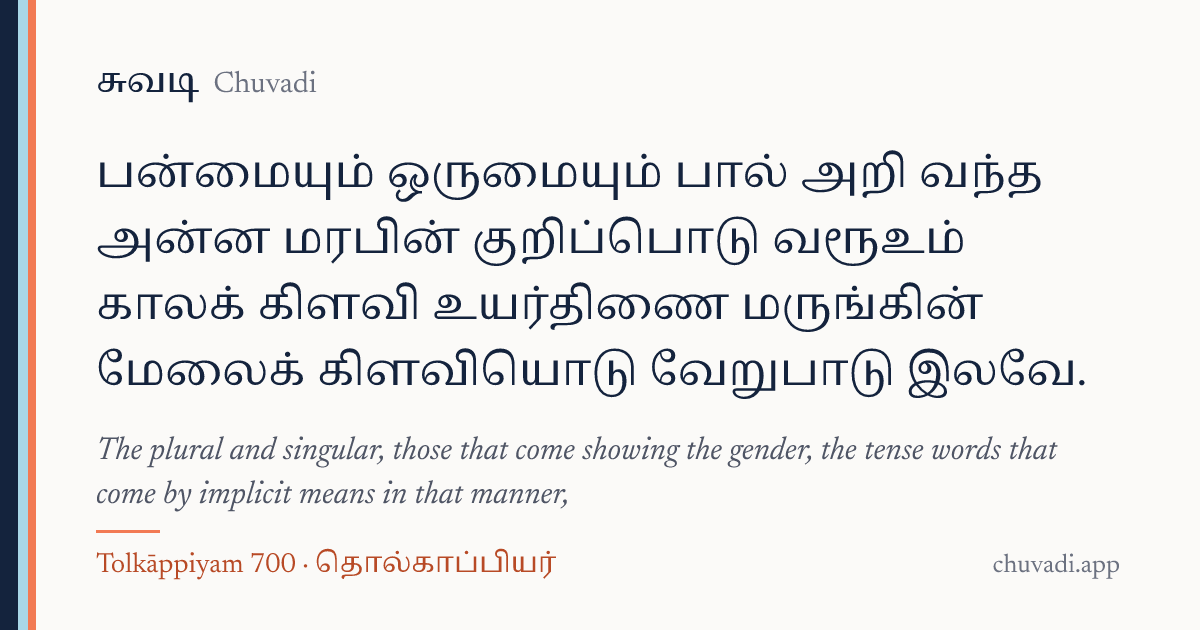
- The plural and singular, those that come showing the gender,
- the tense words that come by implicit means in that manner,
- on the side of the high class,
- do not differ from the words above.
What the poem says
The high-class implicit verbs take the same personal endings, showing number and gender, as the explicit finite verbs listed above. So kariyaṉ, kariyaḷ, kariyar "he, she, they (are) dark" use -aṉ, -aḷ, -ar, and in the first person one finds kariyēṉ "I am dark", kariyēm "we are dark".
In other words, the implicit verb differs from the explicit only in lacking a tense sign; its endings are not a separate system. This is the plain sense the commentators give.