



தொல்காப்பியம் 701 · சொல் 6.19
பாடல் · The poem
Tap a word to see where else it occurs.
பொருள் · Meaning in TamilAI
அ, ஆ, வ என்று வரும் மூன்று விகுதிகளும் அஃறிணைப் பலவின்பால் படர்க்கை வினைக்கு உரியவை. வந்தன, உண்ணா, உண்குவ என்பன எடுத்துக்காட்டுகள்.
இளம்பூரணர்
இளம்பூரணர் அ, ஆ, வ என்னும் மூன்றையும் அஃறிணைப் பலவின்பால் படர்க்கை வினைமுற்று விகுதிகளாகக் கொள்வார்.
நச்சினார்க்கினியர்
நச்சினார்க்கினியரும் இம்மூன்றையும் பலவின்பால் விகுதிகளாகவே கொள்வார்; ஆ விகுதி எதிர்மறைப் பொருளில் வருவதைப் பற்றி இவர் கூறுவது இங்கு சரிபார்க்கப்படவில்லை.
ஆ விகுதி பெரும்பாலும் எதிர்மறைப் பொருளில் வரும்; அஃறிணைக்குப் படர்க்கை வினை மட்டுமே தனியாகக் கூறப்படுகிறது என்று உரையாசிரியர்கள் காட்டுவர்.
ஆங்கிலம் · English translationAI
Translation
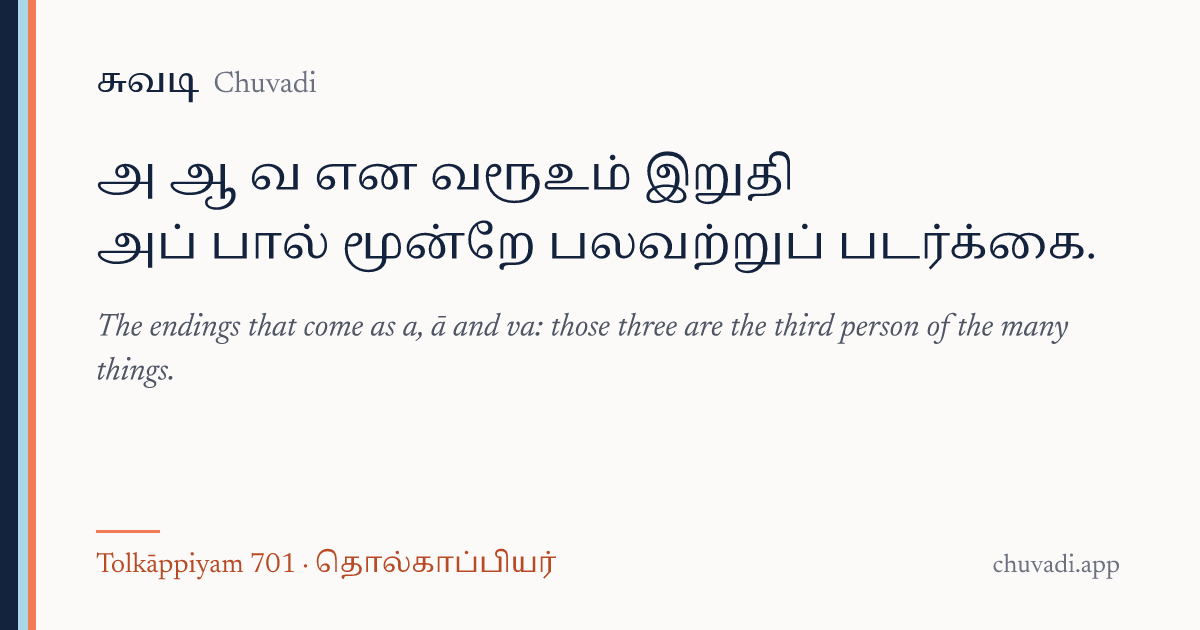
- The endings that come as a, ā and va:
- those three are the third person of the many things.
What the poem says
Now the non-high class (aḵṟiṇai). Its plural third person ("many things") has three endings: -a, -ā and -va. Examples: vantaṉa "they (things) came", uṇṇā "they do not eat, they will not eat", uṇkuva "they will eat".
The -ā ending is usually negative in sense. The commentators note that the non-high class has no first or second person forms of its own, since only the third person is relevant to it in ordinary speech.