



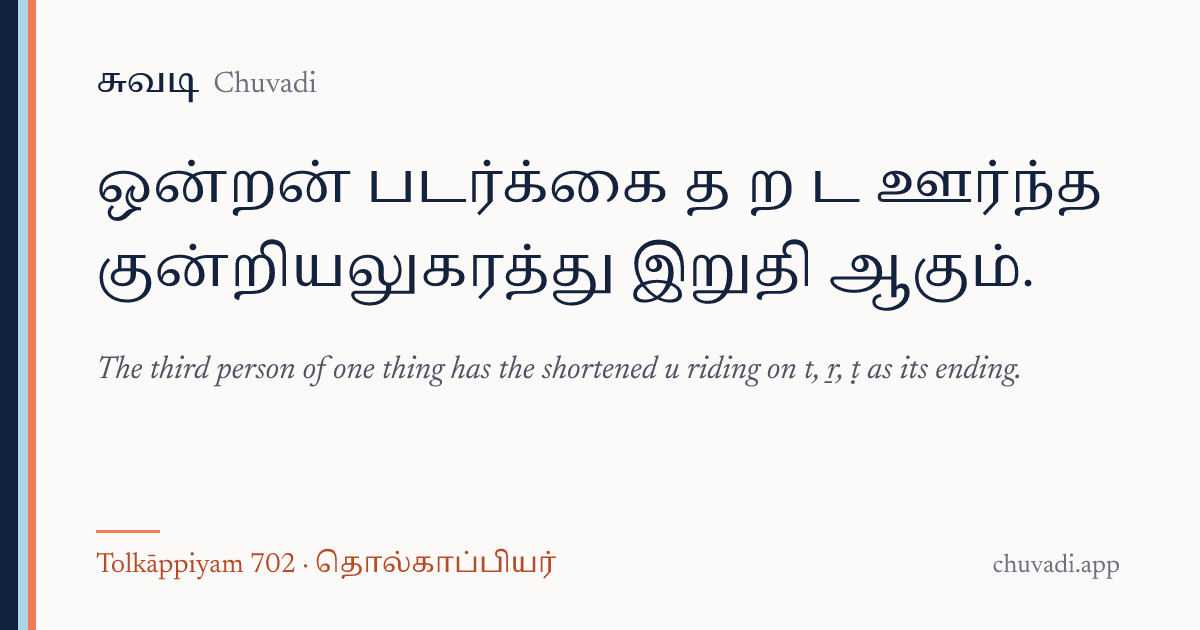
தொல்காப்பியம் 702 · சொல் 6.20
பாடல் · The poem
Tap a word to see where else it occurs.
பொருள் · Meaning in TamilAI
த, ற, ட என்னும் மெய்களின்மேல் ஏறிய குற்றியலுகரமாகிய து, று, டு என்பன அஃறிணை ஒன்றன்பால் படர்க்கை வினையின் இறுதியாகும். வந்தது, கூயிற்று என்பன எடுத்துக்காட்டுகள்.
இளம்பூரணர்
இளம்பூரணர் த, ற, ட என்னும் மெய்களின் மேல் ஏறிய குற்றியலுகரமாகிய து, று, டு என்பவற்றை அஃறிணை ஒன்றன்பால் படர்க்கை வினைமுற்று விகுதிகளாகக் கொள்வார்.
நச்சினார்க்கினியர்
நச்சினார்க்கினியரும் இம்மூன்றையும் ஒன்றன்பால் விகுதிகளாகவே கொள்வார்; இவர் தரும் எடுத்துக்காட்டுகள் இங்கு சரிபார்க்கப்படவில்லை.
இவற்றுள் து விகுதியே பிற்கால வழக்கில் பெரிதும் நிலைத்தது; டு விகுதி செய்யுளில் அரிதாகவே வரும்.
ஆங்கிலம் · English translationAI
Translation
- The third person of one thing has the shortened u riding on t, ṟ, ṭ
- as its ending.
What the poem says
The non-high-class singular ("one thing") in the third person ends in -tu, -ṟu or -ṭu, where the u is the shortened u (kuṟṟiyalukaram) on t, ṟ, ṭ. Examples: vantatu "it came", kūyiṟṟu "it called"; the -ṭu ending is the rarest of the three.
The -tu ending became the regular one in later Tamil, while -ṟu remains in forms like pōyiṟṟu "it went".