



தொல்காப்பியம் 712 · சொல் 6.30
பாடல் · The poem
Tap a word to see where else it occurs.
பொருள் · Meaning in TamilAI
பலர்பால் படர்க்கை, முன்னிலை, தன்மை என்னும் மூன்றும் நிகழ்காலத்தில் செய்யும் என்னும் வாய்பாட்டு முற்றுவினையோடு சேர்ந்து வாரா. அவன் உண்ணும், அது உண்ணும் என வரும்; அவர் உண்ணும், நீ உண்ணும், யான் உண்ணும் என வாரா.
இளம்பூரணர்
இளம்பூரணர் செய்யும் என்னும் வாய்பாட்டு முற்று நிகழ்காலத்தில் பலர்பால் படர்க்கை, முன்னிலை, தன்மை ஆகிய மூன்றோடும் வாராது எனப் பொருள் கொள்வார்.
நச்சினார்க்கினியர்
நச்சினார்க்கினியரும் இத்தடையை முற்றுவினைக்கே உரியதாகக் கொள்வார்; பெயரெச்சமாக வரும்போது இம்மூன்றோடும் வரும் என்பது பின்னொரு நூற்பாவால் பெறப்படும் என்பார்.
இத் தடை முற்றுவினைக்கு மட்டுமே; பெயரெச்சமாக வரும்போது செய்யும் இம்மூன்றோடும் வரும் என்பதைப் பின்னொரு நூற்பா கூறும்.
ஆங்கிலம் · English translationAI
Translation
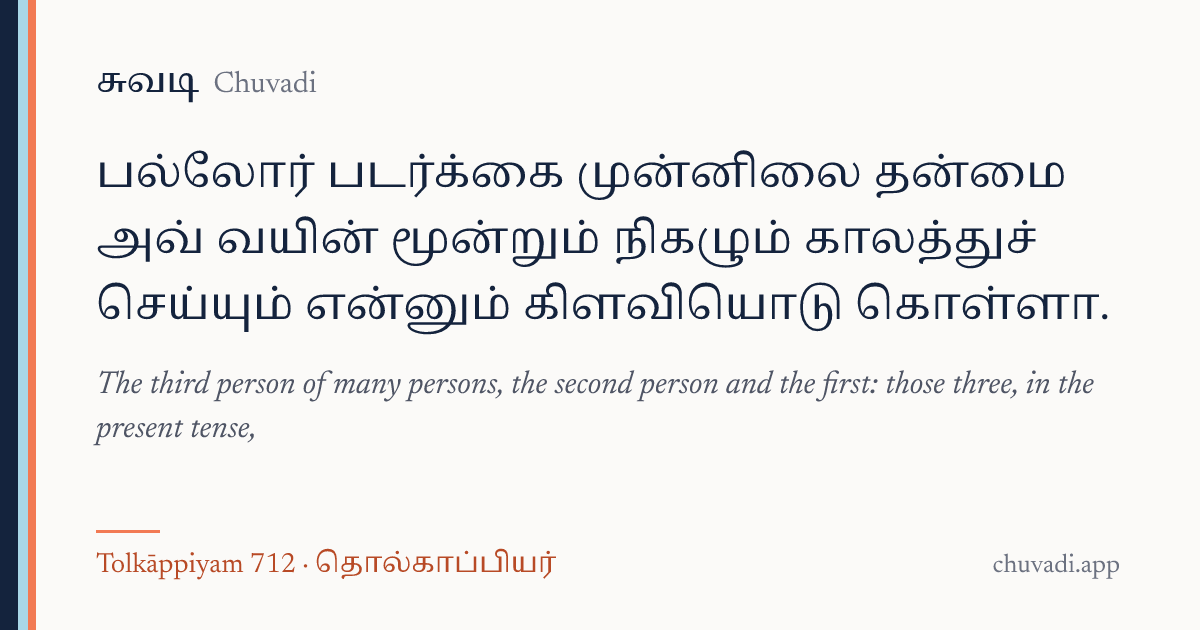
- The third person of many persons, the second person and the first:
- those three, in the present tense,
- do not go with the word of the ceyyum type.
What the poem says
The finite form of the ceyyum type (uṇṇum "eats, will eat") is restricted: it is not used with the high-class plural third person, nor with the second or first person. So one says avaṉ uṇṇum "he eats" or atu uṇṇum "it eats", but not avar uṇṇum, nī uṇṇum or yāṉ uṇṇum.
It thus remains for the masculine, feminine, neuter singular and neuter plural of the third person. The phrase "in the present tense" reflects the sense the grammar gives to ceyyum as a present (or general) form. Tol.720 later lifts this restriction when ceyyum is used as a relative participle.