



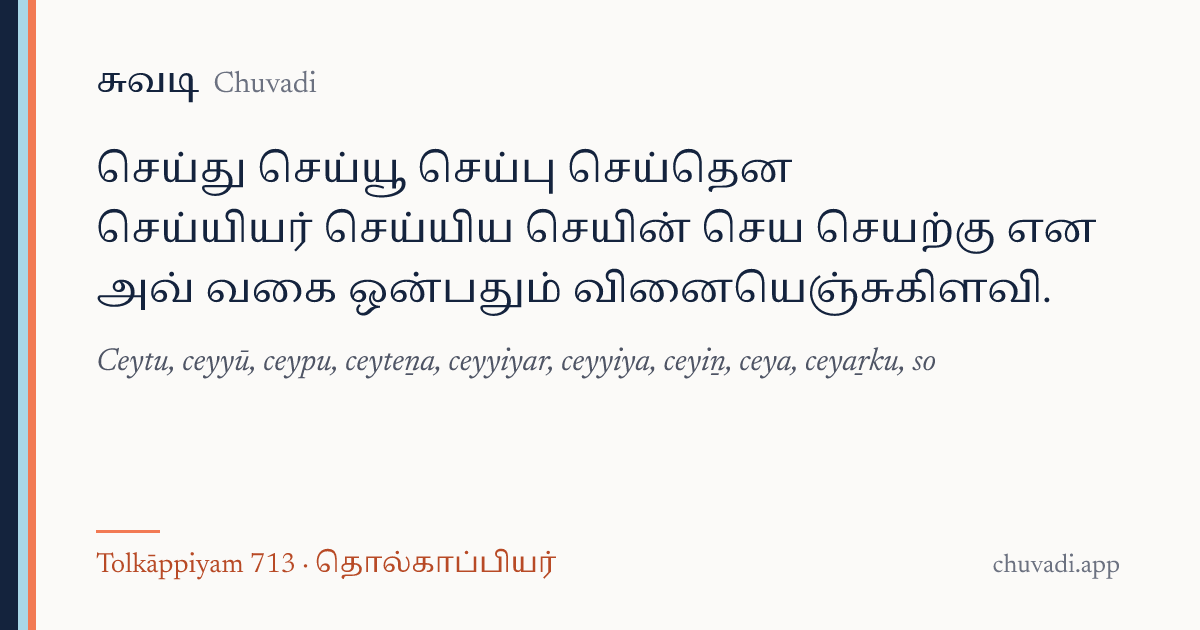
தொல்காப்பியம் 713 · சொல் 6.31
பாடல் · The poem
Tap a word to see where else it occurs.
பொருள் · Meaning in TamilAI
செய்து, செய்யூ, செய்பு, செய்தென, செய்யியர், செய்யிய, செயின், செய, செயற்கு என்னும் ஒன்பது வாய்பாடுகளும் வினையெச்சச் சொற்களாகும். உண்டு வந்தான், உண்ணிய வந்தான், உண்ணின் என்பன எடுத்துக்காட்டுகள்.
இளம்பூரணர்
இளம்பூரணர் செய்து, செய்யூ, செய்பு, செய்தென, செய்யியர், செய்யிய, செயின், செய, செயற்கு என்னும் ஒன்பது வாய்பாடுகளையும் வினையெச்சங்களாகக் கொள்வார்.
நச்சினார்க்கினியர்
நச்சினார்க்கினியரும் இவ்வொன்பதையும் வினையெச்ச வாய்பாடுகளாகவே கொள்வார்; இவற்றின் காலப் பொருள் பற்றி இவர் கூறும் விளக்கம் இங்கு சரிபார்க்கப்படவில்லை.
செய்யூ, செய்பு, செய்யியர் போன்ற வடிவங்கள் பழஞ்செய்யுளில் மட்டுமே பெரிதும் வருவன; பிற்கால வழக்கில் செய்து, செய, செயின் போன்றவையே நிலைத்தன.
ஆங்கிலம் · English translationAI
Translation
- Ceytu, ceyyū, ceypu, ceyteṉa,
- ceyyiyar, ceyyiya, ceyiṉ, ceya, ceyaṟku, so
- those nine kinds are the verbal participle words.
What the poem says
The verbal participle (viṉaiyeccam, a verb form left "incomplete" and finished by a following verb) has nine patterns, named by model forms of the verb cey "do": ceytu "having done", ceyyū "having done" (an older variant), ceypu "having done", ceyteṉa "when (it) did", ceyyiyar and ceyyiya "in order to do", ceyiṉ "if (one) does", ceya "so as to do, while doing", and ceyaṟku "for doing".
Concrete examples: uṇṭu vantāṉ "he ate and came", uṇṇiya vantāṉ "he came to eat", uṇṭiṉ "if he eats". Several of these forms (ceyyū, ceypu, ceyyiyar) are old and survive mainly in Caṅkam poetry.