



தொல்காப்பியம் 715 · சொல் 6.33
பாடல் · The poem
Tap a word to see where else it occurs.
பொருள் · Meaning in TamilAI
அவற்றுள், முதலில் நின்ற செய்து, செய்யூ, செய்பு என்னும் மூன்றும் தம் வினைமுதலின் வினையாலேயே முடியும். உண்டு வந்தான் என்பதில் உண்டவனே வந்தவன்.
இளம்பூரணர்
இளம்பூரணர் முதலில் நின்ற செய்து, செய்யூ, செய்பு என்னும் மூன்றும் தம் வினைமுதலின் வினையாலேயே முடியும் எனப் பொருள் கொள்வார்.
நச்சினார்க்கினியர்
நச்சினார்க்கினியரும் இம்மூன்று எச்சங்களுக்கும் முடிக்கும் வினைக்கும் வினைமுதல் ஒன்றாக இருக்க வேண்டும் என்றே கொள்வார்.
இம் மூன்று வினையெச்சங்களுக்கும் பின்வரும் முற்றுவினைக்கும் எழுவாய் ஒன்றாகவே இருக்க வேண்டும் என்பது இதன் கருத்து.
ஆங்கிலம் · English translationAI
Translation
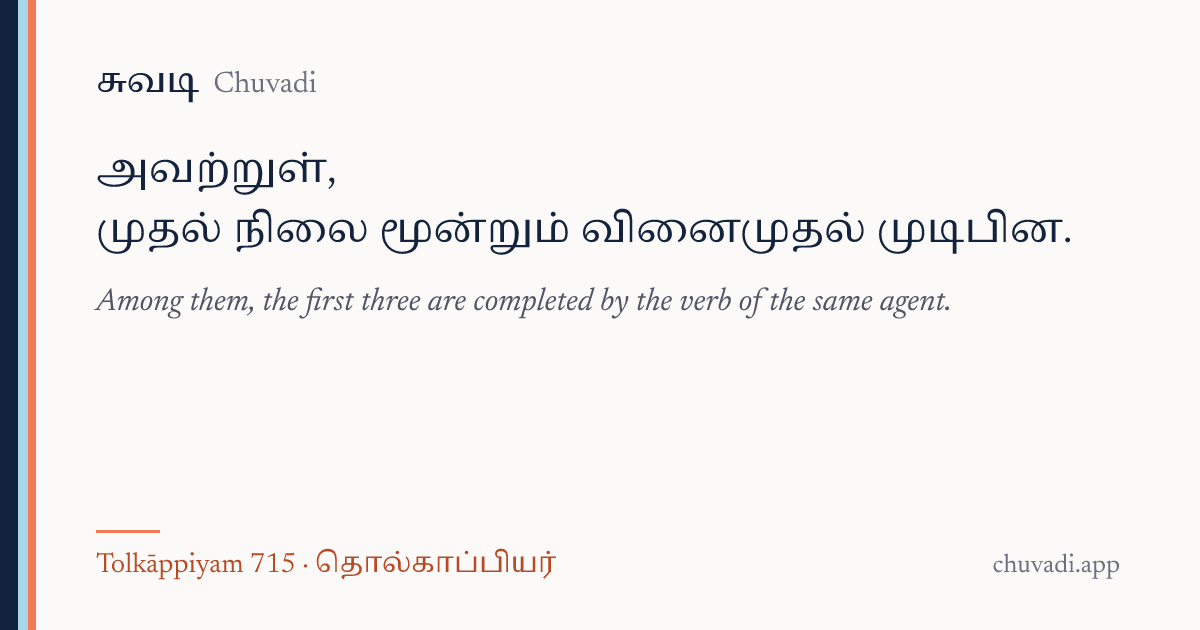
- Among them,
- the first three are completed by the verb of the same agent.
What the poem says
The first three participles of tol.713, ceytu, ceyyū and ceypu, must be completed by a verb whose subject is the same as their own. So uṇṭu vantāṉ "he ate and came": the one who ate is the one who came. One cannot say, with this form, "he having eaten, she came".
"Agent" here translates viṉaimutal, the doer of the action. This same-subject rule is still the norm for the -tu participle in modern Tamil.