



தொல்காப்பியம் 716 · சொல் 6.34
பாடல் · The poem
Tap a word to see where else it occurs.
பொருள் · Meaning in TamilAI
அம் மூன்று வினையெச்சங்களும் சினையின் வினையைக் காட்டி வரும்போது, சினையோடு முடியாமல் முதலோடு முடிந்தாலும், வினைமுதல் ஒன்றே என்று கொள்ளப்படும் என்று புலவர் கூறுவர். கண் சிவந்து நின்றான் என்பதில் சிவந்தது கண், நின்றவன் அவன்; ஆயினும் இது பிழையன்று.
இளம்பூரணர்
இளம்பூரணர் அம்மூன்று எச்சங்களும் சினையின் வினையைக் காட்டி முதலின் வினையால் முடிந்தாலும், சினையின் தொழில் முதலின் தொழிலாகவே கொள்ளப்படுவதால் வினைமுதல் ஒன்றே எனப் பொருள் கொள்வார்.
நச்சினார்க்கினியர்
நச்சினார்க்கினியரும் இதனை முன்னைய விதிக்கு அமைதியாகவே கொள்வார்; இவர் தரும் எடுத்துக்காட்டுகள் இங்கு சரிபார்க்கப்படவில்லை.
சினையின் தொழில் முதலின் தொழிலாகவும் கொள்ளப்படும் என்பதே உரையாசிரியர்களின் விளக்கம்.
ஆங்கிலம் · English translationAI
Translation
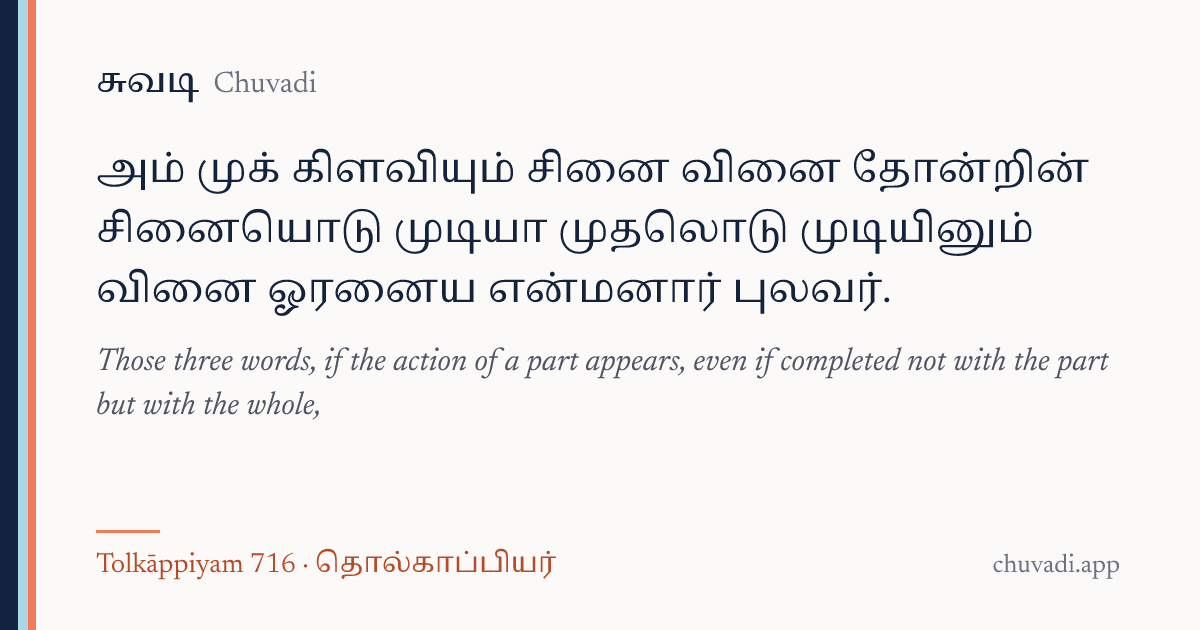
- Those three words, if the action of a part appears,
- even if completed not with the part but with the whole,
- the verb is the same, say the learned.
What the poem says
A qualification of the same-subject rule. When one of those three participles describes the action of a part (ciṉai) of a person, such as the eye or hand, and the finite verb describes the whole (mutal), the person, this still counts as the same subject. So kaṇ civantu niṉṟāṉ "his eyes reddened and he stood": the eyes reddened, the man stood, and the construction is correct.
The commentators explain that a part's action is in a sense the whole's action. The example is my own of the general type.