



தொல்காப்பியம் 717 · சொல் 6.35
பாடல் · The poem
Tap a word to see where else it occurs.
பொருள் · Meaning in TamilAI
ஏனைய வினையெச்சங்கள் தம் வினைமுதலின் வினையாலும், பிறிது வினைமுதலின் வினையாலும், தம் இயல்புக்கு ஏற்ப முடியும் என்று கூறுவர். உண்ண வந்தான் என்பதில் வினைமுதல் ஒன்று; மழை பெய்ய நெல் விளைந்தது என்பதில் வினைமுதல் வேறு வேறு.
இளம்பூரணர்
இளம்பூரணர் ஏனைய வினையெச்சங்கள் தம் வினைமுதலின் வினையாலும், பிறிதொரு வினைமுதலின் வினையாலும் தம் இயல்புக்கு ஏற்ப முடியும் எனப் பொருள் கொள்வார்.
நச்சினார்க்கினியர்
நச்சினார்க்கினியரும் ஆன் வந்து இயையும் வினைநிலை என்பதைப் பிறிது வினைமுதலின் வினை எனக் கொள்வார்; இவர் தரும் எடுத்துக்காட்டுகள் இங்கு சரிபார்க்கப்படவில்லை.
இரண்டாம் வரி செறிவானது; பிறிதொரு வினைமுதலின் வினை வந்து இயைவதைக் குறிக்கும் என்று உரையாசிரியர்கள் கொள்வர்.
ஆங்கிலம் · English translationAI
Translation
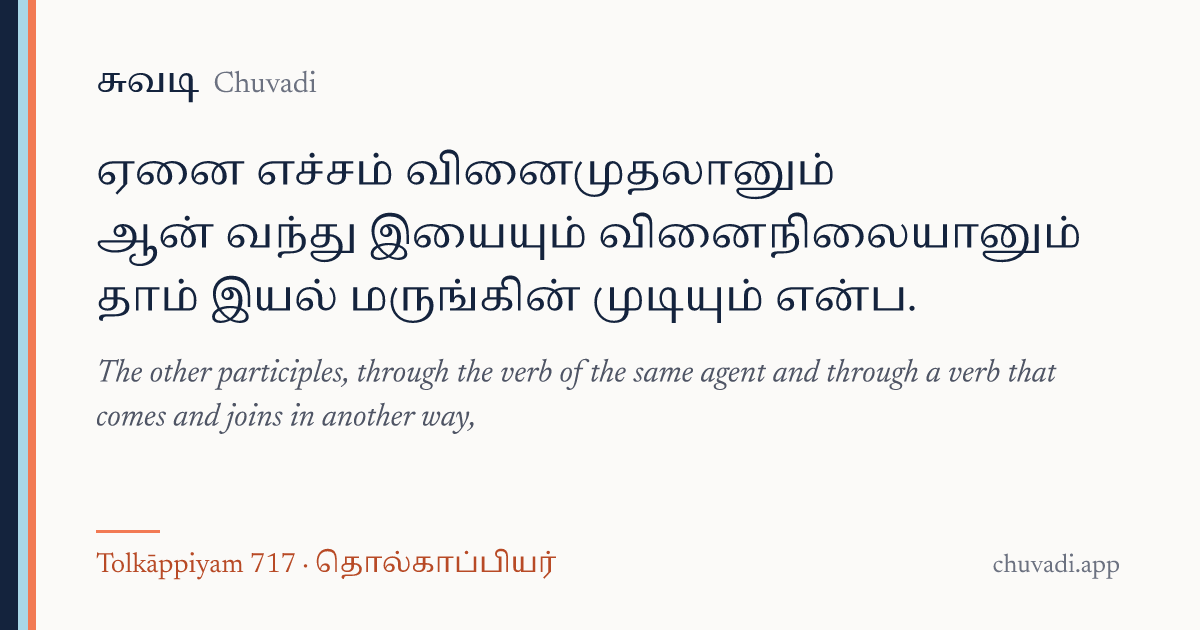
- The other participles, through the verb of the same agent
- and through a verb that comes and joins in another way,
- are completed according to their own nature, they say.
What the poem says
The remaining participles are free: they may be completed by a verb of the same subject or by a verb of a different subject, as their nature allows. So uṇṇa vantāṉ "he came to eat" has one subject, while maḻai peyya nel viḷaintatu "the rain having fallen, the paddy grew" has two.
The second line is compressed; the commentators take it to mean a verb belonging to another agent that comes in and links with the participle. "According to their own nature" leaves it to usage which participle allows which construction.