



தொல்காப்பியம் 718 · சொல் 6.36
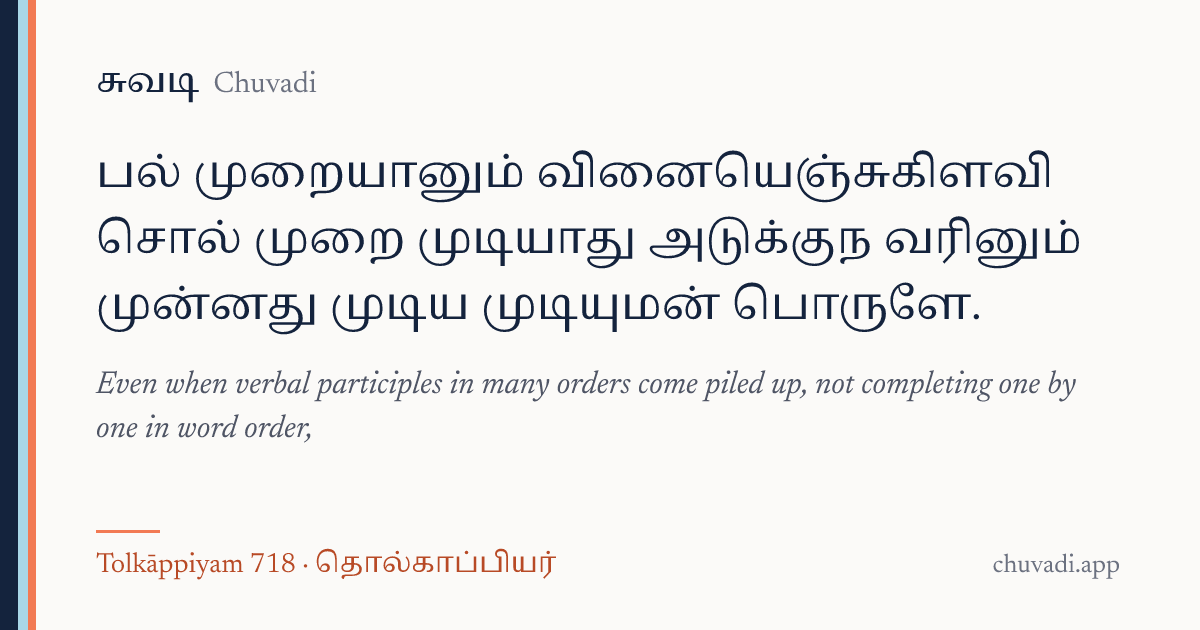
பாடல் · The poem
Tap a word to see where else it occurs.
பொருள் · Meaning in TamilAI
பல வினையெச்சங்கள் அடுக்கி வந்து, சொல் வரிசைப்படி ஒன்றன்பின் ஒன்றாக முடியாமல் இருந்தாலும், முடிக்கும் வினை முடியவே எல்லாவற்றின் பொருளும் முடியும். உண்டு தின்று ஆடிப் பாடி வந்தான் என்பதில் எல்லா எச்சங்களும் வந்தான் என்னும் ஒரே வினையால் முடிகின்றன.
இளம்பூரணர்
இளம்பூரணர் பல வினையெச்சங்கள் அடுக்கி வந்து சொல் வரிசைப்படி ஒன்றன்பின் ஒன்றாக முடியாவிட்டாலும், இறுதியில் வரும் முடிக்கும் வினை முடியவே எல்லாவற்றின் பொருளும் முடியும் எனப் பொருள் கொள்வார்.
நச்சினார்க்கினியர்
நச்சினார்க்கினியர் உரையும் இந்நூற்பாவுக்கு மேற்கூறிய பொருளையே தருவதாகக் கொள்ளலாம்; முன்னது என்னும் சொல்லுக்கு இவர் கொள்ளும் பொருள் இங்கு சரிபார்க்கப்படவில்லை.
‘முன்னது’ என்பதை முடிக்கும் முற்றுவினையைக் குறிப்பதாக உரையாசிரியர்கள் விளக்குவர்; சொல் அளவில் அதற்கு வேறு பொருளும் கொள்ள இடமுண்டு.
ஆங்கிலம் · English translationAI
Translation
- Even when verbal participles in many orders
- come piled up, not completing one by one in word order,
- when the first is completed, the meaning is completed.
What the poem says
Participles may be stacked in a chain without each being completed by the next: uṇṭu tiṉṟu āṭip pāṭi vantāṉ "having eaten, chewed, danced and sung, he came". None of the participles is finished by the one after it; all are completed together by the final verb.
The last line is read by the commentators as saying that when the leading verb, the finite verb that heads the chain, is completed, the meaning of all the participles is completed with it. The word "first" (muṉṉatu) is open to more than one reading, and the commentators explain it from the construction rather than from the word itself.