



தொல்காப்பியம் 719 · சொல் 6.37
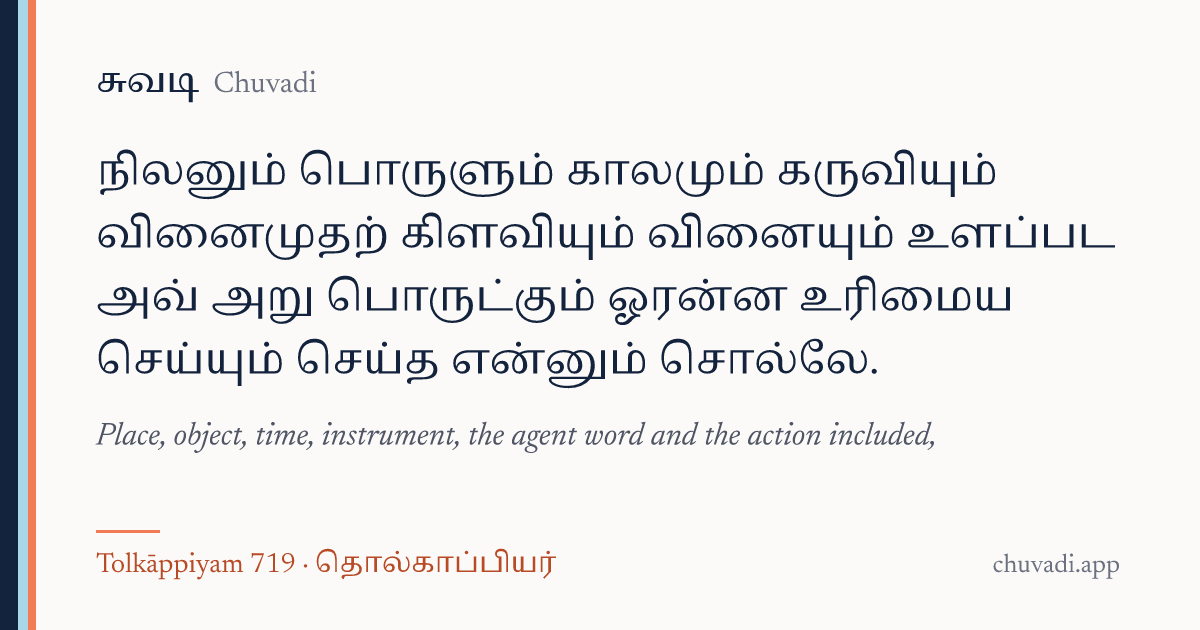
பாடல் · The poem
Tap a word to see where else it occurs.
பொருள் · Meaning in TamilAI
செய்யும், செய்த என்னும் பெயரெச்சச் சொற்கள் நிலம், பொருள், காலம், கருவி, வினைமுதல், வினை ஆகிய ஆறு பொருள்களுக்கும் ஒப்ப உரியவை. வாழும் இல் (இடம்), உண்ணும் சோறு (பொருள்), வரும் நாள் (காலம்), எழுதும் கோல் (கருவி), உண்ணும் சாத்தன் (வினைமுதல்) என வரும்; செய்த என்பதும் அவ்வாறே வரும்.
இளம்பூரணர்
இளம்பூரணர் செய்யும், செய்த என்னும் பெயரெச்சங்கள் நிலம், பொருள், காலம், கருவி, வினைமுதல், வினை ஆகிய ஆறு பெயர்களோடும் ஒப்ப முடியும் எனப் பொருள் கொள்வார்.
நச்சினார்க்கினியர்
நச்சினார்க்கினியரும் பெயரெச்சம் தொழிலோடு தொடர்புடைய இவ்வாறு பொருளையும் தழுவி நிற்கும் என்றே கொள்வார்; இவர் தரும் எடுத்துக்காட்டுகள் இங்கு சரிபார்க்கப்படவில்லை.
பெயரெச்சம் தொழிலோடு தொடர்புடைய எந்தப் பொருளையும் தழுவி நிற்கும் என்பதே இதன் கருத்து.
ஆங்கிலம் · English translationAI
Translation
- Place, object, time, instrument,
- the agent word and the action included,
- for those six things they have an equal right,
- the words ceyyum and ceyta.
What the poem says
The relative participles (peyareccam) of the ceyyum and ceyta types ("which does", "which did") can qualify six kinds of noun: the place of the action (vāḻum il "the house where one lives"), the object (uṇṇum cōṟu "the rice that is eaten"), the time (varum nāḷ "the day that comes"), the instrument (eḻutum kōl "the pen one writes with"), the agent (uṇṇum cāttaṉ "Cāttaṉ who eats"), and the action itself (uṇṇum ūṇ, where the noun ūṇ "eating" names the action itself).
The same six apply to ceyta: vāḻnta il, uṇṭa cōṟu and so on. It is a classic statement of how a Tamil relative clause can relativise any role in the action.