



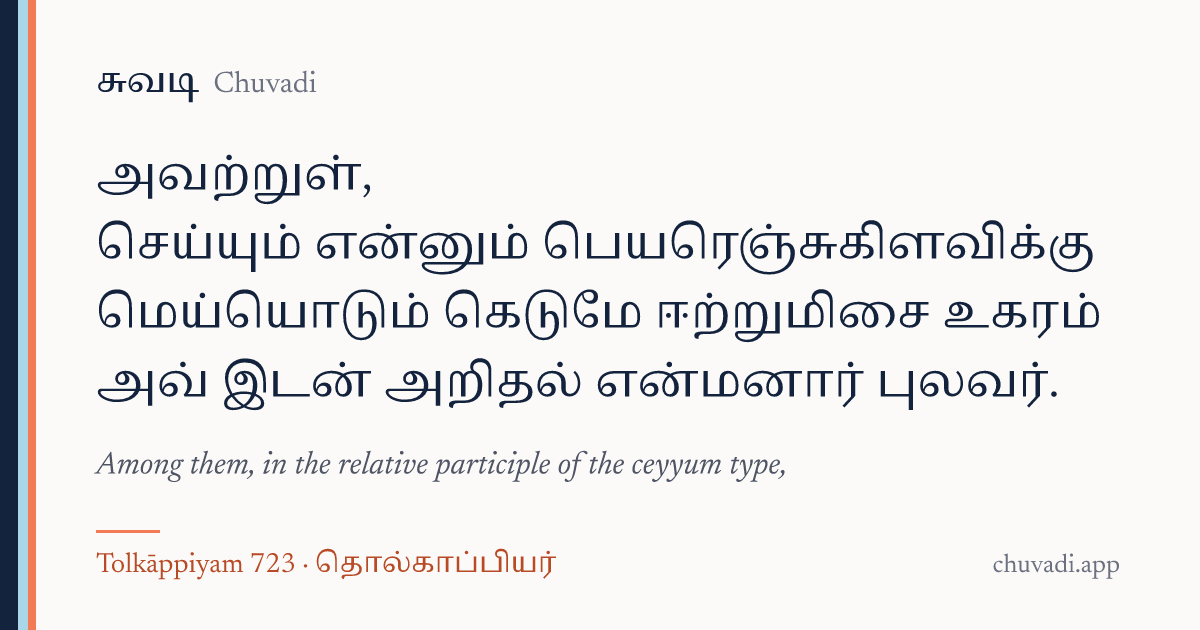
தொல்காப்பியம் 723 · சொல் 6.41
பாடல் · The poem
Tap a word to see where else it occurs.
பொருள் · Meaning in TamilAI
அவற்றுள், செய்யும் என்னும் பெயரெச்சத்தில் இறுதி மகரத்தின் மேல் நிற்கும் உகரம் தான் ஏறிய மெய்யோடு சேர்ந்து கெடுவதுண்டு. போகும் வழி போம் வழி எனவும், ஆகும் இடம் ஆம் இடம் எனவும் வரும்.
இளம்பூரணர்
இளம்பூரணர் செய்யும் என்னும் பெயரெச்சத்தின் இறுதி உகரம் தான் ஏறிய மகர மெய்யோடு கெடுவதும் உண்டு எனப் பொருள் கொண்டு, அவ்வாறு கெடும் இடங்களை வழக்கு நோக்கி அறிய வேண்டும் என்பார்.
நச்சினார்க்கினியர்
நச்சினார்க்கினியரும் இதனை எல்லா வினைகளுக்கும் நிகழாத, வழக்கால் அறியப்படும் திரிபாகவே கொள்வார்; இவர் தரும் எடுத்துக்காட்டுகள் இங்கு சரிபார்க்கப்படவில்லை.
‘அவ்விடன் அறிதல்’ என்றதனால், இது எல்லா வினைகளுக்கும் நிகழாது, வழக்கை நோக்கி அறிய வேண்டும் என்று உரையாசிரியர்கள் கொள்வர்.
ஆங்கிலம் · English translationAI
Translation
- Among them,
- in the relative participle of the ceyyum type,
- the u on the final is lost together with its consonant;
- know where this happens, say the learned.
What the poem says
In the ceyyum relative participle, the syllable carrying the u before the final m may drop, consonant and all. So pōkum "which goes" becomes pōm, ākum "which becomes" becomes ām: pōm vaḻi "the way that goes", ām iṭam "the place where it happens".
"Know where this happens" signals that the loss is not general; it occurs only with certain verbs, and usage decides. This contraction is very common in later Tamil (pōm, ām, vām).