



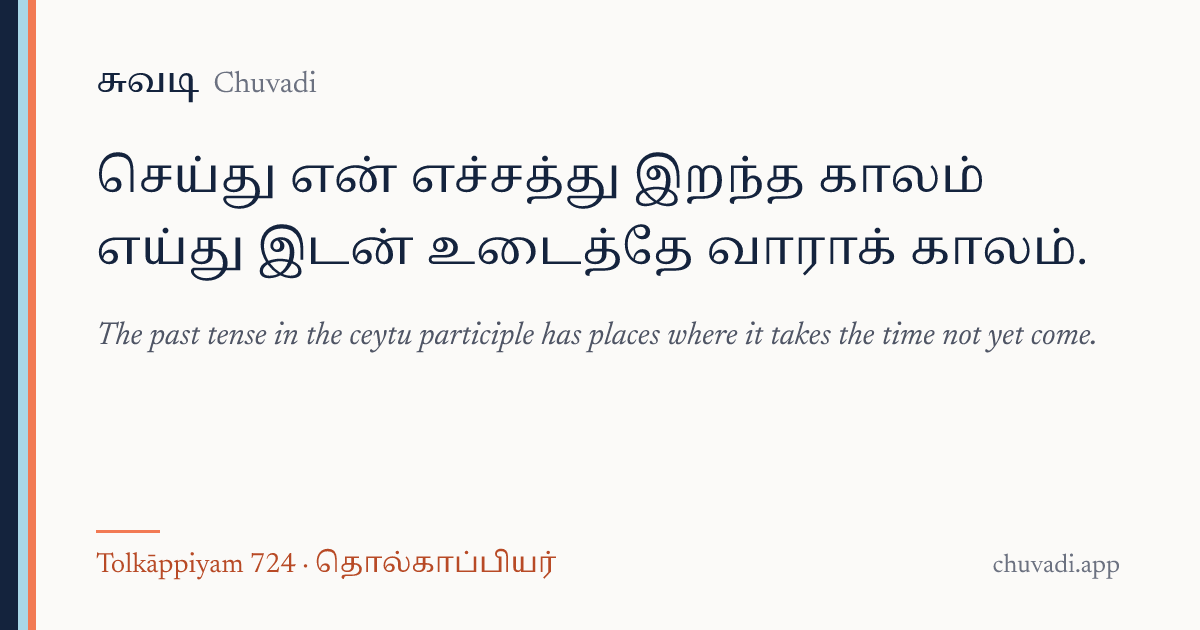
தொல்காப்பியம் 724 · சொல் 6.42
பாடல் · The poem
Tap a word to see where else it occurs.
பொருள் · Meaning in TamilAI
செய்து என்னும் வினையெச்சத்தின் இறந்த காலப் பொருள் சில இடங்களில் எதிர்காலத்தைக் குறிப்பதும் உண்டு. நாளை உண்டு வருவான் என்பதில் உண்ணுதல் இனிமேல்தான் நிகழும்.
இளம்பூரணர்
இளம்பூரணர் செய்து என்னும் வினையெச்சம் இறந்த கால வடிவினதாயினும் சில இடங்களில் எதிர்காலச் செயலைக் குறித்தும் வரும் எனப் பொருள் கொள்வார்.
நச்சினார்க்கினியர்
நச்சினார்க்கினியர் உரையும் இந்நூற்பாவுக்கு மேற்கூறிய பொருளையே தருவதாகக் கொள்ளலாம்; இவர் தரும் எடுத்துக்காட்டுகள் இங்கு சரிபார்க்கப்படவில்லை.
செய்து என்பதன் இறந்த காலம் முடிக்கும் வினையைப் பொறுத்த காலமே என்பதை இவ்விதி காட்டுகிறது என்று விளக்கலாம்.
ஆங்கிலம் · English translationAI
Translation
- The past tense in the ceytu participle
- has places where it takes the time not yet come.
What the poem says
The ceytu participle (uṇṭu "having eaten") is normally past, but it can stand in future contexts: nāḷai uṇṭu varuvāṉ "tomorrow he will eat and come". The eating is past only relative to the coming; in absolute terms it is future.
The commentators explain the rule this way: the past sense of ceytu is relative to the main verb. "Has places" again limits it to the contexts where usage allows it.