



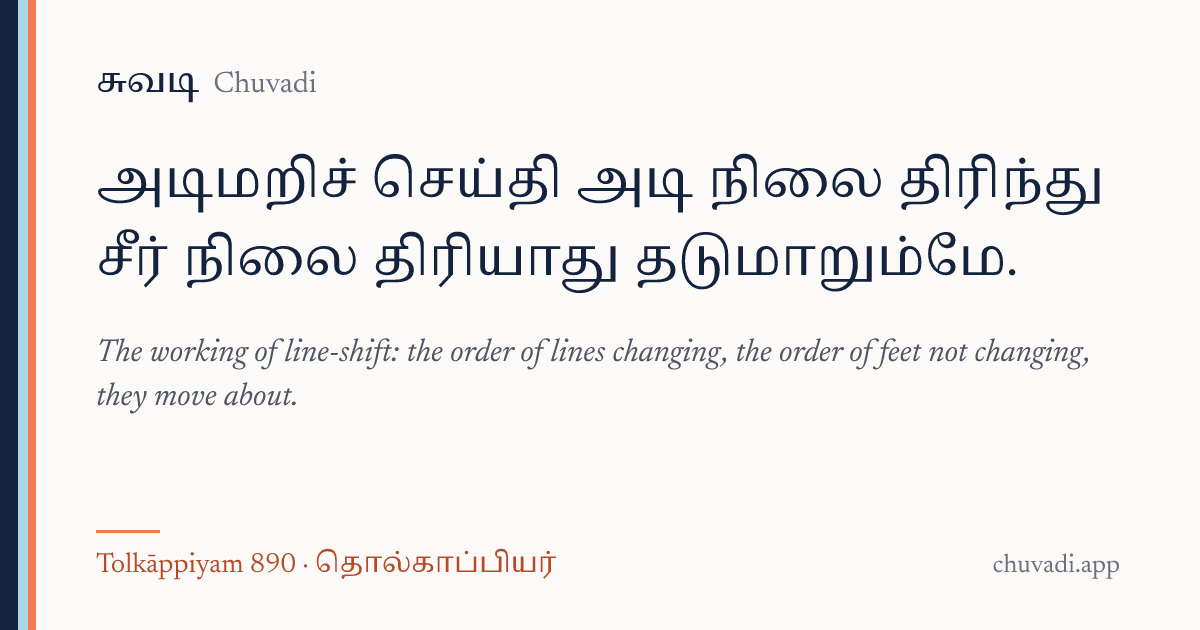
தொல்காப்பியம் 890 · சொல் 9.11
பாடல் · The poem
Tap a word to see where else it occurs.
பொருள் · Meaning in TamilAI
அடிமறி என்பது, ஒரு செய்யுளின் அடிகள் தம் இடத்திலிருந்து மாறி நின்றாலும், ஒவ்வோர் அடிக்குள்ளும் உள்ள சீர்கள் மாறாமல், அடிகளை எந்த வரிசையில் வைத்தாலும் பொருள் மாறாமல் அமைவது ஆகும். ஒவ்வோர் அடியும் தனித்துப் பொருள் முடிந்து நிற்கும்போதே இது இயலும்.
இளம்பூரணர்
இவர் அடிமறியை, அடிகள் தம் இடத்திலிருந்து மாறினாலும் ஒவ்வோர் அடிக்குள்ளும் சீர்கள் மாறாமல் பொருள் கெடாது நிற்கும் செய்யுளாகக் கொண்டு, ஒவ்வோர் அடியும் தனித்துப் பொருள் முடியும் நான்கடிச் செய்யுளை எடுத்துக்காட்டுவார் என்று கூறப்படுகிறது; அச்செய்யுள் இங்கு சரிபார்க்கப்படவில்லை.
நச்சினார்க்கினியர்
இவரும் அடிமறியை அடிகள் இடம் மாறியும் சீர்கள் மாறாது நிற்கும் அமைப்பாகவே கொள்வார். இதில் இளம்பூரணரிடமிருந்து இவர் வேறுபடுவதாகத் தெரியவில்லை; இவர் காட்டும் மேற்கோள்கள் இங்கு சரிபார்க்கப்படவில்லை.
ஒவ்வோர் அடியும் தனிக் கூற்றாக அமைந்த நான்கடிச் செய்யுள்களை உரையாசிரியர்கள் இதற்கு எடுத்துக்காட்டாகக் காட்டுவர்.
ஆங்கிலம் · English translationAI
Translation
- The working of line-shift: the order of lines changing,
- the order of feet not changing, they move about.
What the poem says
Aṭimaṟi, "line-shift", is a stanza whose lines can be taken in any order: the lines change their places while the feet inside each line stay as they are. This is possible when each line is complete in sense, so that reading the second line first or the last line second makes no difference to the meaning.
The commentators illustrate with short four-line stanzas in which every line is a separate statement of the heroine's grief, so that the lines can be shuffled freely. The contrast with cuṇṇam and moḻimāṟṟu is that here whole lines move, never individual feet or words.