



தொல்காப்பியம் 891 · சொல் 9.12
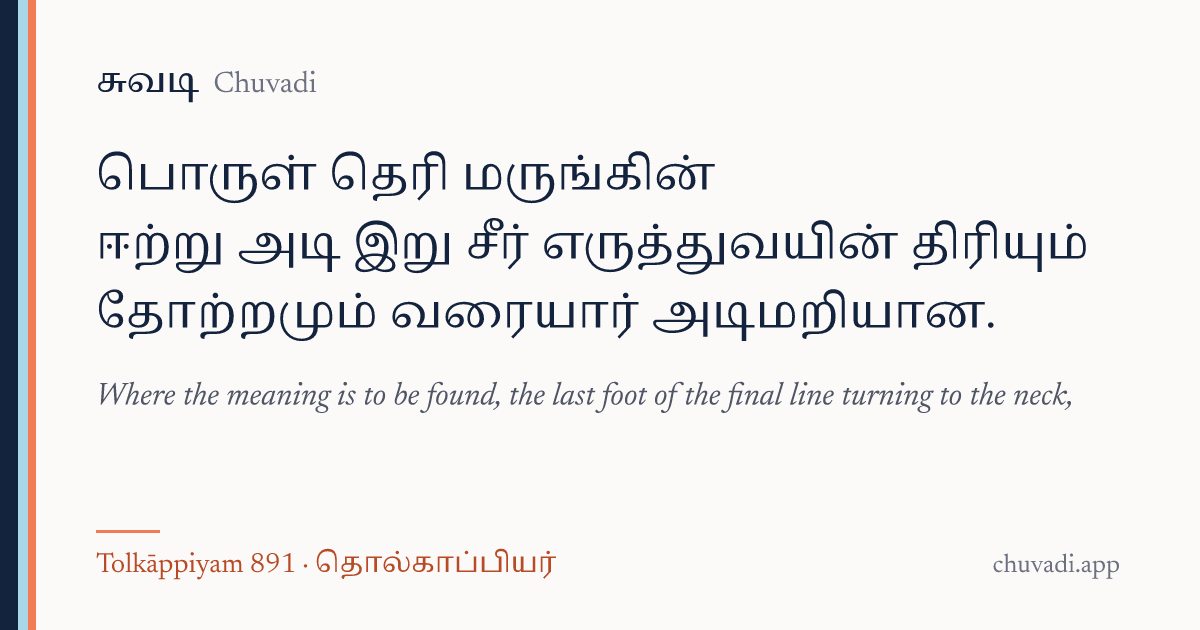
பாடல் · The poem
Tap a word to see where else it occurs.
பொருள் · Meaning in TamilAI
அடிமறியில், பொருள் தெளிவாக விளங்க வேண்டிய இடத்தில், இறுதி அடியின் கடைசிச் சீர் எருத்து என்னும் இடத்திற்கு மாறி வந்து பொருள் கொள்ளப்படுவதையும் நீக்கமாட்டார்கள். பொதுவாகச் சீர்கள் மாறா என்று முன் கூறியதற்கு இது ஒரு விலக்கு.
இளம்பூரணர்
இவர் இதனை அடிமறிக்கு ஒரு விலக்காகக் கொண்டு, பொருள் தெளிவாக வேண்டிய இடத்தில் இறுதி அடியின் கடைசிச் சீர் எருத்து என்னும் முன் இடத்துக்குச் சென்று பொருள் கொள்ளப்படுவதையும் அடிமறியாகவே ஏற்பர் என உரைப்பார். எருத்து என்பதற்கு இவர் தரும் துல்லியமான பொருளும் எடுத்துக்காட்டும் இங்கு சரிபார்க்கப்படவில்லை.
நச்சினார்க்கினியர்
இவரும் இதனை அடிமறியின் ஒரு வகையாகவே கொள்வார்; எருத்து என்னும் இடத்தை இவர் எவ்வாறு விளக்குகிறார், அதில் இளம்பூரணரோடு வேறுபாடு உண்டா என்பவை இங்கு சரிபார்க்கப்படவில்லை.
எருத்து என்பது இங்கே செய்யுளின் எந்த இடத்தைக் குறிக்கிறது என்பது தெளிவாக இல்லை; இறுதிக்கு முந்தைய அடி போன்ற முன் இடமாகப் பொதுவாகக் கொள்ளப்படுகிறது.
ஆங்கிலம் · English translationAI
Translation
- Where the meaning is to be found,
- the last foot of the final line turning to the neck,
- this appearance too they do not exclude, in line-shift.
What the poem says
This nūṟpā adds an exception to line-shift. Normally the feet within each line stay fixed, but where the sense requires it, the final foot of the last line may be moved to the eruttu, literally "neck", of the stanza, and this too is accepted as aṭimaṟi.
What exactly the "neck" is in this rule is not fully clear to me. It is generally understood as a position earlier in the stanza, such as the line before the last, to which the closing word is carried back so that the sense is completed there. I give the general sense and leave the precise placement open.