



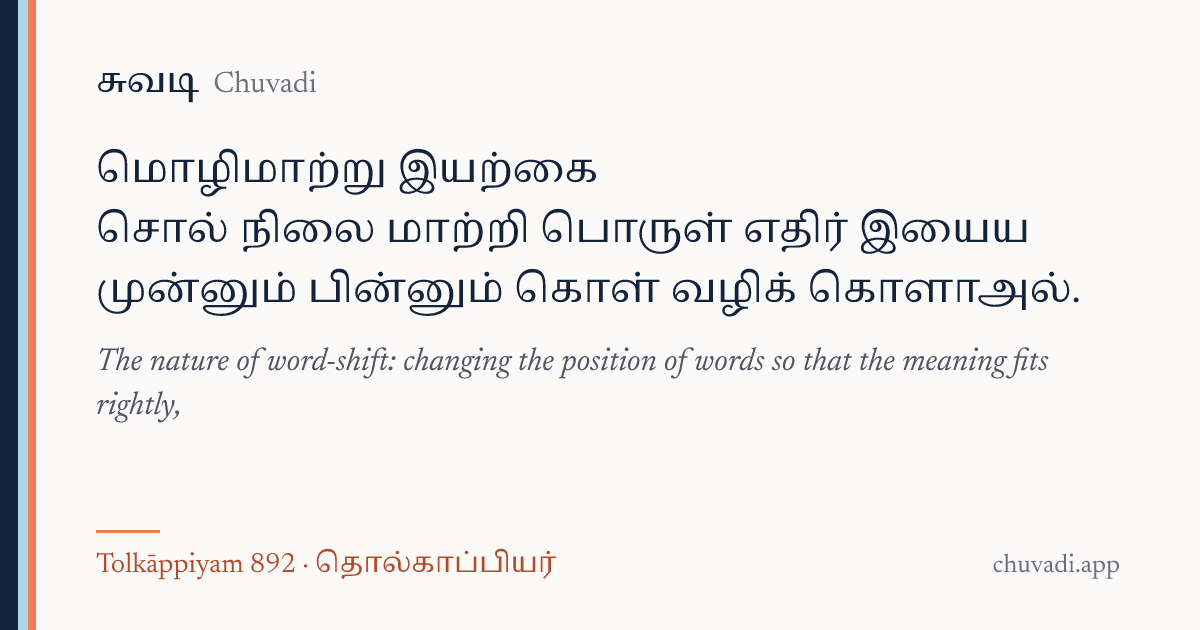
தொல்காப்பியம் 892 · சொல் 9.13
பாடல் · The poem
Tap a word to see where else it occurs.
பொருள் · Meaning in TamilAI
மொழிமாற்று என்பது, சொற்களை அவை நிற்கும் இடத்திலிருந்து மாற்றி, பொருள் சரியாகப் பொருந்தும்படி, முன்னே கொள்ள வேண்டியதை முன்னும் பின்னே கொள்ள வேண்டியதைப் பின்னும் கொண்டு பொருள் காணுதல் ஆகும். சுரை ஆழ, அம்மி மிதப்ப என்று நிற்பதை, சுரை மிதப்ப, அம்மி ஆழ என மாற்றிப் பொருள் கொள்வது இதற்கு மரபில் காட்டப்படும் எடுத்துக்காட்டு.
இளம்பூரணர்
இவர் மொழிமாற்றை, சொற்களை நின்ற இடத்திலிருந்து மாற்றிப் பொருள் பொருந்துமாறு முன்னும் பின்னும் கொண்டு கூட்டுவது எனக் கொள்வார்; அருகருகே உள்ள சொற்களே இடம் மாறுவதால் இது சுண்ணத்திலிருந்து வேறுபடும் என்பது இவர் பொருளுக்கு ஒத்தது. இவர் தரும் எடுத்துக்காட்டுகள் இங்கு சரிபார்க்கப்படவில்லை.
நச்சினார்க்கினியர்
இவரும் மொழிமாற்றைச் சொற்களை முன்னும் பின்னும் கொண்டு கூட்டிப் பொருள் கொள்ளும் முறையாகவே கொள்வார். இதில் இளம்பூரணரிடமிருந்து இவர் வேறுபடுவதாகத் தெரியவில்லை; இவர் காட்டும் மேற்கோள்கள் இங்கு சரிபார்க்கப்படவில்லை.
சுண்ணத்தில் இரண்டு அடிகளுக்கும் இடையே சீர்கள் மாறும்; மொழிமாற்றில் அருகருகே உள்ள சொற்களே இடம் மாறும் என உரையாசிரியர்கள் வேறுபடுத்துவர்.
ஆங்கிலம் · English translationAI
Translation
- The nature of word-shift:
- changing the position of words so that the meaning fits rightly,
- taking them before and after, wherever they are to be taken.
What the poem says
Moḻimāṟṟu, "word-shift", is the method in which words are moved from where they stand, some taken earlier and some later, so that the meaning comes out right. The commentators distinguish it from cuṇṇam by its scope: here words are exchanged within a line or a short phrase, not scattered across two lines.
A familiar illustration in the tradition is a verse that, read as it stands, says the gourd sinks and the grinding stone floats; exchanging the two verbs gives the intended sense, that the gourd floats and the stone sinks. Such apparent nonsense is the signal that words must be shifted.