



தொல்காப்பியம் 893 · சொல் 9.14
பாடல் · The poem
Tap a word to see where else it occurs.
பொருள் · Meaning in TamilAI
த, ந, நு, எ என்னும் எழுத்துகளை முதலாகக் கொண்ட உறவுமுறைப் பெயர்கள், பிரித்துக் காட்ட முயன்றாலும் பிரியாமல் ஒரே சொல்லாக நிற்கும். தந்தை, நுந்தை, எந்தை, தம்முன், நம்முன், நும்முன், எம்முன் போன்றவை இவை.
இளம்பூரணர்
இவர் தந்தை, நுந்தை, எந்தை போன்ற த, ந, நு, எ முதலாகிய முறைப்பெயர்கள் பிரித்துக் காட்ட முயன்றாலும் பிரியாது ஒரு சொல்லாகவே நிற்கும் எனக் கொள்வார். இவர் தரும் எடுத்துக்காட்டுகள் இங்கு சரிபார்க்கப்படவில்லை.
நச்சினார்க்கினியர்
இவரும் இம்முறைப்பெயர்களை ஒரு சொல்லாகவே கொள்வார். இதில் இளம்பூரணரிடமிருந்து இவர் வேறுபடுவதாகத் தெரியவில்லை; இவர் காட்டும் மேற்கோள்கள் இங்கு சரிபார்க்கப்படவில்லை.
இவற்றின் முதல் பகுதி அவனுடைய, உன்னுடைய, என்னுடைய என்பது போன்ற பொருளைத் தந்தாலும், முழுச் சொல்லும் ஒரே பெயராகவே இயங்கும் என்பது உரையாசிரியர்கள் விளக்கம்.
ஆங்கிலம் · English translationAI
Translation
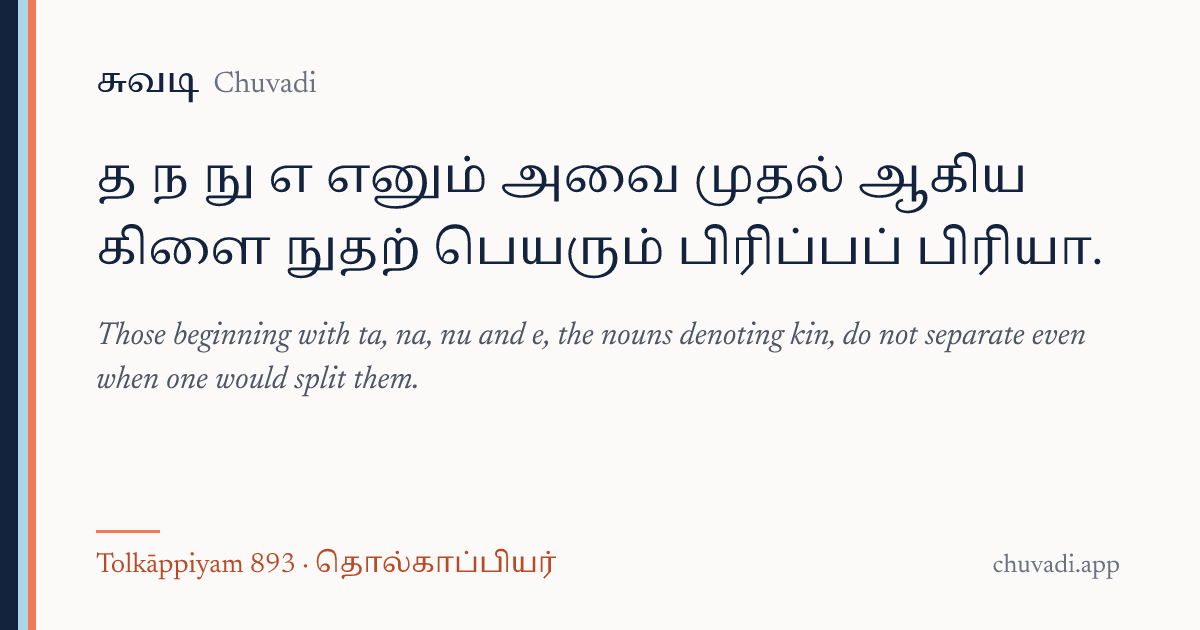
- Those beginning with ta, na, nu and e,
- the nouns denoting kin, do not separate even when one would split them.
What the poem says
Kinship nouns that begin with ta-, na-, nu- and e-, such as tantai "his or their father", nuntai "your father", entai "my father", or tammuṉ, nummuṉ, emmuṉ, nammuṉ "elder brother" with the various possessors, look as if they were a pronoun joined to a kin word. The rule is that they are not to be divided: they behave as single words.
The commentators explain that although the first syllable plainly carries the sense of the possessor (his, your, my, our), the word as a whole functions as one noun, with no case or particle between its parts, and must be treated as such in grammar.